You’ve probably seen or heard the phrase “bon voyage” in movies, captions, or even in real-life goodbyes. It sounds elegant, a little emotional, and somehow more meaningful than a simple “goodbye.”
But what does it actually mean—and more importantly, when should you use it?
Many people search for “bon voyage meaning” because they’re unsure whether it’s formal, casual, romantic, or even appropriate in modern conversations. Some worry about using it incorrectly, while others just want to sound more expressive when wishing someone well on a journey.
This guide clears all that confusion. You’ll not only understand the meaning but also how it feels, when it fits, and when it doesn’t.
Bon Voyage – Quick Meaning
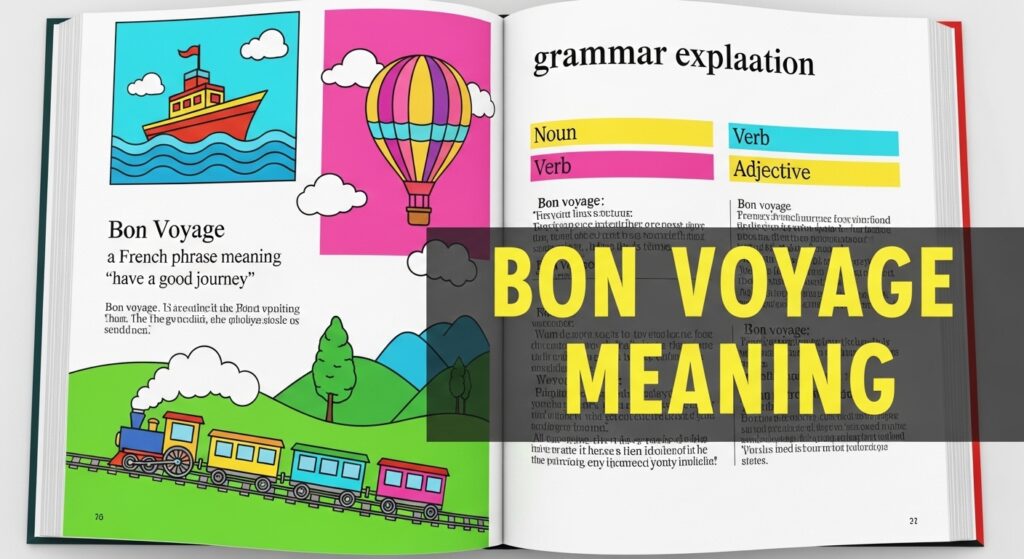
“Bon voyage” is a French phrase that means:
- “Have a good trip”
- “Safe journey”
- “Enjoy your travels”
It’s used when someone is about to travel, especially for a long or meaningful journey.
Simple examples:
- “Bon voyage! Hope you have the best time in Paris.”
- “Wishing you a bon voyage and safe travels.”
- “Bon voyage, my friend. See you soon!”
Origin & Background
“Bon voyage” comes from the French language:
- “Bon” = good
- “Voyage” = journey or trip
So literally, it translates to “good journey.”
Historically, it was used in France as a polite and warm farewell for travelers. Over time, it spread into English-speaking cultures, especially through literature, travel culture, and cinema.
In modern times, the phrase gained popularity again through:
- Travel influencers on social media
- Aesthetic captions on Instagram
- Romantic or emotional movie scenes
Today, it carries a slightly stylish, thoughtful, and emotional tone—more expressive than a plain “bye.”
Real-Life Conversations
1. WhatsApp Chat
Person A: I’m leaving for Dubai tonight
Person B: Wow, that’s exciting! Bon voyage! ✈️
2. Instagram DM
Person A: Finally going on my solo trip tomorrow 😭
Person B: You deserve it. Bon voyage and enjoy every moment ❤️
3. TikTok Comments
User: Moving abroad for the first time
Comment: Bon voyage! This is the start of something big 🔥
4. Text Message
Person A: Boarding now… feeling nervous
Person B: You’ve got this. Bon voyage. Everything will be fine.
Emotional & Psychological Meaning
“Bon voyage” is more than just a phrase—it carries emotion, intention, and connection.
When someone says it, they are expressing:
- Care for your safety
- Excitement for your journey
- A sense of farewell mixed with hope
It often feels warmer and more personal than “take care.”
Why people use it:
- To sound thoughtful and meaningful
- To add emotional depth to a goodbye
- To make the moment feel special
A real-life scenario
Imagine your close friend is moving abroad for the first time. Saying “bye” feels too simple.
You pause, smile, and say:
“Bon voyage… I’m really proud of you.”
That moment carries emotion. It feels complete.
Usage in Different Contexts
1. Social Media
Used in captions or comments:
- “Bon voyage to me ✈️ new adventures begin!”
- Adds aesthetic and emotional tone
2. Friends & Relationships
- Works well for heartfelt goodbyes
- Sounds caring and slightly emotional
3. Work / Professional Settings
- Appropriate but slightly formal
- Good for emails or farewell messages
Example:
“Wishing you a bon voyage and success on your new assignment.”
4. Casual vs Serious Tone
- Casual: Friendly and stylish
- Serious: Emotional and respectful
When NOT to Use It
Even though it’s a beautiful phrase, it doesn’t fit everywhere.
Avoid using it when:
- ❌ Someone is not actually traveling
- ❌ In very casual or joking situations where it feels too formal
- ❌ During serious or sad departures (unless tone matches)
- ❌ When the person might not understand it
Also, in some contexts, it may sound overly dramatic if used unnecessarily.
Common Misunderstandings
1. It’s only for flights
Not true. It applies to any journey—road trips, relocations, or long travel.
2. It’s always formal
Not anymore. Today, it’s used both casually and emotionally.
3. It’s just a fancy “goodbye”
Partially true—but it carries a positive, hopeful meaning, not just a farewell.
4. It’s outdated
Actually, it’s trending again due to travel culture and social media.
Comparison Table
| Expression | Meaning | Tone | Usage Context |
|---|---|---|---|
| Bon voyage | Have a good journey | Warm, stylish | Travel-specific |
| Safe travels | Stay safe while traveling | Neutral, caring | Formal & informal |
| Goodbye | General farewell | Neutral | Any situation |
| Take care | Stay safe | Friendly | Everyday use |
| Farewell | Final goodbye | Formal, emotional | Serious situations |
Key Insight
“Bon voyage” stands out because it blends emotion, elegance, and purpose—it’s not just a goodbye, it’s a wish for a meaningful journey.
Variations / Types
- Bon voyage!
Simple and classic goodbye for travelers - Have a bon voyage
Slightly more conversational - Wishing you a bon voyage
Polite and warm - Bon voyage, my friend
Personal and emotional - Bon voyage and safe travels
Extra caring tone - Bon voyage, enjoy every moment
Encouraging and positive - Bon voyage, see you soon
Adds reassurance of return - Bon voyage on your new journey
Used for life changes - Bon voyage, take lots of pictures!
Light and fun - Bon voyage, proud of you
Emotional and supportive
How to Respond When Someone Uses It
Casual Replies
- “Thanks! I’m really excited!”
- “Appreciate it 😊”
Funny Replies
- “I’ll try not to miss my flight 😂”
- “Hope I survive airport food 😅”
Mature Replies
- “Thank you, that means a lot.”
- “I truly appreciate your kind wishes.”
Respectful Replies
- “Thank you for your thoughtful message.”
- “Grateful for your support.”
Regional & Cultural Usage
Western Culture
Commonly used in travel and social settings
Seen as classy and expressive
Asian Culture
Less commonly used in daily speech
But popular online or in English conversations
Middle Eastern Culture
More formal usage
Often replaced with direct blessings or prayers
Global Internet Usage
Trending phrase in captions, reels, and travel posts
Associated with aesthetic lifestyle content
Generational Differences
- Gen Z: Uses it creatively, often in captions
- Millennials: Use it more traditionally
- Older generations: May see it as formal or literary
Is It Safe for Kids?
Yes, “bon voyage” is completely safe for kids.
It’s a positive, respectful phrase with no negative or inappropriate meaning. In fact, it’s a great way to teach children polite and expressive language.
FAQs
1. What does “bon voyage” mean in English?
It means “have a good trip” or “safe journey.”
2. Is “bon voyage” formal or casual?
It can be both—formal in professional settings and warm in personal conversations.
3. Can I use “bon voyage” in text messages?
Yes, it’s commonly used in texts, chats, and social media.
4. Is it okay to say “bon voyage” to friends?
Absolutely. It sounds thoughtful and friendly.
5. Is “bon voyage” only for long trips?
No, it can be used for any journey, short or long.
6. What is the reply to “bon voyage”?
A simple “thank you” or “thanks, I appreciate it” works perfectly.
Conclusion
“Bon voyage” is more than just a phrase—it’s a feeling wrapped in words. It carries warmth, care, and a quiet sense of hope for the journey ahead.
In a world where most goodbyes are rushed and casual, using “bon voyage” adds something special. It shows intention. It shows emotion. And most importantly, it shows that you care.
The next time someone you know is heading out—whether it’s a trip, a move, or a new chapter—don’t settle for a simple “bye.”
Say it with meaning.
Say it with heart.
Say, “bon voyage.”