If you’ve ever received a message that simply said “Just a heads up…”, you might have paused for a moment and wondered what exactly the person meant. Is it a warning? Friendly advice? Or simply a quick piece of information?
The phrase “heads up” appears everywhere today—text messages, workplace emails, social media comments, and even casual conversations among friends. People use it when they want to give someone advance notice about something important.
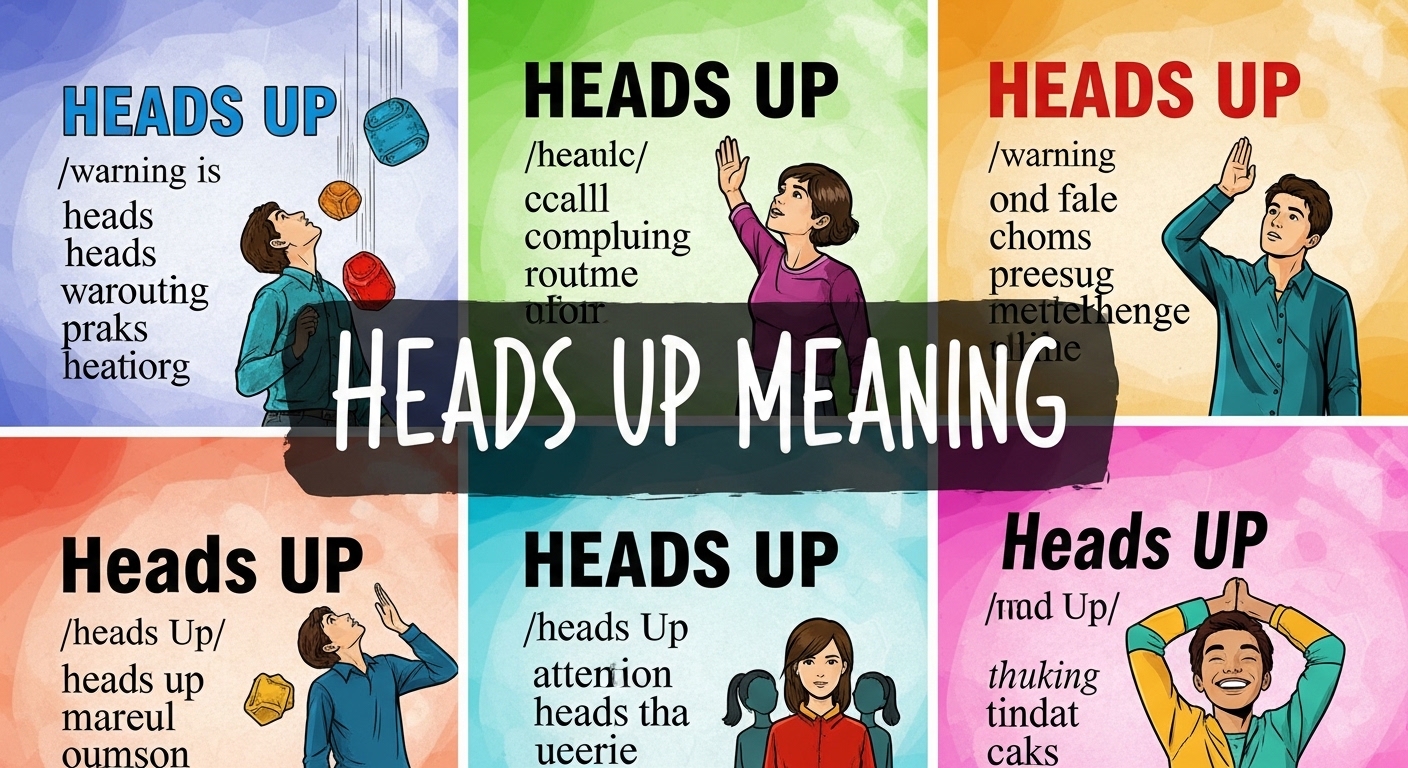
Many learners of English search for the heads up meaning because the phrase isn’t always literal. It doesn’t actually refer to someone lifting their head. Instead, it’s an idiomatic expression used to prepare someone mentally for information that might affect them.
Understanding this phrase helps you interpret conversations more clearly and communicate naturally in modern English. In this article, we’ll explore the meaning, origin, emotional tone, real-life examples, cultural usage, and practical ways to respond when someone gives you a heads up.
Heads Up – Quick Meaning
The phrase “heads up” means a warning, advance notice, or helpful alert about something that is going to happen.
People use it when they want someone to be prepared before something occurs.
Simple Definition
Heads up:
A quick warning or piece of information given in advance so someone can prepare.
Common Situations
People usually say “heads up” when:
- Something important is about to happen
- Someone needs to prepare or adjust plans
- A small warning can prevent confusion
Example Sentences
“Just a heads up — the meeting time changed to 3 PM.”
“Hey, heads up, there’s heavy traffic near the office.”
“I wanted to give you a heads up before the announcement.”
In each case, the speaker is helping the other person stay informed ahead of time.
Origin & Background
The phrase heads up has an interesting history. It originally came from sports and military language.
In early baseball games during the 19th century, players shouted “heads up!” to warn teammates about a fast-moving ball. The message was simple: pay attention and protect yourself.
Over time, the phrase expanded beyond sports. Soldiers began using it in military communication to alert others about incoming danger or sudden movement.
Eventually, everyday conversations adopted the expression.
Evolution of the Phrase
- Sports warning – watch out for the ball
- Military alert – stay aware of danger
- Casual conversation – giving advance notice
Today, the phrase has become part of modern digital communication.
You’ll frequently see it used in:
- Workplace emails
- Group chats
- Social media messages
- Online communities
Interestingly, social media has made the phrase even more common. Short phrases like “quick heads up” or “just a heads up” are now widely used because they communicate information quickly without sounding too formal.
Real-Life Conversations
To understand the heads up meaning, it helps to see how people actually use it in real conversations.
WhatsApp Conversation
Person A:
Hey, just a heads up, the teacher moved tomorrow’s exam to Monday.
Person B:
Oh wow, thanks for telling me. I would’ve shown up unprepared.
Instagram DM
Person A:
Quick heads up — your photo got reposted on a big page.
Person B:
Seriously? That’s amazing. Thanks for letting me know!
TikTok Comments
User 1:
Heads up everyone, this product contains caffeine.
User 2:
Good to know. I almost ordered it.
Text Message
Person A:
Just a heads up, I might arrive 20 minutes late.
Person B:
No worries. I’ll wait.
These examples show how the phrase is usually supportive and helpful, not negative.
Emotional & Psychological Meaning
At a deeper level, saying “heads up” reflects something important about human communication: people want to help others avoid surprises.
When someone gives a heads up, they’re often expressing:
- Consideration
- Responsibility
- Awareness of others’ needs
In modern communication, quick alerts help maintain trust.
For example, imagine a colleague sending you a message:
“Just a heads up, the boss may ask about the project update today.”
That small warning gives you time to prepare. Psychologically, it reduces stress because surprises are one of the biggest sources of workplace anxiety.
Personal Scenario
A few years ago, a friend texted me before a group gathering:
“Heads up — Mark might bring up the travel issue tonight.”
That simple message allowed me to prepare mentally for the conversation. Without it, the topic could have caught me completely off guard.
This shows how small alerts strengthen relationships.
Usage in Different Contexts
The heads up meaning can change slightly depending on where it’s used.
Social Media
On social platforms, people use it to share quick information.
Examples:
- “Heads up — spoilers ahead.”
- “Just a heads up, this video contains flashing lights.”
It helps protect viewers from unexpected content.
Friends & Relationships
Among friends, it often signals care or support.
Example:
“Hey, heads up — Sarah might ask about your plans tonight.”
The intention is friendly preparation.
Workplace / Professional Settings
In professional communication, the phrase softens information.
Example:
“Just a heads up, the client requested a revision.”
This sounds less harsh than a direct complaint.
Casual vs Serious Tone
The tone depends on context.
Casual example:
“Quick heads up — pizza’s almost here.”
Serious example:
“Just a heads up, the deadline has moved forward.”
Both deliver information but carry different levels of urgency.
When NOT to Use It
Even though heads up is useful, it isn’t always appropriate.
Situations to Avoid
1. Extremely formal communication
Example:
Legal documents or official reports.
2. Sensitive emotional topics
For example:
“Heads up — your job might be at risk.”
That message could feel insensitive.
3. Cultural misunderstandings
Some cultures prefer more direct or formal language.
In those cases, clearer wording may be better.
Common Misunderstandings
People sometimes misunderstand the phrase.
Literal Interpretation
Some English learners think it means “lift your head.”
But the phrase is figurative.
Tone Confusion
Some people think it always means bad news.
In reality, it can be neutral or positive.
Examples:
Positive:
“Heads up — your order shipped.”
Neutral:
“Heads up — the schedule changed.”
Overuse
Using it in every sentence can make communication sound repetitive.
Instead, use it when advance notice is genuinely helpful.
Comparison Table
| Expression | Meaning | Tone |
|---|---|---|
| Heads up | Advance warning or notice | Neutral |
| FYI | For your information | Informational |
| Watch out | Warning about danger | Urgent |
| Just letting you know | Casual update | Friendly |
| Keep in mind | Reminder | Thoughtful |
Key Insight
The phrase heads up sits between a warning and a friendly notification. It prepares someone without sounding alarmist or overly formal.
Variations / Types
Here are common variations people use in everyday English.
1. Just a heads up
The most common version. Used for casual updates.
2. Quick heads up
A brief alert about something immediate.
3. Friendly heads up
Suggests kindness and helpful intent.
4. Little heads up
Used when the information is minor.
5. Heads up everyone
Used in group messages or announcements.
6. Thought you’d want a heads up
Shows consideration.
7. Wanted to give you a heads up
Common in workplace emails.
8. Thanks for the heads up
A response expressing appreciation.
9. Appreciate the heads up
More polite version.
10. Here’s a heads up
Often used when introducing information.
How to Respond When Someone Uses It
Your response depends on tone and context.
Casual Replies
- “Thanks for letting me know.”
- “Got it, appreciate it.”
Funny Replies
- “Thanks for the radar alert.”
- “Good catch — crisis avoided!”
Mature Replies
- “I appreciate the advance notice.”
- “Thanks, I’ll prepare for it.”
Respectful Replies
- “Thank you for the heads up.”
- “I’m glad you mentioned that.”
Regional & Cultural Usage
The phrase may feel slightly different across cultures.
Western Culture
In the United States, Canada, and the UK, heads up is extremely common in casual speech and workplace communication.
Asian Culture
In some Asian workplaces, communication may be more formal. The phrase is understood but not always preferred in official settings.
Middle Eastern Culture
English speakers in Middle Eastern countries may use it in informal conversations but choose clearer wording in professional environments.
Global Internet Usage
Online communities worldwide have adopted the phrase because it’s short, friendly, and efficient.
Generational Differences
Gen Z
- Uses the phrase frequently in texts and social media.
Millennials
- Use it in both personal and professional communication.
Older generations may prefer phrases like “I wanted to inform you.”
Is It Safe for Kids?
Yes, the phrase heads up is completely safe for children.
It’s a neutral expression used to warn or inform someone politely.
Teachers, parents, and coaches often use it with kids.
Example:
“Heads up — the game starts in five minutes.”
The phrase encourages awareness rather than fear.
FAQs
What does “heads up” mean in texting?
It means giving someone advance notice or a quick warning about something.
Is “heads up” formal or informal?
It’s mostly informal or semi-professional, commonly used in conversations and workplace emails.
Can “heads up” mean bad news?
Sometimes, but not always. It simply prepares someone for information.
What is another phrase for “heads up”?
Common alternatives include FYI, just letting you know, and watch out.
Is it polite to say “heads up”?
Yes. It’s usually considered helpful and thoughtful.
Can you use it in professional emails?
Yes, but usually in friendly or semi-formal communication.
Why do people say “just a heads up”?
The word “just” softens the message and makes it sound more casual.
Conclusion
The phrase heads up may seem small, but it plays a powerful role in everyday communication. At its core, it’s a simple act of consideration—giving someone the chance to prepare before something happens.
Whether it’s used in a quick text message, a workplace email, or a social media comment, the expression reflects a shared human habit: helping others avoid surprises.
Understanding the heads up meaning allows you to recognize subtle signals in conversations and respond naturally. It also helps you communicate more thoughtfully when sharing important updates.
So the next time you need to warn a friend about traffic, alert a colleague about a schedule change, or notify someone about upcoming news, a simple “just a heads up” can make communication smoother and more considerate.