1. Introduction: Why People Search “ONB Meaning in Text”
The search query “ONB meaning in text” reflects a very specific modern problem: people are encountering short, ambiguous message fragments more often than ever — and they want clarity fast.
In today’s hyper-compressed communication environment (WhatsApp, Instagram DMs, Discord, Slack, SMS), people no longer write full sentences unless necessary. Instead, they rely on abbreviations, clipped phrases, and context-heavy shorthand. As a result, even fluent English speakers — and especially non-native speakers — often pause when they see something like “onb” in a message.
Common thoughts behind this search include:
- “Is ONB a slang word?”
- “Did they mean ‘on bro’ or ‘on behalf’?”
- “Is this professional or casual?”
- “Was it a typo or intentional?”
In 2026, texting habits are faster, looser, and more platform-dependent than ever. Short forms are not going away — they’re evolving. This article will give you complete clarity on the ONB meaning in text, including usage, tone, origin, and whether you should ever use it yourself.
By the end, you’ll understand:
- Exactly what ONB means in texting
- How context changes its meaning
- When it’s appropriate (and when it’s not)
- Why it still exists in modern digital language
2. What Does “ONB Meaning in Text” Actually Refer To?
Clear Definition
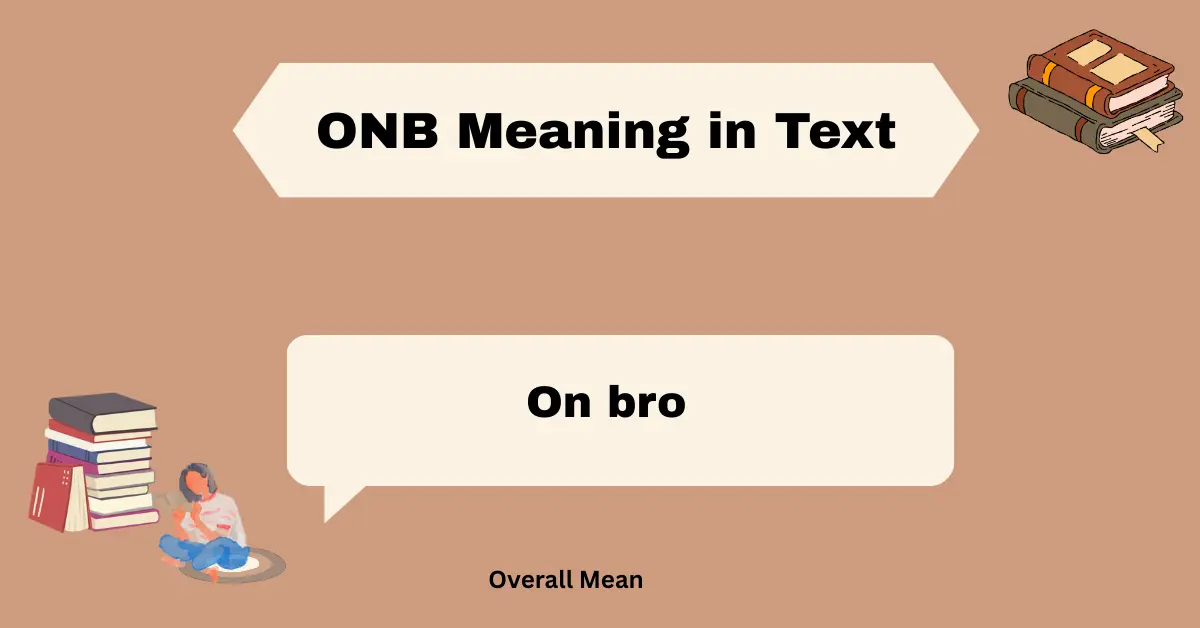
The ONB meaning in text most commonly refers to:
“On bro” — an informal slang phrase used to emphasize truth, sincerity, or agreement.
In plain terms, ONB is a shorthand way of saying:
- “I swear”
- “I’m being serious”
- “I promise this is true”
Literal vs Implied Meaning
- Literal expansion: On bro
- Implied meaning: I’m telling the truth / I’m serious
Example:
“That game was crazy onb”
Meaning:
“That game was genuinely crazy, I’m not exaggerating.”
When It Does NOT Mean What People Assume
ONB does not automatically mean:
- “On behalf”
- “Online banking”
- “Official notification broadcast”
Those meanings exist in formal or technical contexts, not casual texting. In everyday chat, especially among younger users, ONB almost always means “on bro.”
3. Is “ONB” a Slang, Typo, or Intentional Usage?
Slang Usage
Yes — ONB is intentional slang, not a mistake.
It belongs to a category of affirmation slang, similar to:
- fr
- no cap
- ong (on God)
These expressions function as credibility markers — they signal honesty rather than adding new information.
Typing Behavior & Keyboard Influence
ONB appears because:
- It’s faster than typing “on bro”
- Capital letters improve clarity
- Autocorrect doesn’t interfere
In rapid texting, three-letter affirmations are ideal.
How to Tell If It’s Intentional
Ask yourself:
- Is the message casual?
- Is it reinforcing a statement?
- Is it between peers or friends?
If yes, ONB is intentional slang, not a typo.
4. Origin and Evolution of “ONB” in Digital Communication
Early Roots in Spoken English
“On bro” comes from spoken urban English, where phrases like:
- on my mom
- on my life
- on God
were used to reinforce truthfulness.
Transition to SMS and Chat Apps
As texting replaced speech:
- Spoken phrases became typed affirmations
- Long expressions shortened
- Capital letters replaced emphasis
Thus:
on bro → onb
Social Media Amplification
Platforms like:
- Twitter/X
- TikTok
- Discord
accelerated ONB’s spread through:
- captions
- comments
- rapid-fire replies
Why It Still Exists in 2026
Because:
- It’s short
- It’s emotionally expressive
- It signals sincerity instantly
Efficiency keeps slang alive.
5. Real-World Usage Scenarios (Detailed Examples)
a) Casual Friend Conversations
Tone: relaxed, friendly, informal
Examples:
“That movie was fire onb”
“I didn’t even see it coming onb”
Here, ONB adds emotional emphasis, not new facts.
b) Workplace & Professional Chat
Tone: risky, context-dependent
Informal team chat:
“The client approved everything onb”
This may be understood, but still borderline unprofessional.
Formal setting:
❌ Avoid using ONB in emails, proposals, or client messages.
c) Social Media, Gaming, and Online Communities
Tone: expressive, playful, fast-paced
Examples:
“Best update they dropped onb”
“This boss fight impossible onb 😭”
ONB fits naturally in these spaces.
6. Emotional Tone and Intent Behind “ONB”
Friendly vs Neutral vs Awkward
- Friendly: with emojis or casual tone
- Neutral: factual reinforcement
- Awkward: when used without shared context
Emoji & Punctuation Impact
“That was wild onb 😂” → warm
“That was wild onb.” → neutral
“That was wild ONB” → intense emphasis
Digital tone is fragile — ONB relies heavily on context.
7. Cultural and Regional Differences in Usage
Native vs Non-Native Speakers
Non-native speakers often:
- Misinterpret ONB
- Assume it’s technical
- Avoid using it themselves
Regional Patterns
More common in:
- US, UK urban youth culture
- Online global gaming communities
Less common in:
- Formal English regions
- Professional international communication
8. “ONB Meaning in Text” Compared With Similar Texting Terms
| Term | Meaning | Tone | Formality | Best Use Case |
|---|---|---|---|---|
| ONB | On bro | Casual | Very low | Friends, gaming |
| ONG | On God | Strong emphasis | Very low | Social media |
| FR | For real | Casual | Low | Chats |
| No cap | Not lying | Casual | Low | Slang-heavy talk |
| I swear | Literal promise | Medium | Medium | Mixed settings |
9. Common Misunderstandings and Mistakes
Misinterpretation
Mistaking ONB for:
- “On behalf”
- A typo
- A brand or acronym
Autocorrect Issues
ONB is usually safe, but lowercase “onb” can look accidental.
Overuse
Using ONB in every sentence:
- Reduces impact
- Makes writing sloppy
- Feels immature in professional contexts
10. Is “ONB” Polite, Rude, or Unprofessional?
Relationship-Based Analysis
- Friends: ✔ acceptable
- Colleagues: ⚠ risky
- Clients: ❌ avoid
Context-Based Etiquette
If clarity matters more than tone, spell it out.
11. Expert Linguistic Insight (Text Language in 2026)
From a digital linguistics perspective:
- Abbreviations persist due to cognitive efficiency
- Grammar adapts to platform constraints
- Trust markers replace full explanations
ONB functions as a social truth signal, not a grammatical element.
12. How and When You Should Use “ONB”
Do’s
- Use with peers
- Use sparingly
- Match the platform tone
Don’ts
- Don’t use in formal writing
- Don’t assume universal understanding
- Don’t use with authority figures
Safer Alternatives
- “Honestly”
- “I’m serious”
- “For real”
13. FAQs About “ONB Meaning in Text”
Q1: What is the ONB meaning in text?
It usually means “on bro,” expressing sincerity or truth.
Q2: Is ONB slang?
Yes, it’s informal slang used in casual messaging.
Q3: Can ONB mean something else?
Rarely. In texting, it almost always means “on bro.”
Q4: Is ONB rude?
No, but it can sound careless in professional contexts.
Q5: Should I use ONB at work?
Only in very informal internal chats — otherwise avoid it.
Q6: Is ONB used globally?
Yes, mainly through online communities and social media.
Q7: Is ONB still relevant in 2026?
Yes — its efficiency keeps it alive.
14. Final Summary and Key Takeaways
The ONB meaning in text is simple but context-sensitive. It’s a modern affirmation slang meaning “on bro,” used to emphasize honesty or seriousness in casual digital communication.
Key takeaways:
- ONB is intentional, not a typo
- It’s informal and context-dependent
- Best used among friends and peers
- Avoid in professional or unclear situations
Understanding terms like ONB isn’t just about slang — it’s about navigating modern digital language with confidence.