Every year, millions of people around the world exchange a simple yet powerful phrase: Ramadan Mubarak. But what does it actually mean? Why do people send it across WhatsApp, Instagram, and even TikTok? Understanding the meaning behind Ramadan Mubarak isn’t just about translation—it’s about culture, spirituality, and modern communication. In this guide, we’ll break down its meaning, origins, emotional significance, and how to use it confidently in everyday life.
Ramadan Mubarak – Quick Meaning
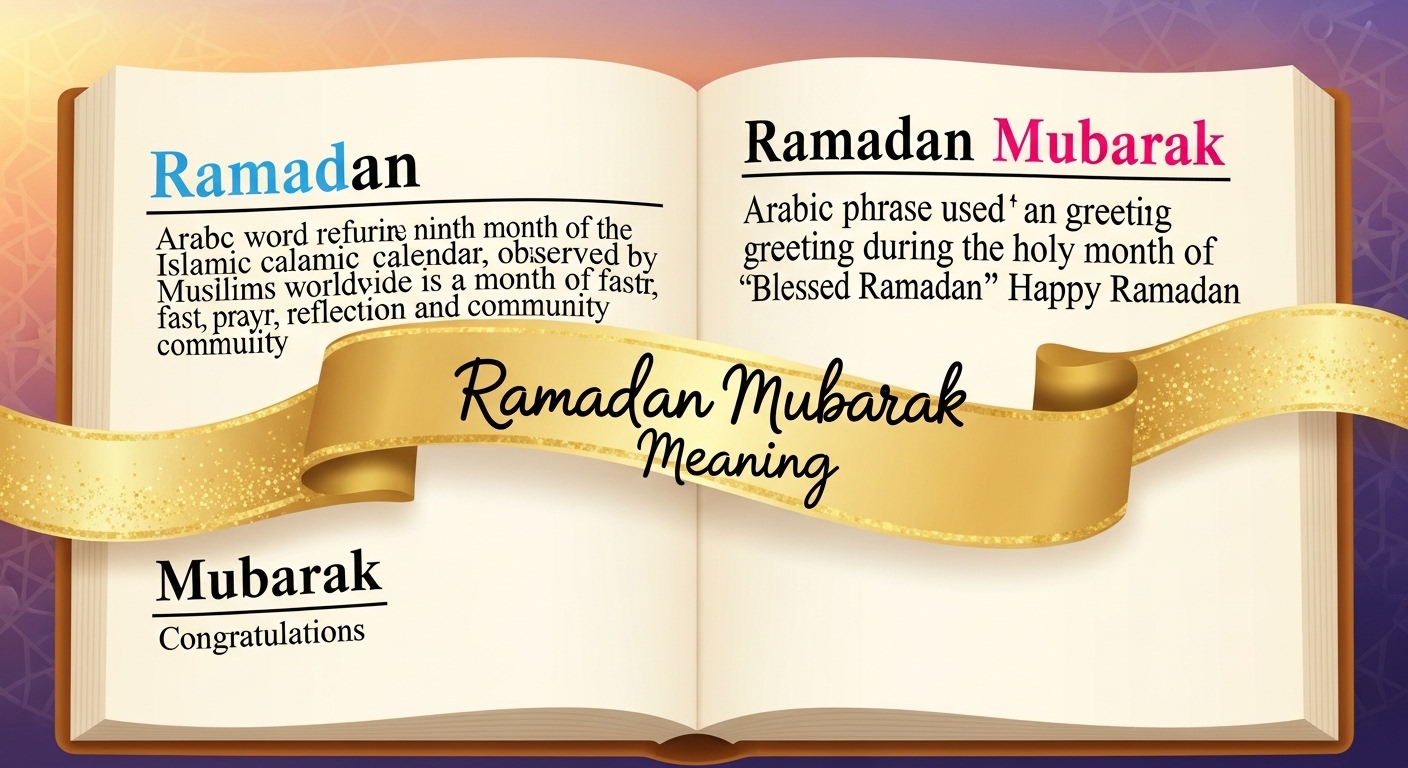
At its core, Ramadan Mubarak is a greeting exchanged during the Islamic holy month of Ramadan.
- Literal translation: “Blessed Ramadan.”
- Purpose: To wish someone a spiritually fulfilling and peaceful month.
- Usage: Commonly sent via texts, social media posts, or in-person greetings.
Examples in real life:
- “Ramadan Mubarak! May this month bring you peace and happiness.”
- “Wishing you a blessed Ramadan, hope it’s full of joy and reflection.”
- “Ramadan Mubarak to your family! Stay safe and blessed.”
In short, it’s more than a greeting—it’s a heartfelt wish for positivity during a sacred period.
Origin & Background
Ramadan Mubarak originates from the Arabic language.
- Religious roots: Islam celebrates Ramadan as a month of fasting, prayer, and reflection. The greeting became a way to express goodwill and spiritual solidarity.
- Cultural influence: Over centuries, the phrase spread across Middle Eastern, South Asian, and African communities, becoming a universal mark of respect and kindness.
- Social media impact: With platforms like Instagram, WhatsApp, and TikTok, people now share digital Ramadan Mubarak cards, GIFs, and posts, blending tradition with modern expression.
- Evolution of meaning: While historically spiritual, today it also carries casual social undertones—acknowledging friendship, connection, and care.
Real-Life Conversations
WhatsApp:
Person A: Ramadan Mubarak! How’s your fasting going?
Person B: Thanks! It’s good so far, a bit challenging at times though. How about yours?
Instagram DMs:
Person A: Just saw your post—Ramadan Mubarak to you and your family!
Person B: Thank you! Same to you! Hope it’s a month full of blessings.
TikTok comments:
Commenter 1: Ramadan Mubarak to everyone celebrating 🌙
Commenter 2: Thank you! May your month be peaceful and happy.
Text message:
Person A: Ramadan Mubarak! Don’t forget the evening prayer tonight.
Person B: Haha thanks for the reminder! Mubarak to you too.
These conversations show how naturally the phrase integrates into both casual and meaningful communication.
Emotional & Psychological Meaning
At its heart, Ramadan Mubarak conveys:
- Positivity: A wish for peace, happiness, and spiritual reflection.
- Connection: Reinforces social and emotional bonds.
- Cultural awareness: Demonstrates respect for Islamic traditions.
Scenario: Imagine a colleague texting you Ramadan Mubarak in the morning. It’s not just a greeting—it signals mindfulness, care, and inclusion. Such gestures strengthen relationships, even in professional environments.
Usage in Different Contexts
- Social media: Shared as posts, stories, or GIFs.
- Friends & relationships: A friendly or heartfelt way to acknowledge the sacred month.
- Work / professional settings: Polite greeting in emails or messages to colleagues observing Ramadan.
- Casual vs serious tone: Can be playful among friends or deeply sincere in family and spiritual contexts.
When NOT to Use It
- Inappropriate contexts: Avoid saying it in non-Islamic religious settings where it may seem forced.
- Cultural sensitivity: Ensure you understand the recipient observes Ramadan.
- Misunderstanding risk: Avoid using it sarcastically or jokingly—it may offend.
Common Misunderstandings
- Literal vs figurative: Some think it’s merely a “hello,” but it’s a blessing.
- Tone confusion: Using it casually in formal settings can appear insincere.
- Overuse: Posting it repeatedly on social media without context may seem impersonal.
Comparison Table
| Expression | Meaning | Context | Tone |
|---|---|---|---|
| Ramadan Mubarak | Blessed Ramadan | Friends, family, colleagues | Warm, respectful |
| Ramadan Kareem | Generous Ramadan | Formal or poetic | Respectful, spiritual |
| Happy Ramadan | Casual greeting | Western contexts | Light, friendly |
| Eid Mubarak | Blessed Eid | End of Ramadan | Festive, celebratory |
| Fasting well? | Inquiry | Friends & family | Casual, curious |
Key Insight: While similar greetings exist, Ramadan Mubarak emphasizes spiritual blessing and goodwill, making it universally safe and respectful for most contexts.
Variations / Types
- Ramadan Kareem – “Generous Ramadan”; emphasizes generosity.
- Blessed Ramadan – English version of Mubarak.
- Happy Ramadan – Casual, Western-friendly.
- Ramadan Mubarak to you and family – Extended formal greeting.
- Warm Ramadan wishes – Modern, polite social media phrasing.
- Peaceful Ramadan – Focuses on serenity and calm.
- Spiritual Ramadan greetings – Highlights reflection and prayer.
- Joyful Ramadan – Celebrates happiness during the month.
- Ramadan blessings – Neutral, versatile, commonly used.
- Heartfelt Ramadan Mubarak – Personal and intimate tone.
How to Respond When Someone Uses It
- Casual replies: “Thanks! Ramadan Mubarak to you too!”
- Funny replies: “Thanks! Don’t eat too many dates 😄”
- Mature replies: “Appreciate it! May your month be peaceful and reflective.”
- Respectful replies: “Thank you! Wishing you a blessed and meaningful Ramadan.”
Regional & Cultural Usage
- Western culture: Often translated as Happy Ramadan for accessibility.
- Asian culture: Particularly in South Asia, often used with additional blessings.
- Middle Eastern culture: Highly formal, deeply spiritual.
- Global internet usage: GIFs, stickers, and memes are common, blending tradition with modernity.
- Generational differences: Gen Z may prefer memes and short text greetings, while Millennials and older generations favor heartfelt phrases.
Is It Safe for Kids?
Yes, Ramadan Mubarak is safe for children. It teaches cultural respect, inclusion, and the joy of sharing blessings. Keep explanations simple: “It’s a way to say ‘have a good and peaceful Ramadan.’”
FAQs
1. Can non-Muslims say Ramadan Mubarak?
Yes, as long as it’s respectful and sincere.
2. What’s the difference between Ramadan Mubarak and Ramadan Kareem?
Mubarak = blessed; Kareem = generous. Both are positive greetings.
3. Is it okay to post Ramadan Mubarak on social media?
Absolutely. Digital greetings are widely accepted.
4. Can it be used in professional emails?
Yes, when addressing colleagues observing Ramadan. Keep tone respectful.
5. Do I need to know Arabic to say it?
No, it’s widely understood globally and often pronounced phonetically.
6. Should I reply every time someone says it?
Polite acknowledgement is ideal, but casual contexts can be skipped.
7. Can it be humorous?
Slightly, with close friends, but avoid sarcasm.
Conclusion
Ramadan Mubarak is more than words—it’s a gesture of goodwill, spiritual reflection, and emotional connection. Whether in texts, social media, or face-to-face, understanding its meaning ensures you communicate with respect and authenticity. By embracing both tradition and modern usage, you can confidently share blessings, strengthen relationships, and participate in a global culture of kindness.