1. Introduction: Why People Search “SMFH Meaning in Text”
If you’ve seen “SMFH” in a message and paused for a second—or reread it twice—you’re not alone.
People search “SMFH meaning in text” because this abbreviation feels emotionally loaded but unclear. It shows up in casual chats, social media replies, gaming lobbies, and sometimes even workplace group messages. The confusion usually comes from tone uncertainty. Is it playful? Angry? Sarcastic? Rude?
In modern texting habits—especially in 2026, where short-form communication dominates—abbreviations carry more emotional weight than full sentences. People type faster, omit punctuation, and rely heavily on shared context. That makes acronyms like SMFH powerful but risky.
This guide explains:
- What SMFH actually means
- How tone and intent change by context
- When it’s harmless vs. offensive
- How different generations and cultures use it
- Whether it’s professional, rude, or acceptable
- When you should never use it
By the end, you’ll understand SMFH better than most native speakers—and know exactly how to interpret or use it without missteps.
2. What Does “SMFH” Mean in Text?
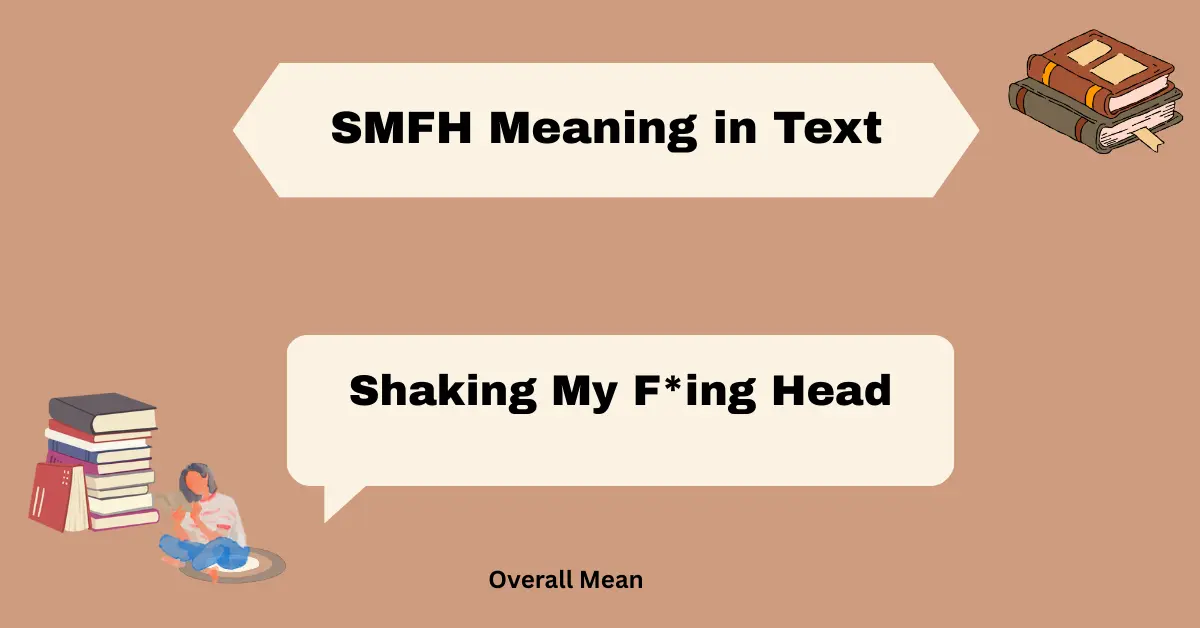
SMFH stands for:
“Shaking My F*ing Head”**
Literal Meaning
At its core, SMFH expresses strong disbelief, frustration, disappointment, or irritation. It’s a more intense version of SMH (Shaking My Head).
Implied Meaning
In real conversations, SMFH often implies:
- “I can’t believe this.”
- “This is ridiculous.”
- “You should know better.”
- “I’m annoyed, but not yelling.”
It’s not just about the situation—it often reflects judgment.
When It Does Not Mean What People Assume
Many assume SMFH always equals anger. That’s not always true.
It can also be:
- Sarcastic (“SMFH you really did that 😭”)
- Playfully dramatic among friends
- Self-directed (“SMFH I forgot my keys again”)
Context determines whether it’s hostile or humorous.
3. Is “SMFH” a Slang, Typo, or Intentional Usage?
Slang Usage
SMFH is intentional slang, not a typo. It belongs to the category of emotive acronyms—terms designed to convey feeling rather than information.
Typing Behavior & Keyboard Influence
People choose SMFH because:
- It’s faster than writing emotion-heavy sentences
- It avoids spelling out profanity
- Mobile keyboards encourage abbreviation over explanation
Intentional Stylistic Choice
Adding the “F” intensifies emotion. Users choose SMFH instead of SMH when:
- The situation feels especially frustrating
- They want to emphasize disbelief
- They’re venting without writing paragraphs
How to Tell the Difference Using Context
Ask yourself:
- Is it followed by emojis? (often softer)
- Is it about a situation or a person?
- Is the sender usually sarcastic or blunt?
Tone lives around the word, not inside it.
4. Origin and Evolution of “SMFH” in Digital Communication
Early Chat & SMS Influence
SMFH emerged in the early 2000s, evolving from:
- SMH (popular in forums and SMS)
- Profanity-based intensifiers common in gamer chats
Character limits pushed users toward compact emotional expressions.
Social Media and Instant Messaging Growth
Platforms like Twitter, Reddit, and Instagram normalized SMFH as:
- A reaction, not a full statement
- A standalone comment
- A response to absurd or controversial content
How Younger Generations Shaped Usage
Gen Z and Gen Alpha reshaped SMFH by:
- Using it ironically
- Pairing it with laughing emojis
- Applying it to minor inconveniences
Why It Still Exists in 2026
SMFH survives because:
- It’s emotionally efficient
- It avoids full profanity filters
- It fits fast, mobile-first communication
- It works across platforms and cultures
5. Real-World Usage Scenarios (Detailed Examples)
a) Casual Friend Conversations
Tone: Informal, emotional, often humorous
Examples:
- “SMFH you really ate my fries 😭”
- “I locked myself out again smfh”
Here, SMFH often targets situations, not people.
b) Workplace & Professional Chat (Formal vs Informal Teams)
Informal Teams (Startups, Slack-heavy culture):
- “SMFH this bug is back again”
Still risky, but sometimes tolerated.
Formal Teams (Corporate, client-facing):
- Avoid entirely
In professional contexts, SMFH can signal:
- Disrespect
- Frustration toward colleagues
- Lack of professionalism
c) Social Media, Gaming, and Online Communities
Tone: Reactive, performative, expressive
Examples:
- “SMFH people still believe this”
- “SMFH matchmaking is broken”
Online, SMFH often invites agreement or debate.
6. Emotional Tone and Intent Behind “SMFH”
Friendly vs Neutral vs Awkward
- Friendly: Paired with emojis or self-blame
- Neutral: Commentary on events
- Awkward: Directed at someone without context
How Punctuation and Emojis Change Meaning
- “SMFH.” → Cold, judgmental
- “SMFH 😂” → Playful disbelief
- “SMFH!!!” → Strong frustration
When It Feels Warm vs Careless
Warm when:
- Used self-referentially
- Used among close friends
Careless when:
- Used toward authority figures
- Used in sensitive conversations
7. Cultural and Regional Differences in Usage
Native vs Non-Native English Speakers
Non-native speakers may:
- Misread SMFH as mild
- Miss the profanity implication
Regional Texting Habits
- US/UK: More normalized
- South Asia & Middle East: Often perceived as rude
- Europe: Depends on digital fluency
Cross-Platform Language Adoption
SMFH is more accepted on:
- Twitter/X
- Discord
Less accepted in:
- Customer support chats
8. “SMFH” Compared With Similar Texting Terms
| Term | Meaning | Tone | Formality | Best Use Case |
|---|---|---|---|---|
| SMH | Shaking my head | Mild | Low | Light disappointment |
| SMFH | Shaking my f***ing head | Strong | Very low | High frustration |
| WTF | What the f*** | Shocked | Very low | Sudden surprise |
| Sigh | Audible frustration | Neutral | Medium | Workplace-safe |
| Facepalm | Embarrassment | Casual | Medium | Mild mistakes |
9. Common Misunderstandings and Mistakes
Misinterpretation Cases
- Assuming it’s always playful
- Missing sarcasm
- Ignoring relationship dynamics
Autocorrect and Keyboard Issues
Sometimes SMFH is typed impulsively, then regretted.
Overuse Problems
Frequent use can make a person seem:
- Negative
- Dismissive
- Emotionally reactive
How to Avoid Confusion
- Add context
- Use emojis intentionally
- Avoid in sensitive discussions
10. Is “SMFH” Polite, Rude, or Unprofessional?
Relationship-Based Analysis
- Friends: Usually okay
- Acquaintances: Risky
- Authority figures: Avoid
Context-Based Analysis
- Venting privately: Acceptable
- Public criticism: Often rude
- Professional settings: Unprofessional
Professional Etiquette Guidance
Replace SMFH with:
- “That’s frustrating”
- “This needs attention”
- “I’m concerned about this”
11. Expert Linguistic Insight (Text Language in 2026)
Digital slang evolves toward:
- Emotional efficiency
- Shared cultural shortcuts
- Tone over grammar
Abbreviations persist because:
- Speed matters
- Mobile communication dominates
- Emotion often matters more than clarity
SMFH reflects compressed emotional expression, not linguistic decay.
12. How and When You Should Use “SMFH”
Do’s
- Use with close friends
- Use self-referentially
- Pair with tone markers
Don’ts
- Use in professional emails
- Use toward strangers
- Use during conflict escalation
Safer Alternatives
- “Wow, that’s frustrating”
- “I can’t believe this”
- “This is disappointing”
13. FAQs About “SMFH”
1. What does SMFH stand for in texting?
It means “Shaking My F***ing Head,” expressing strong frustration or disbelief.
2. Is SMFH worse than SMH?
Yes. The added profanity intensifies the emotion.
3. Can SMFH be playful?
Yes, especially among friends or when paired with emojis.
4. Is SMFH rude?
It can be, depending on context and relationship.
5. Should I use SMFH at work?
No. It’s generally unprofessional.
6. Do older people use SMFH?
Less often. It’s more common among younger, digitally fluent users.
7. Is SMFH still used in 2026?
Yes, especially in social media and informal messaging.
14. Final Summary and Key Takeaways
SMFH is a powerful emotional shorthand that expresses frustration, disbelief, or judgment. Its meaning depends entirely on context, relationship, and tone markers. While common in casual digital spaces, it carries risks in professional or sensitive conversations.
Used wisely, it communicates emotion efficiently. Used carelessly, it can damage tone and relationships.