1. Introduction: Why People Search “WTM Meaning in Text”
The search query “WTM meaning in text” has surged because modern digital conversations move fast—and abbreviations move even faster. People encounter “WTM” in WhatsApp chats, Instagram DMs, Snapchat streaks, Discord servers, or workplace Slack messages and pause for a second wondering: What does that actually mean here?
The confusion is understandable. Unlike older internet slang with a single fixed definition, WTM is context-dependent. It can signal friendliness, impatience, flirtation, or even professional uncertainty depending on who sends it, where it’s sent, and how it’s framed.
In 2026, texting habits are shaped by:
- Short attention spans
- Multilingual users
- AI-assisted typing
- Cross-platform communication (work + social overlap)
This article exists to remove that confusion entirely.
By the end, you’ll understand:
- The exact meaning of WTM in text
- How tone and intent change its interpretation
- When it’s appropriate—or risky—to use
- How professionals, friends, and online communities interpret it
- Why it still survives in modern digital language
2. What Does “WTM Meaning in Text” Actually Mean?
Core Definition
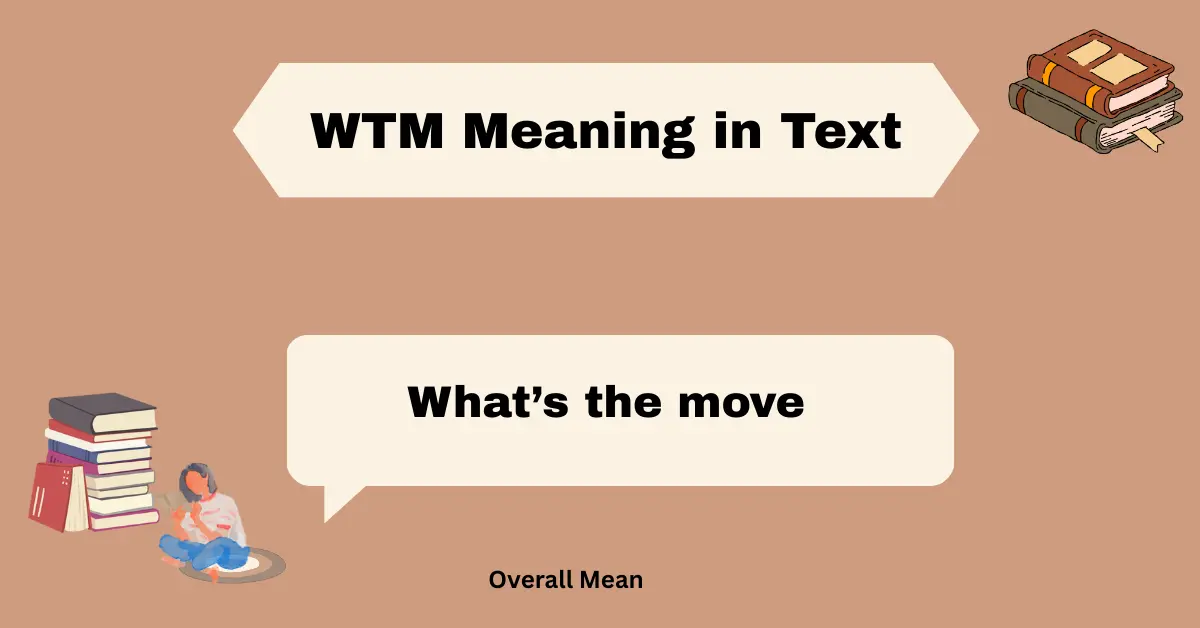
In texting and online messaging, WTM most commonly means:
“What’s the move?”
Literal Meaning
It asks about plans, next steps, or intentions.
Implied Meaning (Contextual)
Depending on the conversation, it may imply:
- “What are we doing next?”
- “What’s the plan?”
- “Are we going out?”
- “What’s happening?”
- “What should we do now?”
When It Does Not Mean What People Assume
Some users mistakenly think WTM means:
- “What time?”
- “Want to meet?”
- “What’s this mean?”
Those interpretations are incorrect unless clearly established earlier in the conversation. Without context, WTM defaults to “What’s the move?”
3. Is “WTM” a Slang, Typo, or Intentional Usage?
Slang Usage
WTM is intentional slang, not a typo. It belongs to conversational shorthand designed for speed and casual tone.
Typing Behavior & Keyboard Influence
Modern predictive keyboards and autocorrect rarely create “WTM” accidentally. If you see it, it was almost certainly typed on purpose.
Intentional Stylistic Usage
People choose WTM to:
- Sound casual
- Avoid sounding demanding
- Keep messages short and open-ended
How to Tell the Difference Using Context
Ask yourself:
- Is the conversation about plans or decisions? → Slang
- Is the sender informal or younger? → Slang
- Is it followed by emojis or casual tone? → Slang
4. Origin and Evolution of “WTM” in Digital Communication
Early Chat & SMS Influence
WTM emerged from early 2000s SMS culture where character limits forced abbreviations.
Social Media & Instant Messaging Evolution
It gained popularity through:
- Twitter/X replies
- Group chats
- Snapchat captions
- Instagram DMs
How Younger Generations Shaped Usage
Gen Z normalized question-based abbreviations like:
- WYA (Where you at)
- WYD (What you doing)
- WTM (What’s the move)
Why It Still Exists in 2026
WTM survives because it’s:
- Efficient
- Emotionally neutral
- Adaptable across cultures
- Easier than typing full sentences
5. Real-World Usage Scenarios (Detailed Examples)
a) Casual Friend Conversations
Tone: Relaxed, friendly
Example:
“I’m free tonight, WTM?”
Meaning: What are we doing? Any plans?
b) Workplace & Professional Chat (Formal vs Informal Teams)
Informal team culture:
“Meeting ended early—WTM?”
Meaning: What’s next on the agenda?
Formal environment:
WTM may feel too casual and should be avoided.
c) Social Media, Gaming, and Online Communities
Tone: Fast-paced, informal
Example:
“Lobby’s full. WTM?”
Meaning: What’s the next game or strategy?
6. Emotional Tone and Intent Behind “WTM”
WTM itself is emotionally neutral, but tone changes with delivery.
Friendly Tone
- “WTM 😊”
- “WTM lol”
Feels inviting and relaxed.
Neutral / Efficient Tone
- “WTM”
Straightforward, no emotion implied.
Awkward or Impatient Tone
- “WTM??”
- “So… WTM.”
May signal frustration or urgency.
7. Cultural and Regional Differences in Usage
Native vs Non-Native English Speakers
Non-native speakers often misinterpret WTM literally and miss its implied meaning.
Regional Texting Habits
- US / UK: Very common
- South Asia: Growing usage in urban digital culture
- Europe: Less common but understood among younger users
Cross-Platform Adoption
WTM appears more often on:
- Snapchat
- Discord
- WhatsApp groups
Than in email or formal platforms.
8. “WTM Meaning in Text” Compared With Similar Texting Terms
| Term | Meaning | Tone | Formality | Best Use |
|---|---|---|---|---|
| WTM | What’s the move? | Casual | Low | Planning |
| WYD | What you doing? | Casual | Low | Check-in |
| WYA | Where you at? | Direct | Low | Location |
| Plans? | Asking about plans | Neutral | Medium | Mixed |
| Next steps? | Task-oriented | Formal | High | Work |
9. Common Misunderstandings and Mistakes
Misinterpretation
Assuming WTM is a command rather than a question.
Autocorrect Issues
Some readers think it’s accidental text. It’s not.
Overuse Problems
Using WTM repeatedly can make you sound lazy or uninterested.
How to Avoid Confusion
Add context:
- “WTM for tonight?”
- “WTM after work?”
10. Is “WTM” Polite, Rude, or Unprofessional?
Relationship-Based Analysis
- Friends: Polite
- Dating: Casual, sometimes flirty
- Colleagues: Depends on culture
Context-Based Analysis
It’s not rude, but can feel dismissive if overused.
Professional Etiquette Guidance
Avoid WTM in:
- Emails
- Client-facing communication
- Formal announcements
11. Expert Linguistic Insight (Text Language in 2026)
Digital language favors:
- Speed over grammar
- Context over completeness
- Efficiency over formality
Abbreviations like WTM persist because:
- They reduce cognitive load
- They signal group belonging
- They adapt across platforms
Language evolution is not decay—it’s optimization.
12. How and When You Should Use “WTM”
Do’s
- Use with friends
- Use in informal teams
- Add context when needed
Don’ts
- Don’t use in formal writing
- Don’t overuse
- Don’t assume everyone understands it
Safer Alternatives
- “What’s the plan?”
- “What should we do next?”
- “Any ideas?”
13. FAQs About “WTM Meaning in Text”
Q1: What does WTM stand for in texting?
It stands for “What’s the move?”
Q2: Is WTM rude?
No, but tone and context matter.
Q3: Can WTM be used professionally?
Only in very informal team chats.
Q4: Does WTM mean “What time?”
No, that’s a common misunderstanding.
Q5: Is WTM flirting?
Sometimes, depending on context and delivery.
Q6: Is WTM still used in 2026?
Yes, especially in casual digital communication.
Q7: Should non-native speakers use WTM?
Only if they’re confident about context.
14. Final Summary and Key Takeaways
The WTM meaning in text is simple on the surface but deeply contextual in practice. It means “What’s the move?”, yet its tone shifts based on relationship, platform, punctuation, and culture.
Key takeaways:
- WTM is intentional slang, not a typo
- Context determines tone and politeness
- It’s casual, efficient, and still relevant in 2026
- Avoid it in formal or unclear situations
- When in doubt, spell it out
Understanding modern texting isn’t about memorizing slang—it’s about reading intent.