If you have spent time on TikTok, Instagram, Snapchat, or texting with friends, chances are you have seen someone say, “I’m feening,” or “I’m feening for you.” At first glance, the word can seem confusing because it is often spelled differently and used in different situations.
Some people use it when they desperately want food. Others use it when talking about a crush, a relationship, or even an addiction. That variety is exactly why so many people search for the meaning of “feening.”
The term carries strong emotional energy. It describes an intense craving, longing, or desire that feels difficult to ignore. Depending on the context, it can sound playful, romantic, dramatic, or serious.
In this guide, you’ll learn exactly what feening means, where it came from, how people use it online, and what it reveals about modern communication.
Feening Meaning – Quick Meaning
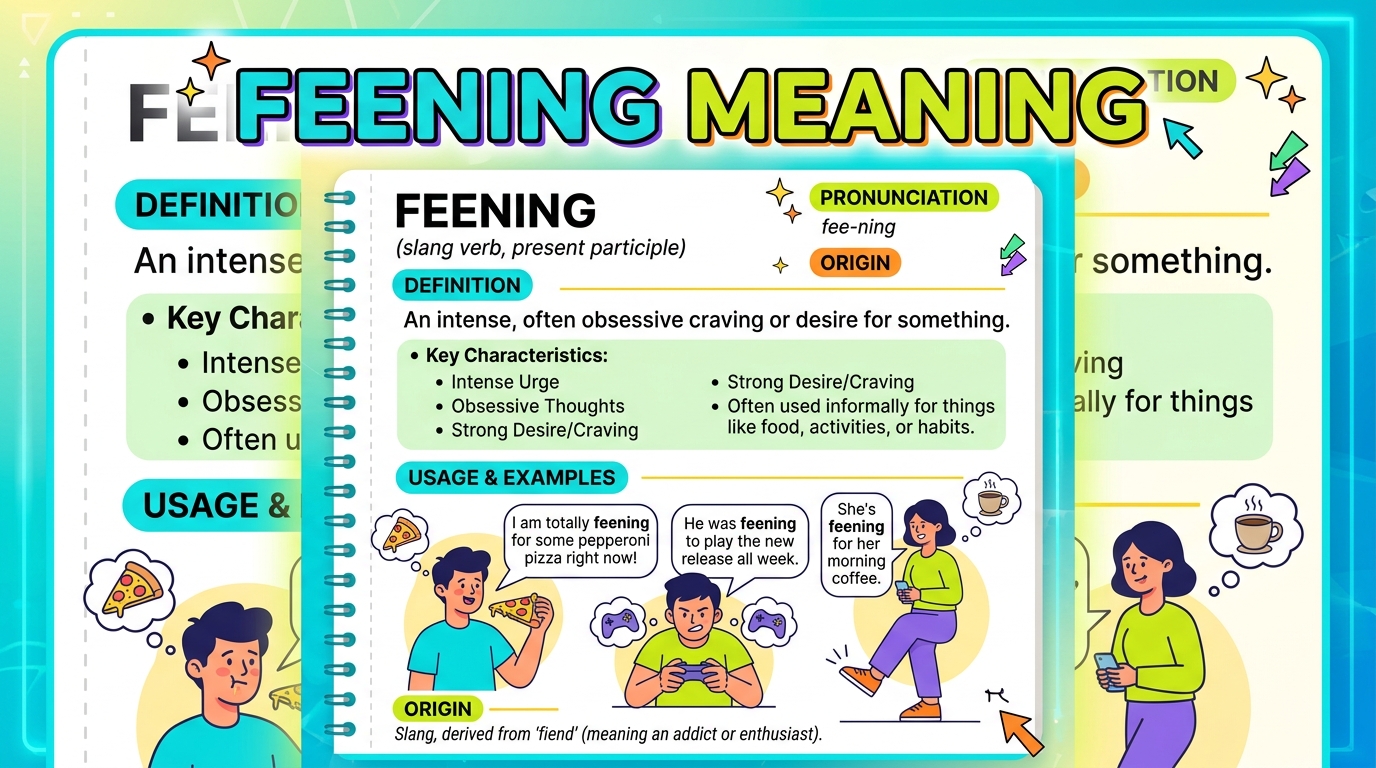
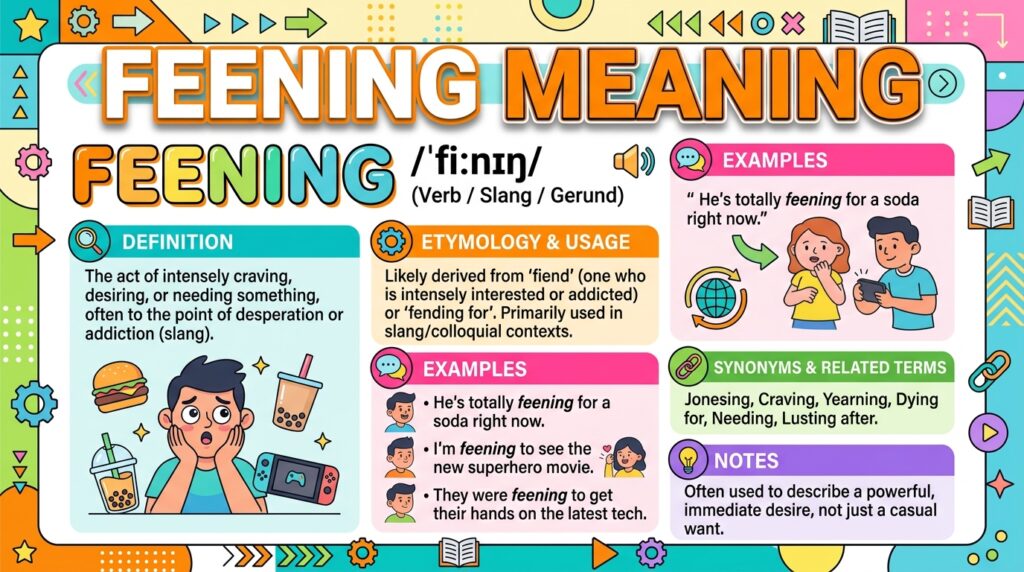
Feening is slang for strongly craving, wanting, or obsessively desiring something or someone.
It often describes a feeling that goes beyond ordinary interest.
Simple Definition
- Strong desire or craving
- Intense longing for something
- Extreme eagerness or obsession
- Sometimes linked to addiction-related language
Examples
“I’m feening for some pizza right now.”
“She’s been feening for his attention all week.”
“Everybody was feening to hear the new album.”
In most casual conversations, the word simply means wanting something very badly.
Origin & Background
The word “feening” comes from fiending, which originated from the word fiend.
Historically, a fiend referred to someone who was excessively attached to something. Over time, urban slang communities began using “fiending” to describe intense cravings, especially related to substances.
As spoken language evolved, many people began spelling it phonetically as feening because that reflects how it sounds when spoken aloud.
Cultural Influence
Hip-hop culture played a major role in popularizing the term. Lyrics often used “fiending” to describe strong desire, obsession, or addiction.
Social Media Impact
Platforms like TikTok and Instagram accelerated the spread of the alternate spelling “feening.”
Today, younger users often write:
- Feening
- Feenin
- Fiending
- Fiendin
All generally express the same emotional idea.
How the Meaning Evolved
Originally, the term carried stronger connections to addiction.
Now it is commonly used for:
- Food cravings
- Romantic attraction
- Attention seeking
- Entertainment excitement
- Emotional longing
The meaning has become broader and more playful.
Fiending or Feening
Many people wonder whether fiending and feening are different words.
The answer is no.
Fiending is the traditional spelling, while feening is a phonetic slang spelling commonly seen online.
Examples:
- “I’m fiending for coffee.”
- “I’m feening for coffee.”
Both sentences communicate the same meaning.
The choice usually depends on personal style and internet culture.
Feening Meaning Slang
In slang, feening means having a powerful desire that feels difficult to control.
People often use it dramatically for emphasis.
Examples include:
- Feening for attention
- Feening for food
- Feening for a relationship
- Feening for new music
The slang version often exaggerates emotions for humor or relatability.
Feening for Someone
When someone says they are feening for someone, they mean they strongly desire that person’s presence, affection, attention, or communication.
The phrase often appears in romantic situations.
It can express:
- Missing someone
- Attraction
- Emotional attachment
- Obsession
The intensity depends on the context and tone.
Feening for Someone Meaning
The phrase “feening for someone” usually means you cannot stop thinking about them.
You want to hear from them, see them, or feel connected to them.
Example:
“I’ve been feening for her text all day.”
This doesn’t necessarily mean unhealthy obsession. Sometimes it simply reflects excitement and emotional anticipation.
Feening Symptoms
Although “feening” is often used casually, it usually describes recognizable emotional behaviors.
Common signs include:
- Constantly checking your phone
- Thinking about something repeatedly
- Feeling impatient
- Increased excitement
- Difficulty focusing on other things
- Emotional restlessness
For example, someone waiting for a message from a crush may jokingly say they’re “feening.”
Feening for Drugs Meaning
Historically, the phrase “feening for drugs” referred to intense cravings experienced by someone seeking a substance.
In this context, the term carries a much more serious meaning.
It may describe:
- Withdrawal cravings
- Strong urges
- Dependency-related behavior
Because of these origins, some people still associate the word with addiction language even when it is used casually online.
Context matters greatly.
Feening Pronunciation
The word is usually pronounced:
Fee-ning
Phonetic pronunciation:
FEE-ning
It sounds almost identical to “fiending” in everyday speech.
This similarity explains why the alternate spelling became so popular online.
Fiending or Feening Meaning
Whether you see fiending or feening, both generally communicate the same idea:
A strong craving, longing, desire, or emotional need.
The difference is mostly spelling preference rather than meaning.
Real-Life Conversations
WhatsApp Conversation
Person A: Where have you been all day?
Person B: Honestly, I’ve been feening for that weekend trip. I can’t focus on anything else.
Instagram DM
Person A: You liked all my stories today.
Person B: Not gonna lie, I’ve been feening for your content lately.
TikTok Comments
Person A: This song drops tomorrow.
Person B: I’ve been feening for this release for months.
Text Message
Person A: Why are you checking your phone every minute?
Person B: Because I’m feening for her reply.
Emotional & Psychological Meaning
At its core, feening expresses emotional intensity.
People rarely use it for things they simply like.
Instead, they use it when a desire feels urgent, exciting, or overwhelming.
Psychologically, the word often communicates anticipation. It captures the uncomfortable gap between wanting something and actually getting it.
I once heard a friend jokingly say he was “feening” after sending a message to someone he liked. He wasn’t truly obsessed. He was simply excited, hopeful, and impatient. That emotional mixture is exactly why the word resonates with so many people.
Modern communication rewards expressive language, and “feening” helps people dramatize feelings in a relatable way.
Usage in Different Contexts
Social Media
People use it to express excitement, anticipation, or strong interest.
Example:
“I’m feening for the next episode.”
Friends & Relationships
It often describes emotional attachment or attraction.
Example:
“She’s feening for his attention.”
Work or Professional Settings
Generally not recommended.
The word is highly informal and may sound unprofessional.
Casual vs Serious Tone
Casually, it means wanting something badly.
In serious conversations involving addiction, it may describe intense cravings.
Always consider context.
When NOT to Use It
Avoid using feening in:
- Formal emails
- Academic writing
- Business meetings
- Professional presentations
- Sensitive addiction discussions unless context requires it
Some people may misunderstand the word because of its historical connection to substance abuse.
When clarity matters, use more direct language.
Common Misunderstandings
Assuming It Always Means Addiction
Many people think feening only refers to drug cravings.
Today, it often describes ordinary desires.
Confusing It With Love
Feening for someone can indicate attraction, but not necessarily love.
Thinking It Is Always Negative
In many cases, the word is playful and harmless.
Missing Tone
The same phrase can sound funny, romantic, or serious depending on context.
Comparison Table
| Phrase | Definition Intent |
|---|---|
| What Does Feening Mean | Explains the basic meaning |
| How to Use Feening | Shows proper usage in conversation |
| Examples of Feening | Demonstrates real-life situations |
| Feening vs Fiending | Compares spelling variations |
| Feening vs Craving | Compares intensity levels |
| Feening vs Wanting | Shows emotional difference |
| Feening vs Obsession | Highlights severity differences |
Key Insight
The word feening sits between ordinary wanting and full obsession. It adds emotional intensity without always implying something serious.
Variations / Types
Feening Meaning
Strong craving or desire.
Feening in Text
Used to express intense wanting during conversations.
Feening Abbreviation
No standard abbreviation exists, though some write “feenin.”
Feening Slang
Modern internet slang for craving something intensely.
Feening in Chat
Often appears in texting and social media conversations.
Feening for Food Meaning
Desperately wanting a specific meal or snack.
Feening for Attention Meaning
Seeking recognition, responses, or validation.
Feening for Love Meaning
Longing for affection or emotional connection.
Feening for Music Meaning
Excitedly waiting for a song or album.
Feening for Someone Meaning
Strongly missing or wanting contact with a person.
How to Respond When Someone Uses It
Casual Replies
- “I can tell.”
- “You’re not the only one.”
- “Same here.”
Funny Replies
- “Stay strong.”
- “The struggle is real.”
- “You’re down bad.”
Mature Replies
- “I understand why you feel that way.”
- “Hopefully you’ll get what you’re waiting for.”
Respectful Replies
- “That sounds important to you.”
- “I hope things work out.”
Regional & Cultural Usage
Western Culture
The term is widely recognized in social media and music culture.
Asian Culture
Usage is growing through internet trends and English-speaking online communities.
Middle Eastern Culture
More common among younger users familiar with global social media.
Global Internet Usage
TikTok, Instagram, and online gaming communities helped spread the term worldwide.
Gen Z vs Millennials
Gen Z uses feening more frequently and casually.
Millennials may be more familiar with the traditional spelling “fiending.”
Is It Safe for Kids?
Generally, yes.
Most young people use feening to describe excitement, cravings, or enthusiasm.
However, parents should understand that the word originated from addiction-related slang. Context determines whether its usage is harmless or more serious.
FAQs
What does feening mean in slang?
Feening is a slang term that means strongly craving, wanting, or obsessing over something or someone. People often use it online to express intense desire, excitement, or anticipation.
What does it mean when someone is feening?
When someone is feening, they are experiencing a strong urge or longing for something they want badly. The feeling can relate to food, attention, entertainment, or a person they miss.
Is it fiending or feening?
Both fiending and feening are commonly used and generally mean the same thing. Fiending is the traditional spelling, while feening is a phonetic internet slang version that became popular on social media.
What is a synonym for feening?
Common synonyms for feening include craving, longing, yearning, wanting, obsessing, and desiring. The best synonym depends on the context and intensity of the feeling being described.
Can feening refer to a person?
Yes, people often say they are feening for someone when they strongly miss that person or want their attention, affection, or company. The phrase is especially common in texting and dating conversations.
Is feening always about addiction?
No, modern slang usage is usually much broader than addiction-related meanings. Most people use it casually to describe strong excitement, desire, or anticipation rather than substance cravings.
How is feening used in a text message?
In texting, feening is often used to emphasize how badly someone wants something. For example, a person might say they are feening for a friend’s reply, a favorite meal, or an upcoming event.
Is feening a negative word?
Not necessarily; the word can be positive, neutral, or negative depending on the situation. Many people use it humorously or playfully to exaggerate their excitement or interest.
Why is feening popular on social media?
Feening became popular because it expresses emotions quickly and dramatically in a relatable way. Platforms like TikTok, Instagram, and Snapchat helped spread the term among younger audiences.
Can feening be used in professional settings?
It is usually best to avoid feening in professional communication because it is informal slang. In work or academic settings, words like eager, interested, or enthusiastic are more appropriate alternatives.
Conclusion
Language constantly evolves, and feening is a perfect example of how people create expressive ways to describe powerful emotions. Whether someone is feening for food, attention, music, or a person they care about, the word captures a feeling that goes beyond ordinary wanting. Understanding its meaning helps you interpret conversations more accurately and communicate with greater confidence. As long as you pay attention to context and audience, feening can be a relatable, vivid, and emotionally rich addition to modern communication.