If you’ve ever seen someone comment “fuego” under a post, caption, or message, you’ve probably felt the energy—even if you weren’t entirely sure what it meant. That’s exactly why people search for fuego meaning. It’s a simple word, yet it carries emotion, style, and intensity in a way that feels instantly powerful.
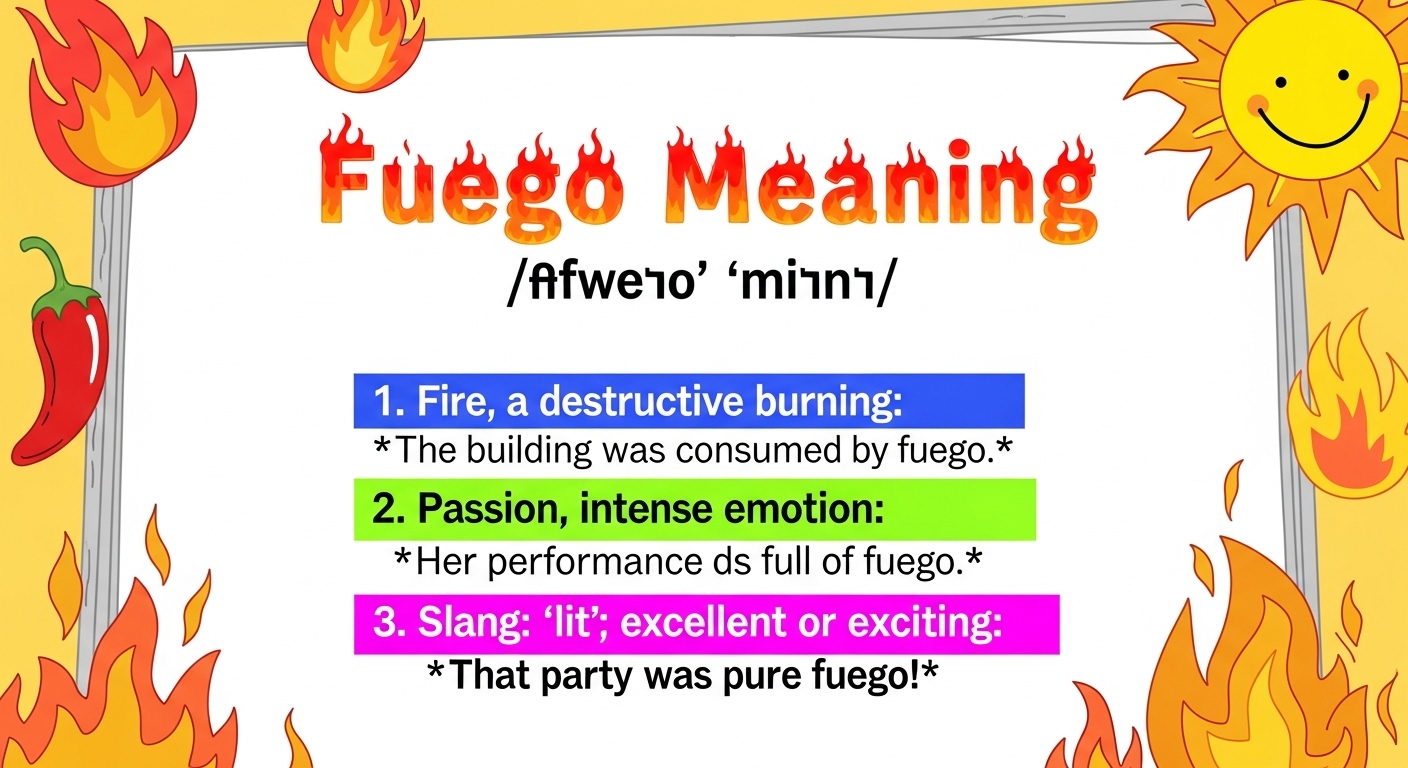
At first glance, it literally means “fire” in Spanish. But in today’s digital world, it has evolved into something much more expressive. People use it to describe anything exciting, attractive, impressive, or emotionally charged.
This article clears up the confusion. You’ll not only understand what “fuego” means—you’ll also learn how, when, and why people use it so naturally in real conversations.
Fuego Meaning – Quick Meaning
“Fuego” = Fire (Spanish)
But in modern slang, it means:
- 🔥 Something amazing or impressive
- 🔥 Extremely attractive or “hot”
- 🔥 High energy, exciting, or powerful
Examples:
- “That outfit is fuego 🔥”
- “Bro, this song is straight fuego”
- “Her performance? Fuego, no doubt.”
In simple terms, when someone says fuego, they’re saying:
👉 “This is next-level good.”
Origin & Background
“Fuego” comes directly from Spanish, where it literally means fire. Traditionally, it was used in everyday language—talking about heat, flames, or passion.
But things changed with globalization and internet culture.
As Latin music, fashion, and slang became more influential worldwide, words like fuego crossed language barriers. Platforms like TikTok, Instagram, and YouTube accelerated this shift. Suddenly, people who didn’t speak Spanish were using “fuego” to describe music, outfits, and even personalities.
Its evolution is fascinating:
- Original meaning: Physical fire
- Cultural meaning: Passion, intensity
- Modern slang: Cool, hot, amazing
Today, “fuego” is less about literal flames—and more about emotional impact.
Real-Life Conversations
Here’s how “fuego” naturally shows up in everyday chats:
WhatsApp Chat
Person A: Did you see Ali’s new car?
Person B: Yeah bro… that’s fuego 🔥
Instagram DM
Person A: Just posted a new pic
Person B: I just saw it… fuego vibes 🔥
TikTok Comments
User 1: This beat goes cr*zy
User 2: Nah fr, it’s fuego
Text Message
Person A: How’s the new restaurant?
Person B: Food was fuego… you need to try it
These aren’t forced. They’re natural. That’s why the word feels so alive.
Emotional & Psychological Meaning
“Fuego” isn’t just a word—it’s an emotional shortcut.
When people use it, they’re expressing:
- Excitement
- Admiration
- Attraction
- Approval
It’s quick, expressive, and carries more feeling than saying “good” or “nice.”
From a psychological perspective, modern communication favors impact over explanation. Instead of long compliments, people drop one powerful word—fuego—and it instantly delivers emotion.
Real-life scenario:
You’re scrolling Instagram late at night. You see a photo that genuinely impresses you. Instead of typing a long message, you comment:
👉 “Fuego 🔥”
It feels effortless—but still meaningful.
That’s the power of emotional shorthand.
Usage in Different Contexts
Social Media
Most common place to use “fuego.”
- Comments
- Captions
- Reactions
Example: “This reel is fuego 🔥”
Friends & Relationships
Used casually to compliment or hype someone.
- “You look fuego today”
- “That idea is fuego”
Work / Professional Settings
Be careful here.
It can feel too informal unless you’re in a creative or relaxed environment.
Better avoided in formal emails or meetings.
Casual vs Serious Tone
- Casual: Perfect fit
- Serious: Might feel inappropriate or childish
It’s a vibe-driven word, not a formal one.
When NOT to Use It
Even though it’s popular, “fuego” doesn’t fit everywhere.
Avoid using it:
- In professional emails or formal presentations
- In sensitive or serious discussions
- With people unfamiliar with slang
- In cross-cultural situations where it may confuse
Also, overusing it can make you sound repetitive rather than expressive.
Common Misunderstandings
Here’s where people get confused:
1. Thinking It Always Means “Hot”
It can mean attractive—but also impressive, exciting, or high-quality.
2. Using It Literally
Some people assume it’s always about actual fire. In slang, it’s mostly figurative.
3. Tone Misinterpretation
Sometimes “fuego” can sound flirtatious—even if that wasn’t the intention.
4. Overusing It
If everything is “fuego,” the word loses impact.
Comparison Table
| Phrase | Meaning | Intent |
|---|---|---|
| What Does fuego Mean | Fire / amazing / hot | Definition |
| How to Use fuego | Compliment or hype something | Usage |
| Examples of fuego | “That song is fuego” | Practical use |
| fuego vs “lit” | Both mean exciting, but “fuego” feels more stylish | Comparison |
Key Insight:
“Fuego” stands out because it blends cultural depth with emotional intensity—making it feel more expressive than typical slang like “cool” or “lit.”
Variations / Types
Here are popular variations of “fuego”:
- Fuego meaning: Something amazing or exciting
- Fuego in text: “That pic is fuego 🔥”
- Fuego abbreviation: Rarely abbreviated, often paired with 🔥 emoji
- Fuego slang: Means stylish, hot, impressive
- Fuego in chat: Used as quick praise
More variations:
- On fuego: Performing extremely well
- Stay fuego: Stay confident and energetic
- Fuego vibes: Strong, positive energy
- Pure fuego: Exceptionally good
- Fuego energy: Passionate and bold personality
How to Respond When Someone Uses It
Casual Replies
- “Haha thanks 🔥”
- “Appreciate it!”
Funny Replies
- “Careful, I might burn 🔥😂”
- “Too hot to handle”
Mature Replies
- “That means a lot, thank you”
- “Glad you liked it”
Respectful Replies
- “I appreciate the compliment”
- “Thank you, that’s kind of you”
Regional & Cultural Usage
Western Culture
Common in pop culture, music, and fashion.
Asian Culture
Used mostly by younger audiences influenced by global trends.
Middle Eastern Culture
Growing in popularity, especially in social media slang.
Global Internet Usage
Now universally recognized as a compliment.
Generational Differences
- Gen Z: Uses it frequently and naturally
- Millennials: Use it, but less often
- Older generations: May find it unfamiliar
Is It Safe for Kids?
Yes—generally safe.
“Fuego” is not offensive. However, context matters. When used to describe people, it can sometimes imply attractiveness, so guidance may be helpful for younger users.
FAQs
1. Does fuego always mean “hot”?
Not always. It can mean exciting, impressive, or amazing.
2. Is fuego slang or a real word?
Both. It’s a real Spanish word and also widely used as slang.
3. Can I use fuego in formal writing?
It’s better to avoid it in formal situations.
4. Is fuego the same as “lit”?
Similar, but “fuego” feels more expressive and stylish.
5. Why do people use fuego instead of “good”?
Because it carries stronger emotion and personality.
6. Can fuego be flirtatious?
Yes, depending on context.
7. Is fuego used worldwide?
Yes, especially on social media platforms.
Conclusion
Language evolves, and “fuego” is a perfect example of how a simple word can transform into something emotionally powerful. What started as a literal reference to fire now symbolizes energy, attraction, and excitement in modern communication. It’s quick, expressive, and deeply connected to how people share feelings today. When used naturally, it adds personality and intensity to conversations without needing long explanations. Just remember—context matters. Use it where it fits, avoid overusing it, and let it enhance your communication. Once you understand its rhythm, “fuego” becomes more than a word—it becomes a feeling you can instantly share.