1. Introduction: Why People Search “FWIW Meaning in Text”
If you’ve ever seen someone drop “FWIW” into a message, tweet, Slack reply, or Reddit comment and felt unsure about what they meant, you’re not alone.
In 2026, digital communication is faster, shorter, and more layered with implied meaning than ever before. People no longer just type sentences — they send compressed signals of tone, emotion, and intent using abbreviations, emojis, punctuation, and slang.
That’s exactly why people search “FWIW meaning in text.”
They want to know:
- Is it polite or dismissive?
- Is it casual or professional?
- Is it supportive or argumentative?
- Should I use it in work messages?
The problem is that FWIW doesn’t have just one emotional meaning.
It changes depending on tone, platform, relationship, and context.
In this guide, you’ll learn:
- The exact meaning of FWIW
- How it is really used in modern texting and online speech
- When it sounds helpful vs passive-aggressive
- Whether it’s professional or risky
- And how to use it correctly in 2026
Let’s decode it.
2. What Does “FWIW Meaning in Text” Actually Mean?
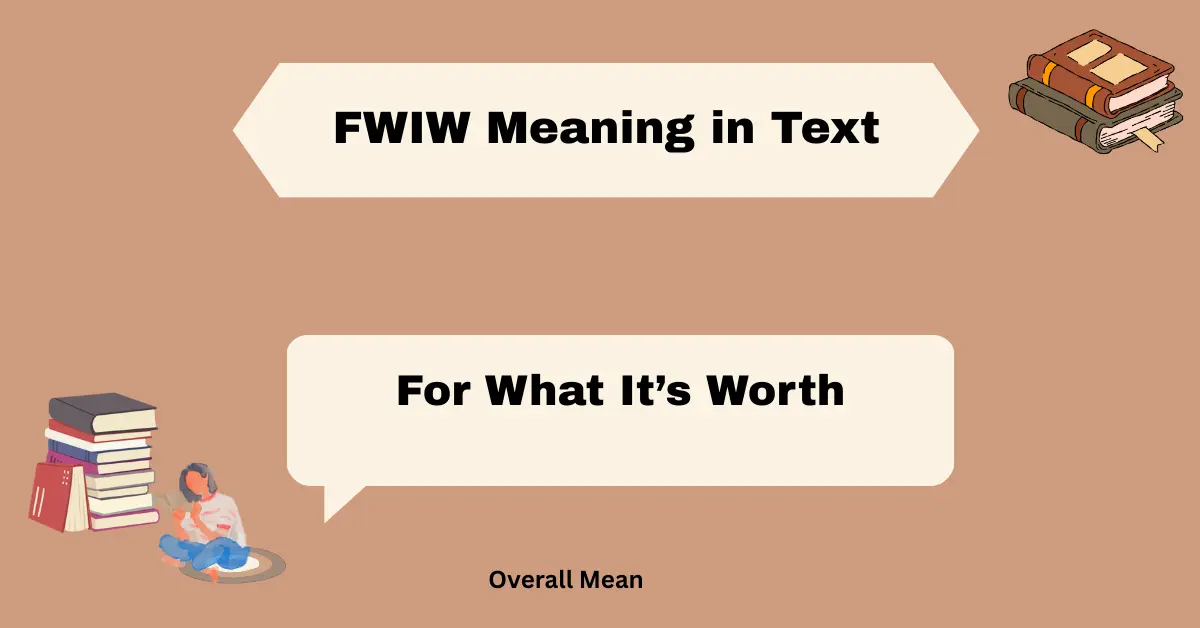
FWIW stands for:
“For What It’s Worth”
Literal Meaning
At a basic level, FWIW means:
“This information may or may not be important, but I’m sharing it anyway.”
It’s a way of softening a statement by signaling that the speaker is not forcing their opinion — they’re just offering it.
Implied Meaning in Text
In modern texting, FWIW often implies:
- “I don’t want to sound pushy…”
- “I’m not saying you’re wrong…”
- “Take this how you want…”
So instead of being direct, it becomes a polite disclaimer before giving advice, facts, or a different opinion.
Example:
“FWIW, I had a great experience with that company.”
This means:
“I’m not telling you what to think, but this was my experience.”
When It Does NOT Mean What People Think
FWIW does not mean:
- “I don’t care”
- “This is worthless”
- “Ignore this”
Even though the phrase contains the word worth, it is not dismissive.
It’s actually a way to lower the emotional weight of what you’re about to say.
3. Is “FWIW” Slang, a Typo, or Intentional Usage?
FWIW is not a typo.
It is an intentional digital abbreviation.
Is FWIW Slang?
Yes — but not in a trendy or juvenile way.
FWIW belongs to functional internet slang, meaning:
- It exists to save time
- It compresses tone
- It helps avoid conflict
It is commonly used by:
- Adults
- Professionals
- Forum users
- Redditors
- Gamers
- Social media writers
Unlike “LOL” or “OMG,” FWIW is about communication strategy, not emotion.
Why People Use It
People use FWIW because they want to:
- Sound neutral
- Avoid confrontation
- Add context
- Share something without pressure
How to Tell What It Means From Context
Look at what comes after FWIW:
- Advice → soft suggestion
- Opinion → gentle disagreement
- Experience → neutral sharing
- Fact → added context
Example:
“FWIW, the deadline is actually tomorrow.”
That’s not rude — it’s useful clarification.
4. Origin and Evolution of FWIW in Digital Communication
FWIW existed in spoken English long before the internet.
People said:
“For what it’s worth…”
as a polite way to introduce:
- Opinions
- Corrections
- Personal experience
Early Digital Use
FWIW became popular in:
- 1990s email
- Online forums
- Early chat rooms
- Business email chains
It was perfect for text because it:
- Was polite
- Prevented arguments
- Softened criticism
Why It Survived Into 2026
Many abbreviations died.
FWIW didn’t — because it serves a real psychological purpose.
In today’s world of:
- Cancel culture
- Screenshotting
- Online arguments
- Workplace Slack messages
People need ways to share opinions safely.
FWIW does exactly that.
5. Real-World Usage Scenarios
a) Casual Friend Conversations
Friends use FWIW when they don’t want to sound bossy.
Example:
“FWIW, I think he was just tired, not mad.”
Tone:
Supportive, calm, non-judgmental.
b) Workplace & Professional Chat
In modern remote work, FWIW is common in:
- Slack
- Teams
Example:
“FWIW, the client asked for a revised version yesterday.”
Tone:
Helpful, neutral, non-confrontational.
It avoids sounding like:
“You messed up.”
c) Social Media, Gaming, and Online Communities
Here, FWIW often introduces:
- A counter-opinion
- A personal experience
Example:
“FWIW, I didn’t have any bugs on PS5.”
Tone:
Non-aggressive disagreement.
6. Emotional Tone and Intent Behind FWIW
FWIW can feel different based on how it’s written.
Neutral
“FWIW, the store closes at 8.”
Simple fact.
Friendly
“FWIW 😊 I really liked your idea!”
Emoji softens it.
Awkward
“FWIW… I wouldn’t do it that way.”
Ellipses make it hesitant or passive-aggressive.
7. Cultural and Regional Differences
Native English speakers use FWIW instinctively.
Non-native speakers may misread it as:
- Dismissive
- Sarcastic
In the US, UK, Canada, and Australia:
FWIW is polite and common.
On global platforms:
It may confuse people unfamiliar with idiomatic English.
8. FWIW Compared With Similar Texting Terms
| Term | Meaning | Tone | Formality | Best Use |
|---|---|---|---|---|
| FWIW | For what it’s worth | Neutral | Medium | Soft opinions |
| IMO | In my opinion | Casual | Low | Personal views |
| FYI | For your information | Direct | Medium | Sharing facts |
| TBH | To be honest | Emotional | Low | Confessions |
| Just saying | Disclaimer | Casual | Low | Opinions |
9. Common Misunderstandings
Mistake 1: Thinking It Means “I Don’t Care”
Wrong. It means “I’m sharing without forcing.”
Mistake 2: Using It to Criticize
Bad:
“FWIW, your work was messy.”
That sounds passive-aggressive.
Better:
“FWIW, I think a few sections could be clearer.”
10. Is FWIW Polite, Rude, or Unprofessional?
FWIW is:
- Polite when offering help
- Neutral in professional settings
- Rude only if used before insults
It is safe for:
- Slack
- Work emails
- Online discussions
Avoid it only when:
- You need to be very formal
- You are delivering serious criticism
11. Expert Linguistic Insight (Text Language in 2026)
Modern digital language favors:
- Softening words
- Emotional buffering
- Low-conflict communication
FWIW works because it:
- Reduces social risk
- Signals humility
- Keeps conversations calm
That’s why it hasn’t disappeared.
12. How and When You Should Use FWIW
Do:
- Use it before advice
- Use it when sharing experience
- Use it to avoid sounding bossy
Don’t:
- Use it before insults
- Overuse it
- Use it to avoid responsibility
Alternatives:
- “Just my experience…”
- “In case it helps…”
- “From what I’ve seen…”
13. FAQs About FWIW Meaning in Text
1. What does FWIW stand for?
For what it’s worth.
2. Is FWIW rude?
No, it is usually polite and neutral.
3. Can I use FWIW at work?
Yes, especially in chats and emails.
4. Is FWIW slang?
Yes, it is a digital abbreviation.
5. Does FWIW mean “I don’t care”?
No. It means “I’m sharing without pressure.”
6. Can it sound passive-aggressive?
Yes, if paired with criticism.
7. Is it still used in 2026?
Yes — especially in professional and online spaces.
14. Final Summary and Key Takeaways
FWIW is one of the most misunderstood abbreviations in modern texting.
It does not mean:
“I don’t care.”
It means:
“Here’s something that might help — take it or leave it.”
It exists to:
- Reduce tension
- Add context
- Share opinions gently
In 2026, as communication becomes faster and more emotionally sensitive, FWIW remains valuable because it keeps conversations polite, calm, and flexible.