In today’s fast-moving digital world, short text abbreviations shape how we communicate online. One of the most common is “FYI,” a phrase used daily in WhatsApp chats, work emails, Instagram DMs, Slack messages, and social media conversations. While most people know FYI stands for “For Your Information,” many still misunderstand the tone behind it.
Depending on context, FYI can sound helpful, professional, cold, polite, or even passive-aggressive. That is why thousands of users search for “FYI meaning in text” every month to understand what someone actually means when using it.
This complete 2026 guide explains the exact meaning of FYI in texting, where it came from, how it is used across different platforms, when it sounds rude or friendly, and the best alternatives to use in modern conversations.
2. What Does “FYI Meaning in Text” Mean?
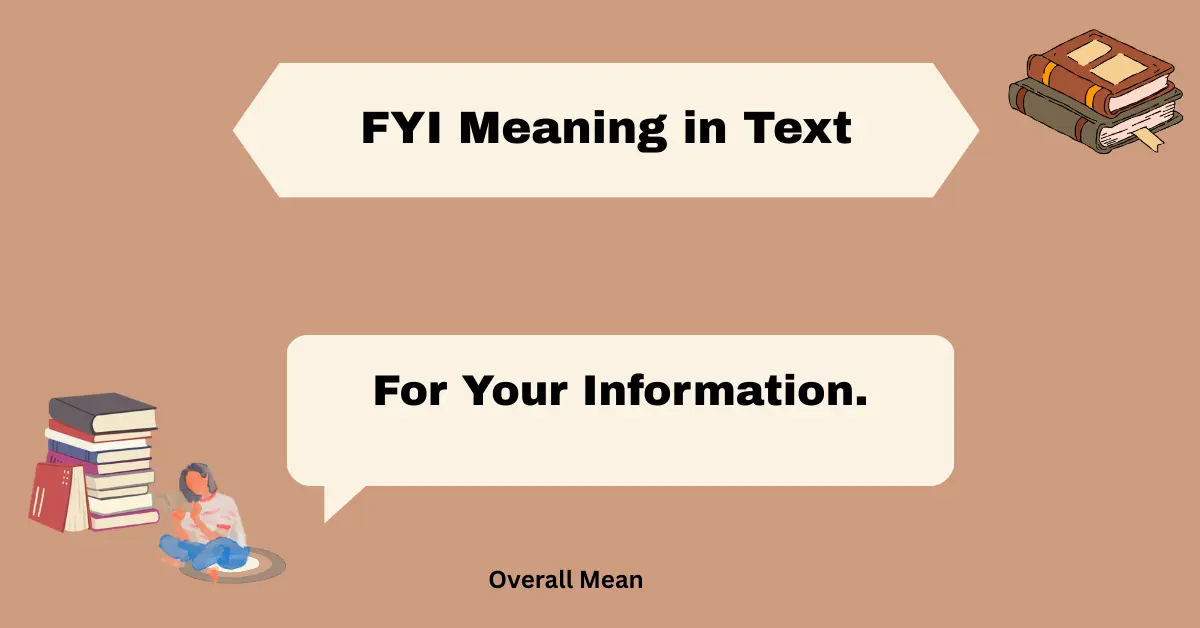
FYI stands for “For Your Information.”
In texting and online communication, it means:
“I am sharing this with you so you are aware.”
It is not a question.
It is not a command.
It is a notification.
Literal meaning
“I am providing this information to you.”
Implied meaning
Depending on tone and context, it can also imply:
- “This might be useful”
- “You should know this”
- “This affects you”
- “This clarifies something”
When FYI does NOT mean what people think
FYI does not mean:
- “You are wrong”
- “You messed up”
- “I’m angry”
- “This is urgent”
Those meanings only appear when the context or punctuation adds emotional weight.
3. Is “FYI” a Slang, Typo, or Intentional Usage?
FYI is not slang.
It is a formal abbreviation that entered casual texting.
Why people think it is slang
It is short, fast, and often used in informal chats — but it originally comes from professional and academic writing.
Why people type FYI
- Keyboard efficiency
- Habit from work email
- Professional tone in short messages
- Cross-platform consistency
How to tell if FYI is neutral or loaded
Look at what follows it.
Compare:
- “FYI the meeting moved to 3pm.” → neutral
- “FYI you were supposed to do this.” → critical
- “FYI 😊 the package arrived.” → friendly
Context decides tone — not the word itself.
4. Origin and Evolution of “FYI” in Digital Communication
FYI existed long before texting.
Early origins
FYI was used in:
- Business memos
- Military reports
- Office letters
It was a way to flag information that was not a request.
SMS and chat era
When texting became common in the 1990s and 2000s, people shortened phrases. FYI survived because:
- It was already short
- It sounded professional
- It saved time
Social media impact
Slack, Discord, and WhatsApp made FYI a bridge between work and casual chat.
Why FYI still exists in 2026
Even with voice notes and AI messaging:
- People want fast, neutral alerts
- FYI signals “read this when you can”
- It avoids emotional tone
5. Real-World Usage Scenarios
a) Casual Friend Conversations
Friends use FYI when sharing helpful info.
Examples:
- “FYI the café closes at 8 now.”
- “FYI your phone is still in my car.”
- “FYI Netflix removed that movie.”
Tone: helpful, neutral, sometimes caring.
b) Workplace & Professional Chat
In work chats, FYI signals non-urgent updates.
Examples:
- “FYI the client approved the design.”
- “FYI the deadline moved to Friday.”
- “FYI the report is in the shared folder.”
Tone: professional, efficient.
In strict workplaces, FYI replaces long explanations.
c) Social Media, Gaming & Online Communities
FYI is used to share knowledge.
Examples:
- “FYI this skin is limited.”
- “FYI the server resets at midnight.”
- “FYI that rumor is fake.”
Tone: informative, community-focused.
6. Emotional Tone and Intent Behind “FYI”
FYI can feel different depending on how it is delivered.
Neutral
“FYI the update is live.”
Friendly
“FYI 😊 your order arrived!”
Cold
“FYI the policy was already explained.”
Passive-aggressive
“FYI you were tagged in this.”
Punctuation matters:
- “FYI.” → cold
- “FYI!” → forceful
- “FYI 🙂” → soft
7. Cultural and Regional Differences
Native English speakers
Use FYI naturally and without emotional weight.
Non-native speakers
May think FYI sounds rude because it is short.
Regional differences
- US & UK: very common
- Asia & Middle East: used mainly in work
- Europe: more formal
On WhatsApp, FYI is often seen as professional even between friends.
8. “FYI” Compared With Similar Texting Terms
| Term | Meaning | Tone | Formality | Best Use |
|---|---|---|---|---|
| FYI | For your information | Neutral | Medium | Updates |
| Just so you know | Awareness | Friendly | Low | Soft reminders |
| Heads up | Warning | Casual | Low | Early notice |
| Note that | Instructional | Formal | High | Documents |
| BTW | By the way | Casual | Low | Side info |
| ICYMI | If you missed it | Casual | Low | Social posts |
FYI is more neutral than “heads up” and more professional than “BTW.”
9. Common Misunderstandings and Mistakes
People think FYI means anger
It does not — tone comes from context.
Autocorrect issues
Some phones change FYI to “fyi,” making it look casual.
Overuse
Using FYI too often makes you sound robotic.
Avoid confusion by:
- Adding a smile emoji
- Adding “just” before FYI
- Writing a short explanation
10. Is “FYI” Polite, Rude, or Unprofessional?
It depends on relationship and context.
Polite when:
- Used to help
- Used to inform
- Used without blame
Rude when:
- Used before criticism
- Used in arguments
- Used with “you should have…”
Professional when:
- Sharing updates
- Clarifying info
- Sending reminders
Never use FYI to correct someone publicly.
11. Expert Linguistic Insight (Text Language in 2026)
Digital language evolves toward efficiency.
FYI survives because:
- It compresses meaning
- It avoids emotion
- It fits all platforms
In 2026, people mix AI writing with human tone. FYI remains useful because it signals information without pressure.
Abbreviations do not disappear — they adapt.
12. How and When You Should Use “FYI”
Use FYI when:
- Sharing news
- Giving updates
- Offering helpful info
Avoid FYI when:
- Apologizing
- Arguing
- Expressing feelings
Safer alternatives:
- “Just letting you know…”
- “Quick update…”
- “In case you didn’t know…”
13. FAQs About “FYI Meaning in Text”
1. Does FYI mean something bad?
No. It only means “for your information.”
2. Is FYI rude in texting?
Only if used before criticism.
3. Can I use FYI with my boss?
Yes. It is professional and common.
4. Why does FYI sound cold sometimes?
Because it is short and emotion-neutral.
5. Is FYI outdated?
No. It is still widely used in 2026.
6. Should I use FYI with friends?
Yes, but add warmth if needed.
7. What emoji works with FYI?
🙂 😊 👍 soften the tone.
14. Final Summary and Key Takeaways
The FYI meaning in text is simple: for your information.
But its emotional tone depends entirely on context.
FYI is:
- Neutral
- Professional
- Efficient
- Still relevant in 2026
Use it to share, not to judge.