We’ve all met someone who just feels… too much. Maybe they dominate every conversation, refuse to listen, or constantly complain. That’s usually when the word “insufferable” comes to mind.
But what does insufferable meaning really capture?
People search for this term not just for a dictionary definition—but because they’ve experienced it. It’s a word tied to emotion, frustration, and sometimes even guilt. You might wonder:
- Am I being insufferable?
- Is someone in my life crossing a line?
- Why does this word feel so intense?
This article clears that confusion. We’ll explore not just the definition, but the human behavior behind it—how it’s used, misunderstood, and felt in real life.
Insufferable Meaning – Quick Meaning
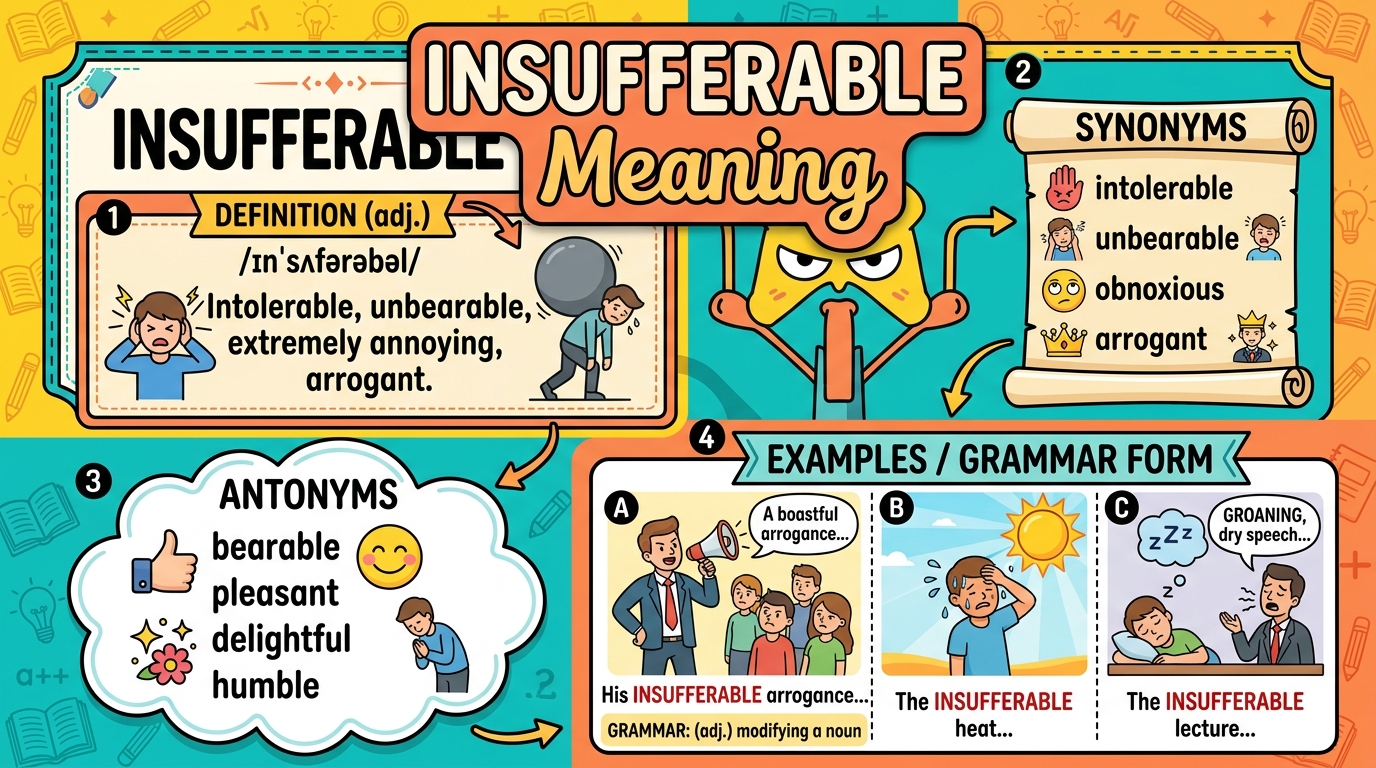
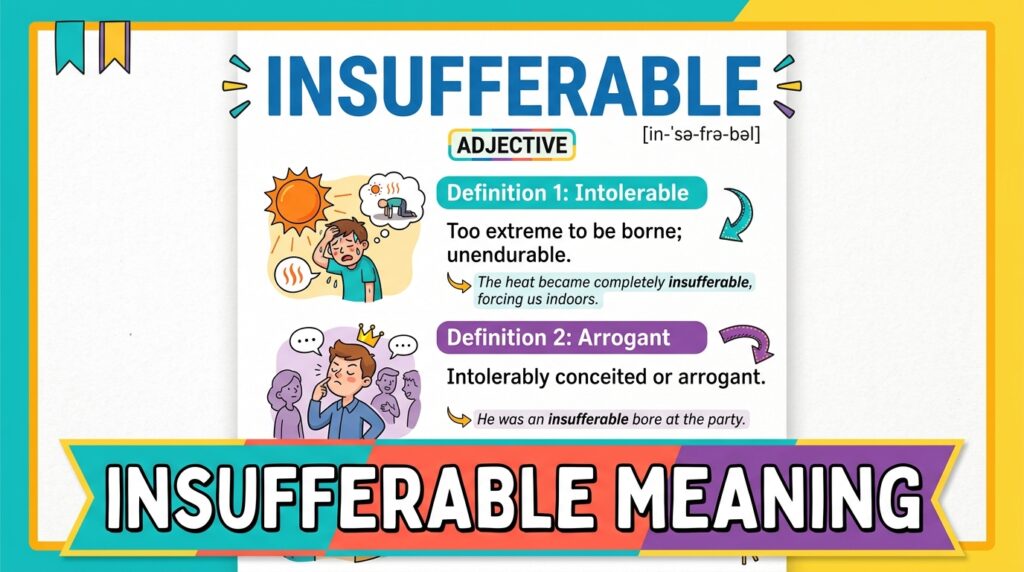
Insufferable describes someone or something that is extremely annoying, unbearable, or difficult to tolerate.
Simple Breakdown:
- Emotion behind it: Irritation, frustration, overwhelm
- Intensity: Strong (more than just “annoying”)
- Usage: Describes behavior, attitude, or personality
Quick Examples:
- “He’s so insufferable when he starts bragging.”
- “This heat is absolutely insufferable today.”
- “I love her, but she can be insufferable sometimes.”
It’s not a casual word—it carries weight.
Origin & Background
The word insufferable comes from the Latin insufferabilis, meaning “that cannot be endured.”
Over time, it moved into Middle English, keeping its core meaning: something that pushes beyond the limits of patience.
Cultural Evolution:
- Classic literature used it to describe arrogance or pride.
- In modern times, it’s often tied to personality traits—like ego, negativity, or attention-seeking.
Social Media Influence:
Today, platforms like TikTok and Instagram have amplified the word:
- “Main character energy” sometimes gets labeled as insufferable
- Overconfidence online is often criticized using this term
The meaning hasn’t changed—but its usage has become more emotionally expressive.
Real-Life Conversations
1. WhatsApp Chat
Person A: I tried explaining calmly, but he kept interrupting.
Person B: Ugh, that’s insufferable. I’d lose my patience too.
2. Instagram DMs
Person A: Did you see her story? Another “look at me” post.
Person B: Honestly, it’s getting insufferable at this point.
3. TikTok Comments
User1: Why does he act like he knows everything?
User2: Because he’s insufferable 😂
4. Text Message
Person A: My boss keeps micromanaging every tiny thing.
Person B: That sounds insufferable. How are you even dealing with it?
These conversations show something important: the word often comes from shared frustration.
Emotional & Psychological Meaning
Calling someone insufferable isn’t just about behavior—it’s about emotional overload.
What It Expresses:
- Loss of patience
- Feeling unheard or disrespected
- Emotional exhaustion
Why People Use It:
- When “annoying” feels too weak
- When behavior becomes repetitive
- When tolerance reaches its limit
What It Reveals:
In modern communication, people are less willing to tolerate:
- Constant negativity
- Ego-driven behavior
- Lack of self-awareness
Personal Scenario:
I once worked with someone who corrected everyone—even on small, harmless mistakes. At first, it seemed helpful. But over time, it became exhausting. Conversations felt tense. Eventually, the word insufferable wasn’t about them—it was about how drained I felt.
That’s the deeper truth: this word reflects our emotional boundaries.
Usage in Different Contexts
Social Media
- Used casually but strongly
- Often tied to personality critiques
- Example: “This influencer is becoming insufferable”
Friends & Relationships
- Can be playful or serious
- Depends on tone
- “You’re insufferable today 😂” vs genuine frustration
Work / Professional Settings
- Rarely used directly
- Might appear in private discussions
- Too harsh for formal communication
Casual vs Serious Tone
- Casual: Light teasing
- Serious: Genuine emotional discomfort
Tone matters more than the word itself.
When NOT to Use It
Avoid in These Situations:
- Professional emails – sounds harsh and unprofessional
- Sensitive conversations – can hurt deeply
- Cultural differences – may be taken more seriously
Why It Can Backfire:
- It labels a person, not just behavior
- Can feel like a personal attack
- May damage relationships
Sometimes, it’s better to describe the behavior instead.
Common Misunderstandings
1. It Means “Just Annoying”
Not exactly—it’s stronger than that.
2. It’s Always Serious
Sometimes it’s used jokingly, especially among friends.
3. It Describes Personality Permanently
Not always—someone can act insufferable without being that way all the time.
4. Tone Doesn’t Matter
Tone changes everything. The same word can be playful or harsh.
Comparison Table
| Phrase | Meaning | Intent |
|---|---|---|
| What Does Insufferable Mean | Extremely hard to tolerate | Understanding definition |
| How to Use Insufferable | Describe behavior or situations | Practical usage |
| Examples of Insufferable | Real-life sentences | Context clarity |
| Insufferable vs Annoying | Stronger, more intense | Emotional comparison |
| Insufferable vs Arrogant | Focuses on impact, not trait | Behavioral difference |
Key Insight
“Insufferable” isn’t just about someone’s actions—it’s about how those actions feel to others over time.
Variations / Types
- Insufferable meaning
Basic definition of being unbearable - Insufferable in text
Used to express frustration in messages - Insufferable abbreviation
Rarely abbreviated, usually written fully - Insufferable slang
Sometimes replaced with “too much” or “extra” - Insufferable in chat
Casual, often exaggerated - Emotionally insufferable
Behavior that drains emotional energy - Socially insufferable
Awkward or attention-seeking actions - Humorously insufferable
Used jokingly among friends - Situationally insufferable
Temporary behavior, not permanent - Self-aware insufferable
When someone jokingly admits their own behavior
How to Respond When Someone Uses It
Casual Replies
- “Haha, I know right?”
- “Tell me about it!”
Funny Replies
- “That’s my superpower 😎”
- “I try my best 😂”
Mature Replies
- “What exactly bothered you?”
- “Let’s talk about it calmly.”
Respectful Replies
- “I didn’t realize it felt that way—thanks for telling me.”
- “I’ll try to be more mindful.”
The response can either escalate or resolve the situation.
Regional & Cultural Usage
Western Culture
- Direct communication
- Used openly, even humorously
Asian Culture
- Less direct
- May avoid such strong labeling
Middle Eastern Culture
- Context-dependent
- Can be taken more seriously
Global Internet Usage
- Widely understood
- Often exaggerated for effect
Generational Differences
- Gen Z: Uses it casually, sometimes humorously
- Millennials: More context-aware, less frequent usage
Is It Safe for Kids?
Yes, but with guidance.
Children may not fully understand its emotional weight. It’s important to teach:
- The difference between behavior and personality
- How words can affect others
Used carefully, it can help kids express frustration—but it shouldn’t become a habit.
FAQs
1. Is insufferable a rude word?
It can be, depending on tone and context.
2. Can something be insufferable, not just a person?
Yes—weather, noise, or situations can be described this way.
3. Is it stronger than annoying?
Yes, significantly stronger.
4. Can it be used jokingly?
Yes, especially among close friends.
5. Is it a personality trait?
Not necessarily—it often describes behavior.
6. Why do people use it so often now?
Social media has made expressive language more common.
7. What’s a softer alternative?
“Frustrating” or “difficult” are gentler options.
Conclusion
Understanding insufferable meaning goes beyond vocabulary—it touches real human emotions. It’s a word people use when patience runs thin, when behavior feels overwhelming, and when boundaries are quietly being crossed. But like any powerful word, it requires awareness. Used carelessly, it can hurt. Used thoughtfully, it can express honest feelings. The key is balance—recognizing when frustration is valid, and when communication needs more care. In the end, words shape relationships, and choosing them wisely makes all the difference in how we connect with others.