Language on the internet changes faster than ever, and sometimes a single word can spark curiosity across cultures. One of those words is “mija.”
People see it in texts, captions, or comments and immediately wonder what it means, where it comes from, and why it feels so emotional. It often appears in conversations that sound warm, personal, or even slightly teasing.
At its core, mija meaning is more than just slang—it carries cultural weight, affection, and emotional tone that can completely change depending on context. That’s exactly why so many people search for it today.
This guide breaks it down in a simple, human way so you never misunderstand it again.
mija meaning – Quick Meaning
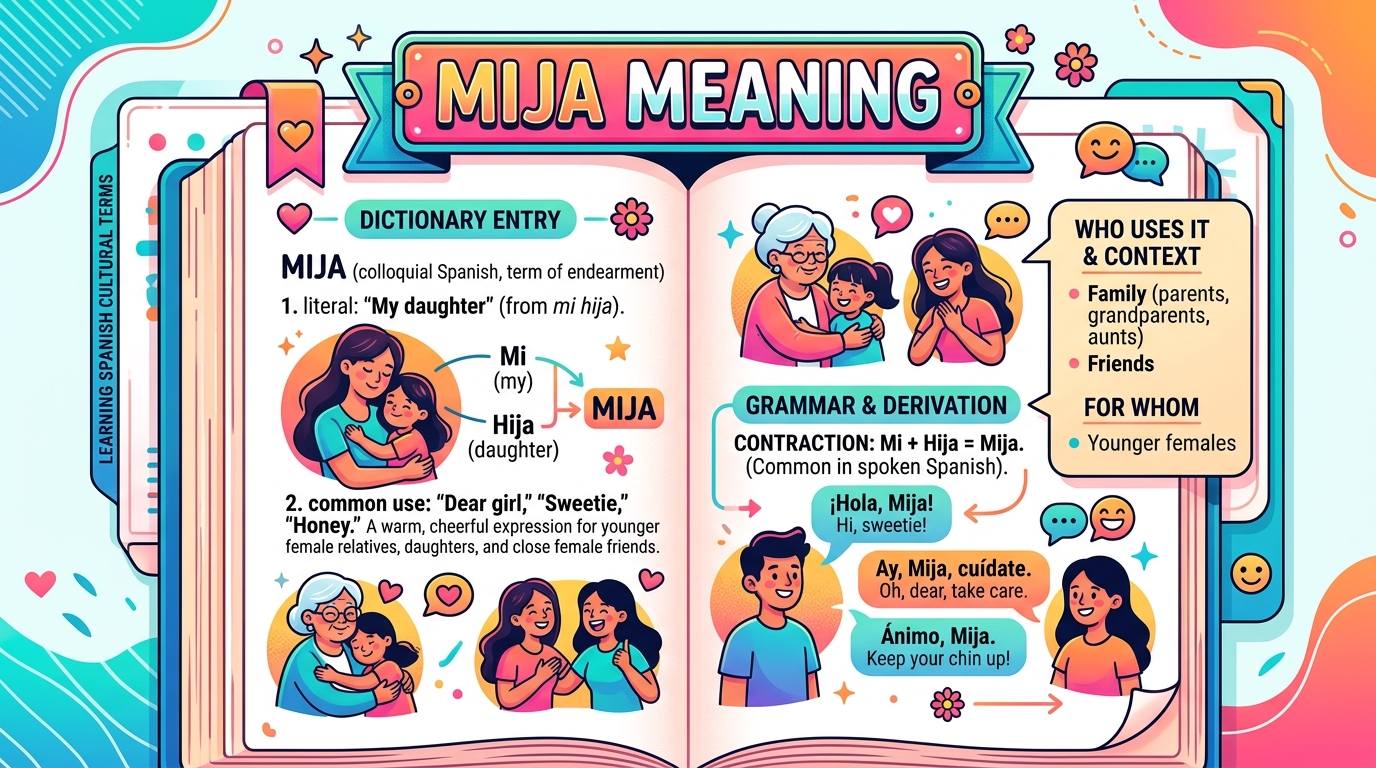
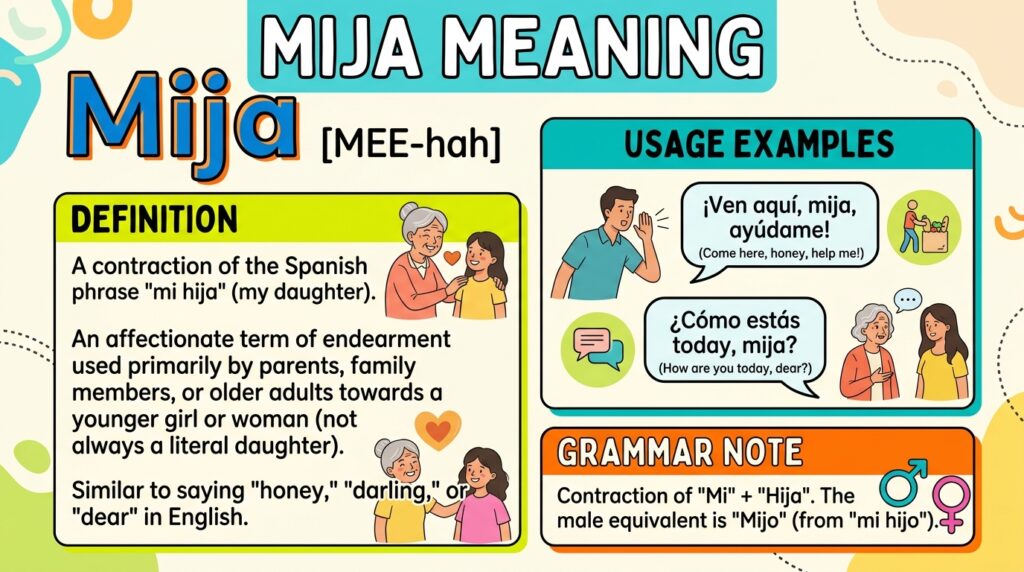
The word “mija” comes from Spanish and is a casual, affectionate contraction of “mi hija”, which means “my daughter.” However, its modern usage is much broader.
Quick definition:
- A term of affection
- Used to address someone warmly (often female)
- Can mean “my dear,” “sweetheart,” or “girl” in casual speech
Common emotional tone:
- Loving ❤️
- Caring 🤍
- Slightly teasing 😄
Example usage:
- “Mija, be careful on your way home.”
- “Come here, mija, I missed you.”
- “Mija, you really did that!”
Even though it literally means “my daughter,” in real life it is often used beyond family relationships.
Origin & Background
The origin of mija is rooted in Spanish language culture, particularly in Latin American communities.
Originally, it was short for “mi hija.” Over time, it became a natural spoken term used by parents, elders, and even close friends.
Cultural evolution:
- Started as a family-based affectionate term
- Expanded into everyday friendly speech
- Became common in Mexican-American and Latin American communities
- Spread globally through social media platforms
On TikTok, Instagram, and memes, mija became popular because it sounds warm, slightly dramatic, and emotionally expressive.
Today, even people who don’t speak Spanish use it casually in chats just to add personality or affection.
Real-Life Conversations (MANDATORY)
WhatsApp Chat
Person A: I failed my exam again…
Person B: Mija, don’t stress. You’ll get it next time, I believe in you.
Instagram DM
Person A: I posted a new photo, not sure if it looks good 😭
Person B: Mija, you look amazing. Stop doubting yourself.
TikTok Comment Section
Person A: I tried this recipe and burned it 💀
Person B: Mija, even burnt food can be gourmet if you believe hard enough 😂
Text Message
Person A: I think I made a mistake at work
Person B: Mija, breathe. One mistake doesn’t define your whole career.
These conversations show how mija adds emotional softness and comfort in digital communication.
Emotional & Psychological Meaning
The word mija is emotionally powerful because it creates instant closeness. Even when used between friends, it signals care, protection, or warmth.
Why people use it:
- To comfort someone
- To show affection without being too formal
- To soften advice or criticism
- To create emotional bonding
What it reveals about modern communication:
Today’s digital language is not just about information—it’s about emotion. Words like mija help people express care in short messages where tone is often lost.
Short scenario:
Imagine a friend going through a breakup. Instead of a long speech, someone simply says, “Mija, you deserve better.” That small word carries emotional weight that feels personal and healing.
Usage in Different Contexts
Social Media
Used in comments and captions to sound warm or playful:
- “Mija, you ate with this outfit 🔥”
Friends & Relationships
Used to show closeness or affection:
- Often used between close female friends or family-like bonds
Work / Professional Settings
Rare and generally inappropriate unless in informal workplaces:
- Can sound too personal or unprofessional
Casual vs Serious Tone
- Casual: affectionate, playful
- Serious: comforting or emotional support
When NOT to Use It
Even though mija is warm, it is not always suitable.
Avoid using it:
- With strangers (can feel too personal)
- In formal emails or business settings
- In cultures where Spanish slang may be misunderstood
- With people who may not like informal nicknames
Cultural sensitivity:
Some individuals may see it as overly familiar or gender-specific, so context matters.
Common Misunderstandings
Many people misinterpret mija when they first see it online.
Common mistakes:
- Thinking it only means “my daughter”
- Assuming it is romantic slang
- Believing it is rude or disrespectful
- Using it without understanding tone
Tone confusion:
Depending on context, it can sound:
- Loving ❤️
- Teasing 😏
- Encouraging 💪
Literal vs figurative:
- Literal: “my daughter”
- Figurative: “my dear” or “sweet girl”
Comparison Table
| Aspect | What Does “mija” Mean | How to Use “mija” | Examples of “mija” | mija vs Other Slang |
|---|---|---|---|---|
| Definition | Term of affection from Spanish | Used in casual emotional speech | “Mija, don’t worry” | More emotional than “girl” |
| Intent | Express care | In friendly chats | “You got this, mija” | Softer than “bro” |
| Usage | Informal contexts | Between close people | “Come here, mija” | Warmer than “dude” |
| Emotion | Love & comfort | Supportive tone | “Mija, relax” | More nurturing |
Key Insight
mija stands out because it blends emotional warmth with casual language, making it more personal than most slang words.
Variations / Types
1. mija (in text)
Used in chats to show affection
→ “Mija, are you okay?”
2. mija meaning slang
Informal digital usage
→ Adds emotional tone in messages
3. mija abbreviation
Short for “mi hija”
→ Often used casually in speech
4. mija slang meaning
Friendly emotional address
→ Used between close people
5. mija in chat
Digital affectionate tone
→ “Good night, mija”
6. mija meaning in English
Means “my dear” or “sweetheart”
→ Context-based translation
7. mija affectionate use
Used to comfort someone
→ “Mija, you’ll be fine”
8. mija friendly tone
Casual bonding word
→ Used in friendships
9. mija cultural slang
Rooted in Latin American Spanish
→ Spread globally via social media
10. mija emotional slang
Expresses care or empathy
→ Softens communication
How to Respond When Someone Uses It
Casual replies
- “Aww thank you 😊”
- “You’re the best!”
Funny replies
- “Okay mija energy activated 😂”
- “Why do I feel adopted now?”
Mature replies
- “I appreciate your support.”
- “That means a lot, thank you.”
Respectful replies
- “Thanks for your kindness.”
- “I really value that.”
Regional & Cultural Usage
Western culture
Used in casual English conversations influenced by Spanish slang.
Asian culture
Often seen on social media but not widely used in real speech.
Middle Eastern culture
Mostly recognized through online content, not everyday language.
Global internet usage
Popularized through TikTok, memes, and Instagram captions.
Generational differences
- Gen Z: Uses it playfully online
- Millennials: Understands cultural roots more deeply
Is It Safe for Kids?
Yes, mija is generally safe for kids because it is a soft, affectionate term. However, children should understand context so they don’t use it in inappropriate or formal situations.
FAQs
1. What does mija mean in simple words?
It means “my dear” or “sweetheart,” used as a term of affection.
2. Is mija romantic?
Not usually. It is more affectionate than romantic.
3. Can I use mija with friends?
Yes, especially close friends, but context matters.
4. Is mija Spanish or English?
It is Spanish but widely used in English online slang.
5. Is mija rude?
No, it is generally warm and positive.
6. Why do people say mija online?
To sound caring, emotional, or playful in messages.
Conclusion
Understanding mija meaning goes beyond translation—it is about emotion, culture, and connection. This small word carries warmth that can soften conversations and build closeness instantly. Whether used in friendship, family talk, or social media, it reflects how language evolves with human emotion. Used correctly, it adds sincerity and comfort to communication. Just remember context matters. When spoken naturally, mija becomes more than slang—it becomes a gentle way of showing care in everyday life.