If you’ve ever seen someone reply with just “oof” and wondered what it actually means, you’re not alone. It’s one of those short, almost effortless expressions that somehow carries a lot of emotional weight.
People search for “oof meaning” because it shows up everywhere—WhatsApp chats, TikTok comments, gaming streams—and yet, its meaning shifts depending on tone, situation, and relationship.
At first glance, it seems simple. But in real communication, “oof” can express sympathy, embarrassment, pain, humor, or even silent judgment. This article clears that confusion and helps you understand how to use it naturally—without sounding awkward or out of place.
OOF Meaning – Quick Meaning
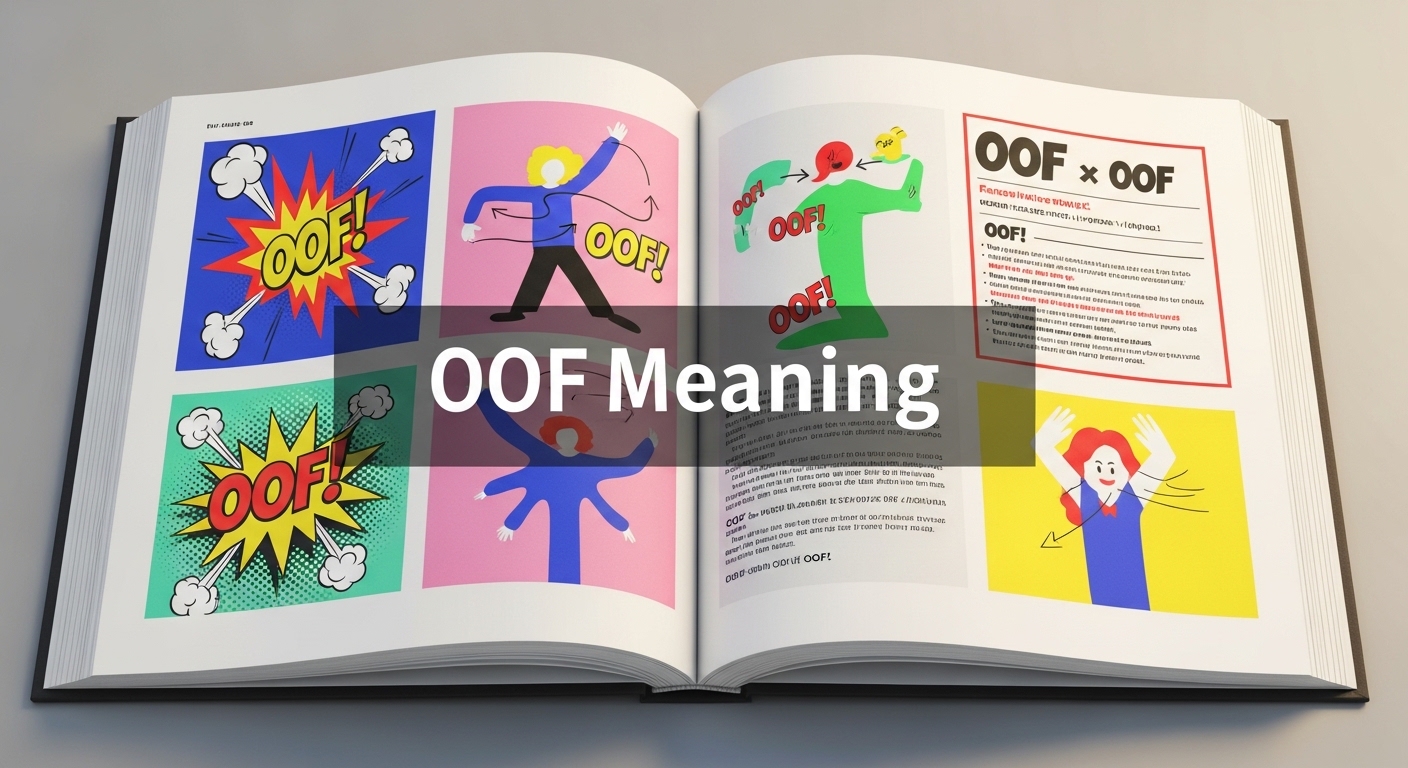
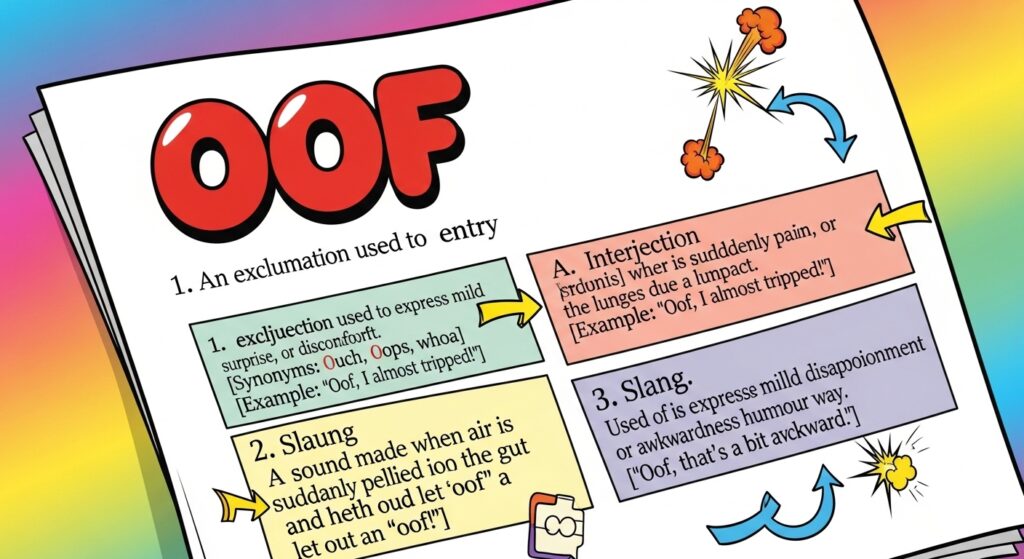
“Oof” is an informal expression used to react to something uncomfortable, painful, awkward, or unfortunate.
It usually conveys:
- Emotional discomfort
- Sympathy for someone
- Secondhand embarrassment
- Mild shock or surprise
Simple Examples:
- “I failed my exam.”
→ “Oof, that’s tough.” - “He texted her by mistake 💀”
→ “Oof…” - “I dropped my phone again.”
→ “Oof 😭”
It’s short, but it says a lot—often without needing a full sentence.
Origin & Background
The word “oof” isn’t new. It has been used in English for decades as a sound people make when they get hit or feel sudden discomfort—like when someone bumps into something and says “oof!”
However, its modern usage exploded online, especially through gaming culture.
One major turning point was the game Roblox, where a character made a distinctive “oof” sound when defeated. That sound became a meme and spread across the internet.
From there, platforms like TikTok, Twitter, and Instagram adopted it—not just as a sound, but as a reaction.
Over time, “oof” evolved:
- From a physical reaction → to an emotional reaction
- From a sound → to a text-based expression
- From literal pain → to social and psychological discomfort
Today, it’s part of global internet language.
Real-Life Conversations
WhatsApp Chat
Person A: I just told my boss the wrong numbers in the meeting 😭
Person B: Oof… that’s rough
Instagram DM
Person A: She left me on seen again
Person B: Oof… you deserve better honestly
TikTok Comments
User 1: When you wave back at someone who wasn’t waving at you
User 2: OOF 😭
Text Message
Person A: I called my teacher “mom” today
Person B: Oof 💀
These examples show how “oof” fits naturally into everyday conversations—quick, emotional, and relatable.
Emotional & Psychological Meaning
“Oof” is more than just slang—it reflects how people process emotions quickly in digital communication.
It often expresses:
- Empathy without overexplaining
- Shared discomfort
- Recognition of awkward or painful moments
Instead of writing a long message, people use “oof” to say: “I feel that.”
A Real-Life Scenario
You’re talking to a friend who just got rejected from a job they really wanted. You don’t want to sound fake or overly dramatic. You simply say:
“Oof… I know you were really hoping for that.”
That one word softens the conversation. It shows understanding without forcing a heavy emotional response.
That’s the power of “oof”—it creates emotional connection with minimal effort.
Usage in Different Contexts
Social Media
On platforms like TikTok or Instagram, “oof” reacts to:
- Cringe moments
- Fails
- Emotional stories
Example:
“Oof, that ending hurt.”
Friends & Relationships
Used casually among friends:
- “Oof, you got caught?”
- “Oof… that must’ve been awkward”
It feels natural and relatable.
Work / Professional Settings
Use caution here.
In formal environments, “oof” can sound unprofessional or too casual.
Instead of:
“Oof, that’s bad.”
Say:
“That’s unfortunate. Let’s fix it.”
Casual vs Serious Tone
- Casual → Friendly, empathetic
- Serious → May feel dismissive if used alone
Tone matters more than the word itself.
When NOT to Use It
Avoid using “oof” in:
- Serious emotional situations (loss, trauma)
- Formal communication (emails, reports)
- Professional feedback
- Cultural contexts where slang may confuse people
Example:
Someone shares deeply personal grief →
Replying “oof” alone can feel cold or insensitive.
Common Misunderstandings
1. Thinking It Always Means Humor
Not true. It can be serious or empathetic.
2. Assuming It’s Rude
It depends on tone and context.
3. Taking It Literally
It’s not about physical pain anymore—it’s emotional and social.
4. Overusing It
Using “oof” for everything can make your communication feel lazy or repetitive.
Comparison Table
| Expression | Meaning | Tone | When to Use |
|---|---|---|---|
| Oof | Discomfort / sympathy | Casual | Awkward or painful moments |
| Yikes | Shock / concern | Slightly stronger | Surprising or alarming situations |
| Ouch | Pain (literal or emotional) | Direct | Hurtful situations |
| Damn | Strong reaction | Intense | Serious or shocking moments |
| Nice | Positive reaction | Light | Good news |
| Congrats | Celebration | Formal/Casual | Achievements |
Key Insight
“Oof” sits in the middle—it’s softer than “yikes” and less direct than “ouch,” making it perfect for subtle emotional reactions.
Variations / Types
- Oof…
→ Adds seriousness or pause - Big oof
→ Stronger reaction to something very awkward - Oof 😭
→ Emotional pain or sympathy - Oof 💀
→ Extreme embarrassment or humor - Oof lol
→ Lightens the tone - Oof that hurts
→ Direct emotional reaction - Oof moment
→ Describes a situation, not just reaction - Mega oof
→ Exaggerated reaction - Oof bro
→ Casual, friendly tone - Oof… yeah
→ Acknowledging something awkward or obvious
How to Respond When Someone Uses It
Casual Replies
- “Yeah, it really sucks 😅”
- “I know right”
Funny Replies
- “My life is one big oof at this point”
- “Certified oof moment”
Mature Replies
- “Yeah, I’m trying to handle it better”
- “It’s tough, but I’ll figure it out”
Respectful Replies
- “Thanks for understanding”
- “I appreciate that”
Regional & Cultural Usage
Western Culture
“Oof” is widely used in memes, gaming, and casual conversations.
Asian Culture
Less common in daily speech, but used online—especially among younger audiences.
Middle Eastern Culture
Used mostly in English conversations or social media, not in traditional communication.
Global Internet Usage
It’s now part of universal internet slang—understood across countries.
Generational Differences
- Gen Z: Uses it frequently, creatively, and casually
- Millennials: Understand it, but use it less often
Is It Safe for Kids?
Yes, “oof” is generally safe.
It’s not offensive or inappropriate. However, context matters. Kids should still learn when casual slang is acceptable and when more respectful language is needed.
FAQs
1. What does “oof” mean in texting?
It means reacting to something awkward, painful, or unfortunate.
2. Is “oof” rude?
No, but it can feel dismissive if used without context in serious situations.
3. What does “big oof” mean?
A stronger version of “oof,” used for very awkward or unfortunate moments.
4. Can I use “oof” in professional messages?
It’s better to avoid it in formal communication.
5. Why do people say “oof” on TikTok?
To react quickly to relatable, embarrassing, or emotional content.
6. Is “oof” the same as “ouch”?
Not exactly. “Ouch” is more direct, while “oof” is softer and more emotional.
Conclusion
“Oof” might be just three letters, but it carries a surprisingly deep emotional tone. It reflects how modern communication has become faster, more expressive, and often more subtle.
Used well, it shows empathy without overexplaining. Used poorly, it can feel careless or dismissive.
The key is simple:
Understand the situation, read the tone, and respond like a real human—not just a quick typist.
Once you get that balance right, “oof” becomes one of the most natural tools in your everyday communication.
Discover more posts:
- TPO Full Form: Meaning in Medical, Chat, Government & 10 Languages
- IP Full Form – Meaning in Computers, Networking & 10 Languages
- IDTS Full Form in Chat: Meaning, Usage & Examples (2026 Guide)
- MIDC Full Form: Meaning & Translation in 10 Languages
- CCF Full Form in Medical: Meaning, Causes & 10 Language Versions