In modern digital communication, abbreviations like TTYL are widely used across chats, social media, and messaging apps. However, many people still search for “TTYL meaning in text” because its tone and intention are not always clearly understood.
TTYL stands for “Talk to You Later”, but its real meaning depends heavily on context, relationship, and conversation tone. In some cases, it feels friendly and casual, while in others it may appear neutral or slightly distant.
In this guide, you’ll learn not only the definition of TTYL but also its emotional tone, proper usage in different situations, professional boundaries, and how it compares with similar texting terms in 2026.
2. What Does “TTYL Meaning in Text” Mean?
Clear and Precise Definition
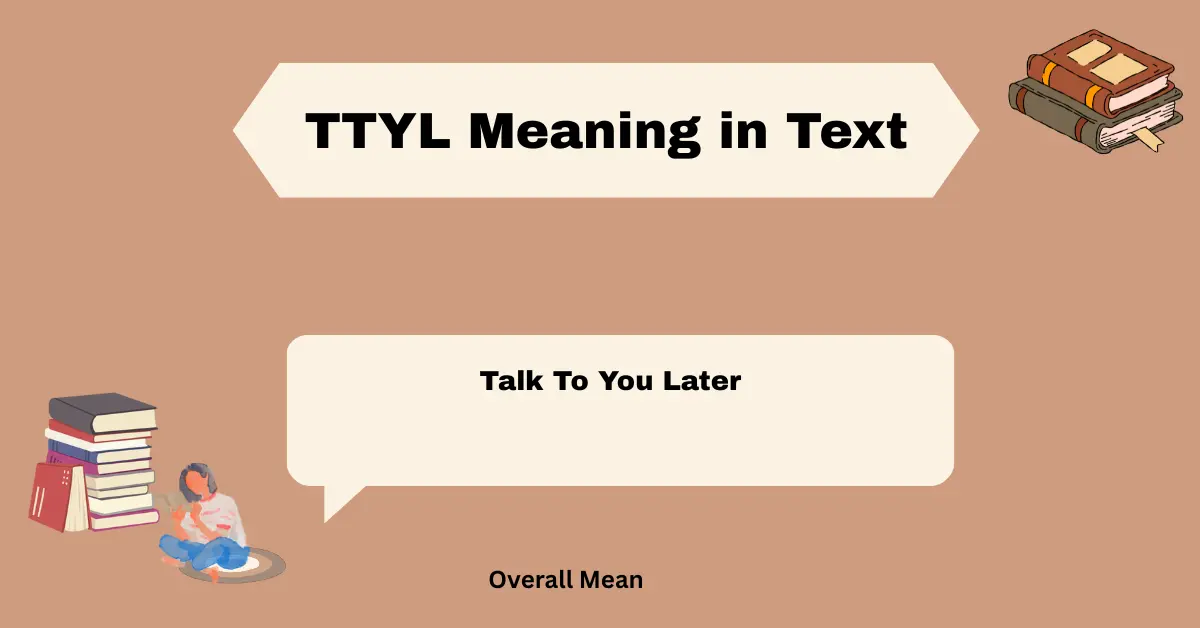
TTYL stands for “Talk To You Later.”
When used in text messages, chats, or online conversations, it means:
“I am ending this conversation now, but I intend to communicate again later.”
Literal Meaning
- A promise of future interaction
- A conversational pause, not a goodbye
Implied Meaning
Depending on context, it can imply:
- Politeness
- Casual friendliness
- Neutral disengagement
When It Does Not Mean What People Assume
TTYL does not necessarily mean:
- Immediate follow-up
- Emotional closeness
- Disinterest or avoidance
In many cases, it simply functions as a soft conversational exit, not a statement of priority or affection.
3. Is “TTYL” a Slang, Typo, or Intentional Usage?
Slang Usage Explanation
TTYL is classified as internet slang, but more specifically, it belongs to functional abbreviations—shortened phrases designed to manage conversation flow rather than express emotion.
Typing Behavior & Keyboard Influence
The popularity of TTYL emerged because:
- Early mobile keyboards were slow
- SMS character limits encouraged brevity
- Predictive typing favored abbreviations
Even with voice typing and AI keyboards in 2026, abbreviations remain because habit outlives necessity.
Intentional Stylistic Usage
Many users still choose TTYL intentionally because it:
- Feels informal and relaxed
- Avoids emotional weight
- Signals continuation without commitment
How to Tell the Difference Using Context
Ask yourself:
- Is the conversation casual or formal?
- Is the sender consistent with abbreviations?
- Is there warmth (emojis, friendly tone) nearby?
Context almost always reveals intent.
4. Origin and Evolution of “TTYL” in Digital Communication
Early Chat & SMS Influence
TTYL originated in:
- Late 1990s instant messaging (AIM, MSN Messenger)
- Early SMS culture with strict character limits
It served the same role as “BRB” or “GTG.”
Social Media and Instant Messaging Evolution
As platforms evolved:
- TTYL moved from necessity to stylistic choice
- It became a casual sign-off, not a technical shortcut
How Younger Generations Shaped Usage
Gen Z and Gen Alpha didn’t invent TTYL, but they recontextualized it:
- Often ironic
- Sometimes intentionally dry
- Occasionally softened with emojis
Why It Still Exists in 2026
TTYL survives because:
- It is instantly recognizable
- It’s emotionally neutral
- It requires no explanation
Language retains what is efficient and socially understood.
5. Real-World Usage Scenarios (Detailed Examples)
a) Casual Friend Conversations
Tone: Friendly, relaxed
Example:
“I’ve got to run now, ttyl 😊”
Here, TTYL feels warm and reassuring.
b) Workplace & Professional Chat
Tone: Depends on company culture
Informal Team Example:
“I’ll review this later today, ttyl.”
Formal Team Example (Not Recommended):
“Meeting ended, ttyl.”
In professional environments, TTYL can sound too casual unless the culture supports it.
c) Social Media, Gaming, and Online Communities
Tone: Neutral to friendly
Example:
“Server’s restarting, ttyl guys.”
Here, TTYL functions as group coordination language rather than emotional speech.
6. Emotional Tone and Intent Behind “TTYL”
Friendly Tone
Often paired with:
- Emojis
- Exclamation points
- Casual wording
Example:
“That was fun, ttyl!”
Neutral or Distant Tone
When used alone, it can feel:
- Abrupt
- Emotionally flat
Example:
“Okay ttyl.”
Awkward or Cold Tone
In emotional conversations, TTYL can feel dismissive.
Example:
“I don’t know… ttyl.”
How Punctuation and Emojis Change Meaning
- TTYL 😊 → warm
- TTYL. → neutral or cold
- ttyl lol → casual deflection
Small markers dramatically shift interpretation.
7. Cultural and Regional Differences in Usage
Native vs Non-Native English Speakers
Non-native speakers may:
- Use TTYL more literally
- Assume it requires follow-up
Regional Texting Habits
- North America: very common
- UK: less frequent, slightly dated
- South Asia: often mixed with formal English
Cross-Platform Language Adoption
TTYL is more common on:
- Messaging apps
- Gaming chats
Less common in:
- Professional social platforms
8. “TTYL Meaning in Text” Compared With Similar Texting Terms
| Term | Meaning | Tone | Formality | Best Use Case |
|---|---|---|---|---|
| TTYL | Talk to you later | Neutral | Low | Casual exit |
| BRB | Be right back | Neutral | Low | Short pause |
| GTG | Got to go | Direct | Low | Immediate exit |
| Talk soon | Promise-based | Warm | Medium | Personal chats |
| Catch up later | Intentional | Polite | Medium | Semi-formal |
9. Common Misunderstandings and Mistakes
Misinterpretation Cases
- Assuming TTYL means emotional closeness
- Assuming rudeness where none exists
Autocorrect and Keyboard Issues
TTYL may be:
- Auto-expanded
- Mistyped as “ttyl.” or “TYTL”
Overuse Problems
Using TTYL repeatedly can feel:
- Lazy
- Emotionally disengaged
How to Avoid Confusion
Add context:
“I need to step out, ttyl after dinner.”
10. Is “TTYL” Polite, Rude, or Unprofessional?
Relationship-Based Analysis
- Friends: polite
- Acquaintances: neutral
- Authority figures: risky
Context-Based Analysis
Politeness depends on:
- Conversation depth
- Emotional stakes
- Expected response time
Professional Etiquette Guidance
Safer alternatives:
- “I’ll follow up later.”
- “Let’s continue this later.”
11. Expert Linguistic Insight: Text Language in 2026
How Digital Slang Evolves
Slang survives when it:
- Serves a clear function
- Is widely understood
- Requires minimal effort
Why Abbreviations Persist
Efficiency still matters, even with AI-assisted typing.
Linguistic Efficiency vs Grammar Rules
Texting language prioritizes:
- Speed
- Social signaling
- Emotional economy
TTYL excels in all three.
12. How and When You Should Use “TTYL”
Do’s
- Use in casual settings
- Add warmth if needed
- Use as a temporary sign-off
Don’ts
- Avoid emotional conversations
- Avoid formal emails
- Avoid customer communication
Safer Alternatives
- “Talk later”
- “Speak soon”
- “We’ll catch up later”
13. FAQs About “TTYL Meaning in Text”
1. What does TTYL mean in text messages?
It means “Talk to you later,” signaling a temporary conversation pause.
2. Is TTYL outdated in 2026?
No. It is still widely understood, though used more selectively.
3. Is TTYL rude?
Not inherently. Tone and context determine politeness.
4. Can TTYL be used professionally?
Only in informal team chats, not formal communication.
5. Does TTYL mean someone will message again soon?
Not necessarily. It implies intention, not timing.
6. Is TTYL slang or abbreviation?
It is an internet abbreviation classified as functional slang.
7. Should I reply when someone says TTYL?
A simple acknowledgment is optional, not required.
14. Final Summary and Key Takeaways
The ttyl meaning in text goes far beyond a simple abbreviation. It is a linguistic tool that manages conversation flow, emotional distance, and social efficiency.
Key points to remember:
- TTYL means “Talk to you later”
- Tone depends entirely on context
- It is casual, neutral, and still relevant
- Professional use requires caution
Understanding TTYL properly helps you communicate more clearly, avoid misinterpretation, and adapt confidently to modern digital language.