Everyone has that one thing that instantly gets under their skin. Maybe it is loud chewing, people interrupting conversations, or leaving messages on “read” without replying. These seemingly small irritations are often called pet peeves.
If you’ve searched for pet peeves meaning, you’re probably wondering what the phrase actually means, where it comes from, and why people use it so often in conversations, social media posts, and everyday life.
Understanding this expression can help you communicate more naturally in English and better understand how people talk about personal frustrations. In this guide, you’ll learn the meaning, origin, examples, cultural interpretations, and practical usage of the phrase.
Pet Peeves Meaning – Quick Meaning
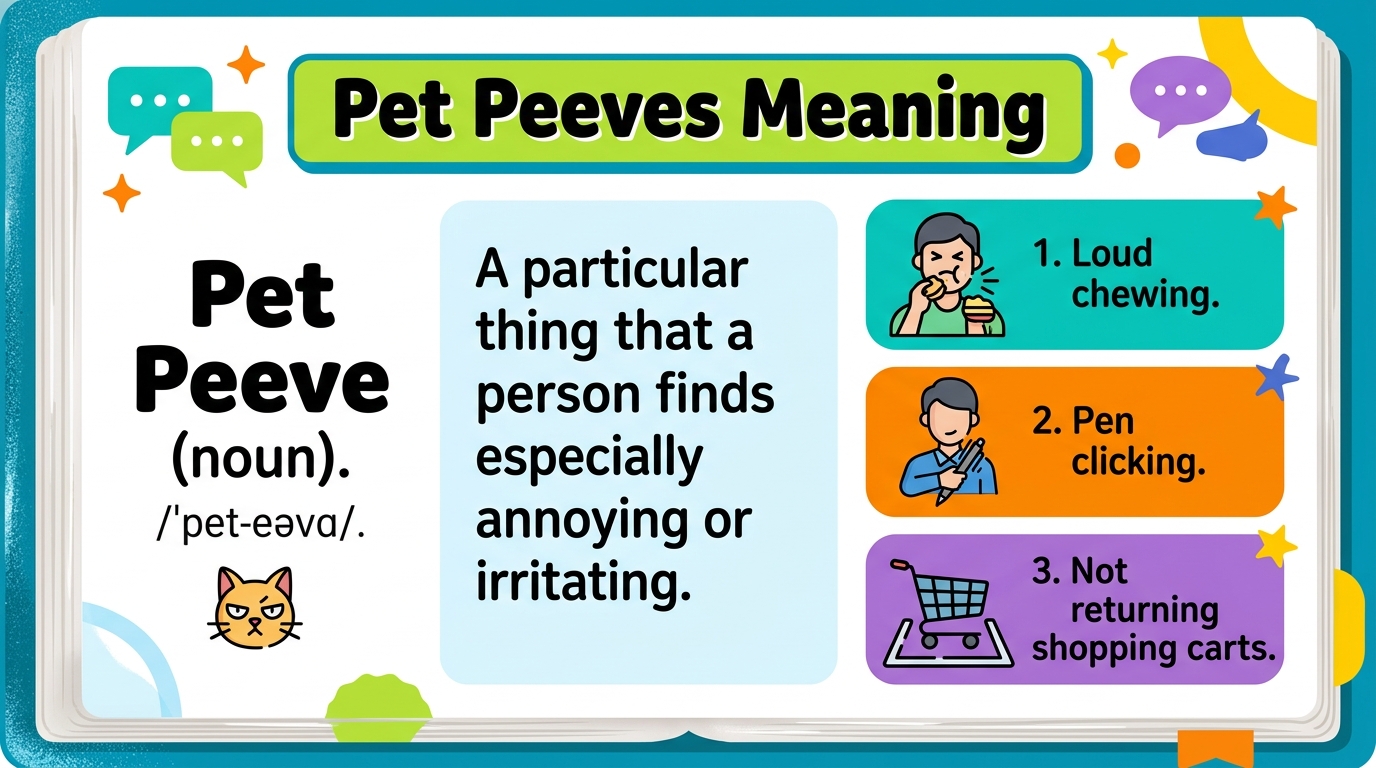
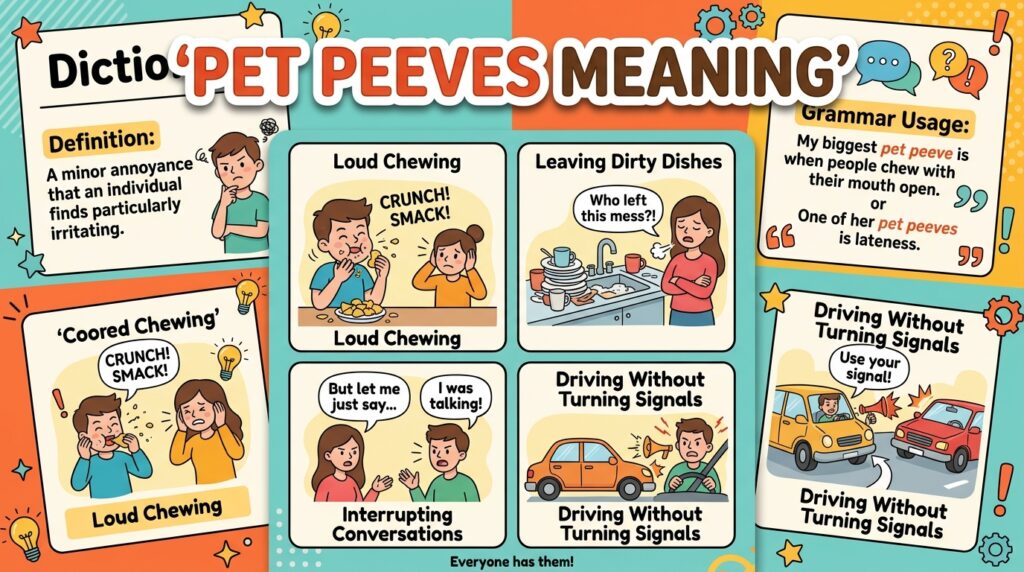
A pet peeve is a particular behavior, habit, or situation that a person finds especially annoying, even if others do not think it is a big deal.
Simple Definition
A pet peeve is:
- A personal annoyance
- A recurring irritation
- Something that bothers you more than it bothers other people
Quick Examples
“People talking during movies are my biggest pet peeve.”
“One of her pet peeves is when someone arrives late.”
“Leaving dirty dishes in the sink is his pet peeve.”
The phrase is commonly used to describe everyday frustrations rather than serious problems.
Origin & Background
The phrase pet peeve first appeared in American English during the early 20th century.
The word pet refers to something personally owned or closely associated with someone. The word peeve means irritation or annoyance.
Together, the expression describes a person’s “favorite annoyance”—something that consistently bothers them.
Over time, the phrase became popular in casual conversations, magazines, television shows, and workplace discussions.
Social Media Influence
Today, social media has made sharing pet peeves a form of entertainment.
People frequently post:
- “What’s your biggest pet peeve?”
- “Unpopular opinion: this is my pet peeve.”
- “Tell me your weirdest pet peeve.”
Platforms like Instagram, TikTok, and X have turned pet peeves into conversation starters that help people connect through shared frustrations.
Pet Peeve Examples
Pet peeves vary from person to person.
Some common examples include:
- Loud chewing
- Interrupting conversations
- Talking during movies
- Leaving shopping carts unattended
- Being consistently late
- Poor customer service
- Not using turn signals while driving
- Excessive phone use during meals
- Grammar mistakes in professional emails
- Leaving caps off toothpaste
What annoys one person may not bother another at all.
Why Is It Called Pet Peeve?
Many learners find the phrase confusing because the word “pet” usually relates to animals.
In this expression, pet means personal or special.
A pet peeve is not literally related to a pet animal. Instead, it refers to a particular annoyance that belongs uniquely to you.
Think of it as:
Pet = personal favorite
Peeve = irritation
Together, they create the idea of a personal irritation that stands out from other annoyances.
Real-Life Conversations
WhatsApp Conversation
Person A: Why are you upset?
Person B: He kept interrupting me during the meeting.
Person A: Ah, that’s one of your pet peeves, right?
Person B: Absolutely. It drives me cr*zy.
Instagram DM
Person A: What’s your biggest pet peeve?
Person B: People who record concerts instead of enjoying them.
Person A: Honestly, same.
TikTok Comments
Creator: What’s a pet peeve you’ll never get over?
Commenter 1: Loud chewing.
Commenter 2: People who don’t return shopping carts.
Commenter 3: Walking slowly in crowded places.
Text Message
Friend 1: Sorry I’m late again.
Friend 2: You’re lucky we’re friends because lateness is one of my biggest pet peeves.
Friend 1: Fair enough. I’ll do better.
Emotional & Psychological Meaning
Pet peeves often reveal more than simple irritation.
They can reflect:
- Personal values
- Expectations
- Boundaries
- Life experiences
For example, someone who values punctuality may become irritated when people arrive late. Another person who values respect may dislike interruptions.
Personal Scenario
Imagine spending hours preparing an important presentation. During your speech, someone constantly checks their phone.
Many people would feel annoyed because the behavior seems disrespectful. The irritation goes beyond the action itself and touches on deeper values like attention and courtesy.
This is why pet peeves often feel stronger than outsiders expect.
Usage in Different Contexts
Social Media
People often discuss pet peeves for engagement and entertainment.
Examples:
- “Drop your biggest pet peeve below.”
- “This is my ultimate pet peeve.”
Friends & Relationships
Sharing pet peeves helps friends and partners understand personal boundaries.
Example:
“My pet peeve is when plans change at the last minute.”
Work & Professional Settings
The phrase can be used professionally when discussing workplace frustrations.
Example:
“A workplace pet peeve of mine is unclear communication.”
Casual vs Serious Tone
In casual conversations, pet peeves are often humorous.
In professional settings, they can communicate expectations and preferences respectfully.
Pet Peeve in a Sentence
Here are several examples:
- One of my biggest pet peeves is people who leave a mess behind.
- Her pet peeve is receiving one-word text replies.
- My manager’s pet peeve is missing deadlines.
- Loud keyboard typing became his office pet peeve.
- Forgetting to mute during meetings is a common workplace pet peeve.
Pet Peeve Pronunciation
The phrase is pronounced:
pet peev
Phonetic Pronunciation
/pet piːv/
Breakdown:
- Pet = sounds like “bet” with a P
- Peeve = sounds like “leave” with a P
Speaking it naturally helps you sound more fluent in everyday English conversations.
Pet Peeve Synonym
Several words and phrases share similar meanings.
Common synonyms include:
- Annoyance
- Irritation
- Frustration
- Nuisance
- Grievance
- Bother
- Complaint
- Aggravation
Example:
“Traffic is a major annoyance.”
“Traffic is one of my biggest pet peeves.”
Both sentences communicate a similar idea.
Pet Peeve in Tagalog
In Tagalog, there is no exact direct translation for pet peeve, but people often express it as:
“Nakakainis na ugali”
or
“Bagay na nakakairita sa akin.”
These phrases mean:
- An annoying habit
- Something that irritates me
Filipino speakers often use the English phrase “pet peeve” directly in modern conversations, especially online.
Pet Peeve in French
In French, similar expressions include:
“Ce qui m’agace le plus”
or
“Ma petite obsession irritante.”
The closest natural translation is:
“Something that annoys me the most.”
Many bilingual French speakers also understand and use the English phrase, especially on social media.
Biggest Pet Peeves Meaning
A biggest pet peeve refers to the annoyance that bothers someone more than all others.
Examples:
- Chronic lateness
- Dishonesty
- Poor manners
- Loud chewing
- Talking over others
When someone says:
“That’s my biggest pet peeve.”
They mean it is their strongest personal irritation.
When NOT to Use It
Avoid using the phrase in situations involving:
Serious Trauma
Pet peeves are minor irritations.
Serious issues should not be described as pet peeves.
Professional Complaints
Formal complaints often require more precise language.
Cultural Misunderstandings
Some people may interpret certain annoyances differently based on cultural expectations.
Sensitive Discussions
Using “pet peeve” for serious discrimination, harassment, or abuse can appear dismissive.
Common Misunderstandings
Mistaking It for Hatred
A pet peeve is an annoyance, not intense hatred.
Thinking Everyone Shares It
Pet peeves are personal.
What bothers you may not bother others.
Using It for Major Problems
The phrase is intended for relatively small frustrations.
Assuming It Is Always Funny
Many pet peeves are discussed humorously, but some reflect genuine personal boundaries.
Comparison Table
| Phrase | Meaning / Intent |
|---|---|
| What Does Pet Peeve Mean | Understand the definition |
| How to Use Pet Peeve | Learn practical usage |
| Examples of Pet Peeve | See real-life situations |
| Pet Peeve vs Annoyance | Pet peeve is personal; annoyance is broader |
| Pet Peeve vs Complaint | Complaint is often formal |
| Pet Peeve vs Frustration | Frustration can be more serious |
| Pet Peeve vs Dislike | Pet peeve is usually specific |
| Pet Peeve vs Red Flag | Red flags signal bigger concerns |
Key Insight
A pet peeve is more personal than a general annoyance. It reflects individual preferences, values, and boundaries rather than universal problems.
Variations & Types
Pet Peeve Meaning
A personal irritation that repeatedly bothers someone.
Pet Peeve in Text
Used to describe annoying habits during messaging or online conversations.
Pet Peeve Abbreviation
There is no universally accepted abbreviation, though some people simply use “PP.”
Pet Peeve Slang
Often used casually to describe everyday frustrations.
Pet Peeve in Chat
Common in online discussions about habits and behavior.
Biggest Pet Peeve Meaning
The most irritating habit or action for a person.
Workplace Pet Peeve Meaning
An annoyance experienced in professional environments.
Relationship Pet Peeve Meaning
A recurring behavior that annoys a partner.
Social Media Pet Peeve Meaning
Online actions that users find irritating.
Daily Life Pet Peeve Meaning
Common everyday behaviors that trigger annoyance.
How to Respond When Someone Uses It
Casual Replies
- “I totally get that.”
- “Same here.”
- “That would annoy me too.”
Funny Replies
- “Congratulations, you’ve unlocked a new pet peeve.”
- “That should be illegal.”
Mature Replies
- “I understand why that bothers you.”
- “Everyone has personal triggers.”
Respectful Replies
- “Thanks for sharing that.”
- “I’ll keep that in mind.”
Regional & Cultural Usage
Western Culture
Pet peeves are openly discussed and often used as conversation starters.
Asian Culture
People may express pet peeves more indirectly to maintain harmony.
Middle Eastern Culture
Context and relationships often influence how openly frustrations are shared.
Global Internet Usage
The phrase has become widely recognized through social media and online communities.
Generational Differences
Gen Z
Often discusses pet peeves humorously through memes and videos.
Millennials
Frequently use pet peeves in workplace and relationship discussions.
Is It Safe for Kids?
Yes.
The phrase is generally safe and appropriate for children.
Learning about pet peeves can help kids identify personal boundaries and communicate frustrations respectfully. Parents can use the concept to teach empathy and understanding.
FAQs
What is an example of a pet peeve?
An example of a pet peeve is when someone chews loudly while eating. It may seem minor to others, but it can be especially irritating to certain people.
What is pet peeve in a relationship?
A pet peeve in a relationship is a small habit or behavior that annoys one partner, such as being late, leaving messages unanswered, or not cleaning up after themselves.
What are the top 3 pet peeves?
Some of the most common pet peeves are loud chewing, interrupting others while they speak, and people arriving late without notice. These behaviors often frustrate many people across different situations.
What’s your biggest pet peeve in a girl?
People’s pet peeves vary based on personal preferences, but common examples include poor communication, constant lateness, or being disrespectful to others. What bothers one person may not bother another.
Why do people have pet peeves?
People develop pet peeves because of their personal values, habits, and life experiences. Behaviors that clash with those expectations can create feelings of irritation.
Are pet peeves the same as red flags?
No, pet peeves are usually minor annoyances, while red flags suggest potentially serious issues in a person’s behavior or character. A pet peeve may be annoying, but a red flag often signals a deeper concern.
Can pet peeves change over time?
Yes, pet peeves can change as people grow and gain new experiences. Something that once felt irritating may become less important, while new annoyances can develop.
Is having pet peeves normal?
Yes, having pet peeves is completely normal and part of being human. Everyone has certain habits or behaviors that they find more irritating than others do.
How do I tell someone about my pet peeves?
The best approach is to communicate calmly and respectfully. Explaining why a behavior bothers you can help others understand your feelings without creating conflict.
Can pet peeves affect friendships?
Yes, repeated pet peeves can sometimes create tension in friendships if they are not discussed. Honest communication and mutual understanding usually help maintain healthy relationships.
Conclusion
Understanding the pet peeves meaning helps you recognize one of the most common expressions in modern English. A pet peeve is more than a simple annoyance—it often reflects personal values, expectations, and everyday experiences. Whether it involves loud chewing, constant interruptions, or poor communication, everyone has something that gets under their skin. By understanding how the phrase is used across cultures, relationships, workplaces, and online conversations, you can use it naturally, interpret it correctly, and communicate your frustrations with greater confidence and clarity.