If you’ve ever heard someone say “salud” during a dinner, celebration, or even after a sneeze, you may have wondered what it truly means. The word sounds simple, but it carries emotional, cultural, and social meaning that changes depending on the moment.
Many people search for “salud meaning” because they hear it in Spanish conversations, movies, travel videos, TikTok clips, or restaurant gatherings. Some think it only means “cheers,” while others believe it directly translates to “bless you.” The truth is more interesting.
“Salud” is one of those words that instantly creates warmth and connection. It can celebrate friendship, wish someone good health, show politeness, or simply make a moment feel more human.
Salud Meaning – Quick Meaning
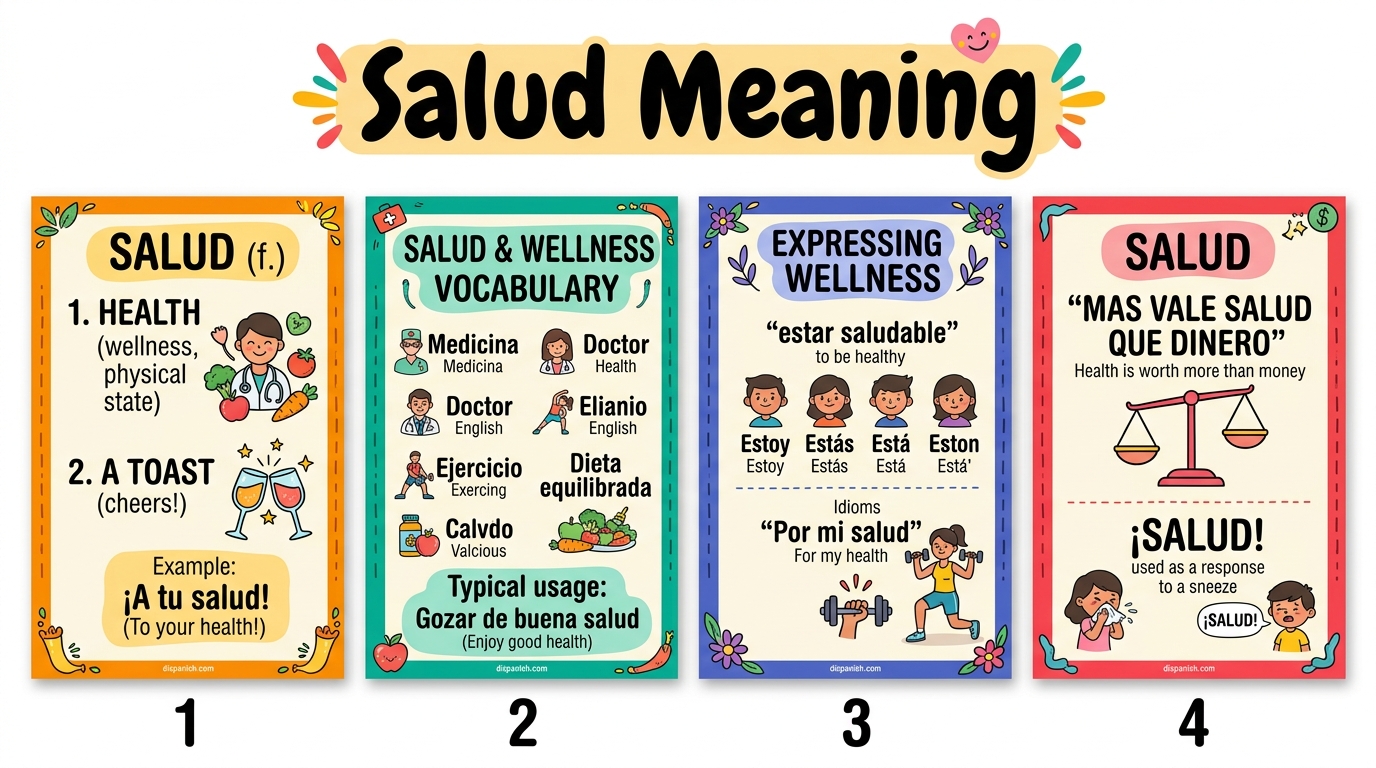
The word “salud” comes from Spanish and literally means “health.”
People commonly use it to:
- Say “cheers” before drinking
- Wish someone good health
- Respond after someone sneezes
- Express positivity and well-being
Simple Examples
“¡Salud! To good memories and better days.”
“You sneezed twice — salud!”
“We raised our glasses and everyone shouted, ‘Salud!’”
In most situations, the word carries kindness and positive energy.
Origin & Background
The word “salud” originates from the Latin word salus, which means health, safety, and well-being. Over time, it became deeply rooted in Spanish-speaking cultures where health and togetherness were considered blessings worth celebrating openly.
Historically, people used expressions related to health during meals and social gatherings because good health was viewed as a gift. That tradition still survives today whenever friends raise glasses and say “salud.”
As Spanish culture spread across Latin America and other regions, the word evolved beyond its literal meaning. It became emotional and social.
Today, social media has expanded its popularity even further. On TikTok, Instagram, and travel vlogs, “salud” often appears in captions showing celebrations, vacations, wine tastings, or heartfelt moments between friends.
The modern internet has transformed it from a cultural phrase into a global expression of positivity.
Salud Meaning Spanish
In Spanish, “salud” directly translates to “health.”
However, native Spanish speakers use it in several natural ways:
- During toasts
- After sneezing
- To wish wellness
- As a joyful social expression
In many Spanish-speaking families, saying “salud” feels automatic. It reflects politeness, warmth, and shared humanity.
For example:
“¡Salud y felicidad!” means “Health and happiness!”
The word often carries emotional sincerity rather than just social habit.
Salud Meaning French
In French-speaking settings, “salud” itself is not a native French word, but people may still recognize it because of Spanish influence, travel culture, and international social media.
The French equivalent for “cheers” is usually:
- “Santé” — meaning “health”
Interestingly, both “salud” and “santé” revolve around the same idea: wishing wellness before drinking.
This similarity shows how many cultures connect celebration with health and connection.
Salud Meaning in Italian
In Italian culture, the closest equivalent to “salud” is:
- “Salute”
Just like in Spanish, it literally means “health.”
Italians also use it:
- Before drinking
- After sneezing
- In warm social gatherings
Mediterranean cultures often share similar traditions around food, family, wine, and hospitality, which is why these expressions feel emotionally connected across languages.
Salud Meaning in English
In English, “salud” usually translates as:
- “Cheers”
- “Health”
- “Bless you”
The exact meaning depends on context.
For example:
- At dinner: “Cheers!”
- After a sneeze: “Bless you!”
- In emotional speech: “Good health”
English speakers often use “salud” stylistically because it sounds warm, international, and celebratory.
Salud Meaning When Drinking
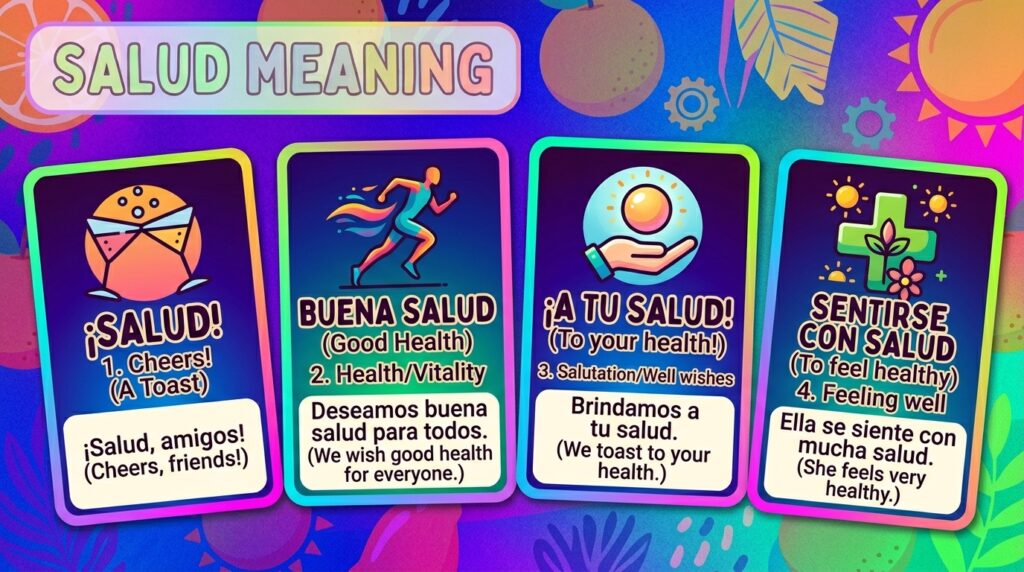
When drinking, “salud” means “cheers.”
People say it while raising glasses before taking a sip. The expression symbolizes:
- Friendship
- Celebration
- Respect
- Good wishes
- Shared experiences
In many Latin cultures, making eye contact while saying “salud” adds sincerity to the moment.
It’s less about alcohol itself and more about human connection.
Salud Meaning Arabic
In Arabic-speaking cultures, “salud” is not a native Arabic term, but people familiar with Spanish culture understand it as a toast connected to health and celebration.
Arabic equivalents may include expressions wishing wellness, peace, or blessings during gatherings.
Because hospitality is highly valued in Middle Eastern culture, the emotional spirit behind “salud” feels surprisingly familiar even across different languages.
Salud Meaning German
In German, the closest equivalent to “salud” is:
- “Prost!” — cheers
- “Gesundheit” — health/bless you
“Gesundheit” is especially interesting because it directly mirrors the health-related meaning of “salud.”
This shows how many cultures connect sneezing and drinking traditions with wishes for wellness.
Salud Meaning Bless You
One of the most common uses of “salud” is after someone sneezes.
In Spanish-speaking communities, instead of saying “bless you,” people simply say:
“Salud.”
It’s short, polite, and caring.
The expression reflects the old cultural belief that sneezing briefly affected the body’s balance or health. Saying “salud” became a quick way of wishing protection and wellness.
Even today, it still feels thoughtful and socially respectful.
Real-Life Conversations
WhatsApp Chat
Person A: I caught the worst cold this week.
Person B: Oh no 😭 salud, seriously take care of yourself.
Instagram DM
Person A: Finally made it to Barcelona 🍷
Person B: Salud! Enjoy every second there.
TikTok Comments
Person A: That dinner table energy is everything.
Person B: The way everyone yelled “salud” together felt so wholesome.
Text Messages
Person A: Achoo 🤧
Person B: Salud 😂 you sneeze like a cartoon character.
Emotional & Psychological Meaning
“Salud” feels emotionally comforting because it instantly creates social connection.
When people say it, they are usually expressing:
- Care
- Celebration
- Respect
- Positivity
- Inclusion
Psychologically, small social rituals help people feel accepted and emotionally safe. A simple word like “salud” can turn strangers into companions for a moment.
I once attended a family-style dinner where nobody spoke the same first language fluently. Yet when the glasses went up and everyone smiled saying “salud,” the room suddenly felt united. That’s the emotional power behind the word.
Usage in Different Contexts
Social Media
On Instagram and TikTok, “salud” often appears in:
- Vacation captions
- Wine photos
- Celebration reels
- Friendship posts
Example:
“Late nights, loud laughs, and salud 🍷”
Friends & Relationships
Among friends, the word feels warm and relaxed.
It can express:
- Support
- Joy
- Shared memories
- Positive vibes
Work & Professional Settings
In professional dinners or networking events, “salud” can still work casually if the environment feels social and culturally appropriate.
However, overusing it in formal emails or corporate conversations may sound awkward.
Casual vs Serious Tone
Casual:
“Salud, bro!”
More heartfelt:
“Salud to your recovery and happiness.”
Tone depends entirely on delivery and setting.
When NOT to Use It
Avoid using “salud” in situations where:
- People may not understand the cultural context
- Serious medical conversations are happening
- Formal business communication requires professionalism
- Mocking accents or cultures could offend others
Using cultural expressions respectfully matters.
Forcing the word unnaturally can make conversations feel performative instead of genuine.
Common Misunderstandings
One major misunderstanding is believing “salud” only means “cheers.”
In reality, it has multiple meanings connected to health and social connection.
Another confusion comes from tone.
Some people use it jokingly online, while others use it sincerely. Without context, the emotional intent may feel unclear.
Literal meaning:
- Health
Figurative meaning:
- Celebration
- Care
- Blessing
- Positivity
Understanding context changes everything.
Comparison Table
| Phrase | Meaning / Intent |
|---|---|
| What Does Salud Mean | Refers to health, cheers, or bless you |
| How to Use Salud | Used during drinks, sneezes, or celebrations |
| Examples of Salud | “Salud!” before drinking or after sneezing |
| Salud vs Cheers | “Cheers” focuses celebration; “salud” adds wellness meaning |
| Salud vs Bless You | Both respond to sneezing, but “salud” literally means health |
Key Insight
What makes “salud” special is that it combines social warmth with emotional goodwill. Few words feel both celebratory and caring at the same time.
Variations / Types
Salud meaning
A Spanish word meaning health, cheers, or wellness.
Salud in text
Used casually in messages after sneezing or celebrating online.
Salud abbreviation
Sometimes shortened jokingly as “sld” in very casual chats.
Salud slang
Online, it can symbolize positive energy or party culture.
Salud in chat
Common in multicultural group chats and social captions.
Salud toast meaning
Used before drinking to wish health and happiness.
Salud meme meaning
Often appears humorously in food, travel, or drinking memes.
Salud social media meaning
Represents celebration, friendship, and lifestyle moments.
Salud cultural meaning
Reflects hospitality, connection, and wellness traditions.
Salud emotional meaning
A small word carrying warmth, kindness, and shared joy.
How to Respond When Someone Uses It
Casual Replies
- “Cheers!”
- “Salud!”
- “To good times!”
Funny Replies
- “Now that’s my kind of language 🍷”
- “I’ll drink to that.”
- “Suddenly I feel healthier already.”
Mature Replies
- “Wishing you the same.”
- “To health and peace.”
- “Appreciate that.”
Respectful Replies
- “Thank you.”
- “Salud y felicidad.”
- “Wishing everyone well.”
Regional & Cultural Usage
Western Culture
In Western countries, “salud” is strongly associated with drinking culture, celebrations, and travel experiences.
Asian Culture
In many Asian cultures, health-focused expressions already exist, so the emotional idea behind “salud” feels relatable even if the exact word is unfamiliar.
Middle Eastern Culture
Middle Eastern hospitality traditions align closely with the warmth behind “salud,” especially during meals and gatherings.
Global Internet Usage
Online, “salud” has become aesthetic and symbolic.
People use it in:
- Travel content
- Lifestyle posts
- Friendship edits
- Celebration videos
Generational Differences
Gen Z
Uses it playfully, aesthetically, and socially online.
Millennials
More likely to use it naturally during dinners, travel, or social gatherings.
Is It Safe for Kids?
Yes, “salud” is generally safe for kids.
It’s a polite and positive expression connected to health, celebration, and social manners. Parents may simply want to explain the cultural context if children hear it used around drinking situations.
FAQs
What does it mean to say “salud”?
Saying “salud” usually means wishing someone good health, happiness, or well-being. People commonly say it before drinking, after sneezing, or during warm social moments.
Is salud Spanish or French?
“Salud” is originally a Spanish word that means “health.” In French, a similar expression is “santé,” which also connects to wishing good health during a toast.
Is salud only used when drinking?
No, “salud” is not limited to drinking situations. Spanish speakers also use it after someone sneezes or when expressing good wishes and positivity toward others.
Why do Mexicans say “salud”?
Mexicans say “salud” as a cultural expression of respect, warmth, and celebration. It reflects the importance of health, hospitality, and togetherness in social gatherings.
Can you say salud instead of cheers?
Yes, many people use “salud” the same way they use “cheers.” The difference is that “salud” carries a deeper meaning connected to health and goodwill.
What is the English translation of salud?
The direct English translation of “salud” is “health.” Depending on the situation, it can also mean “cheers” or “bless you.”
Do people say salud after sneezing?
Yes, in Spanish-speaking cultures, “salud” is commonly said after someone sneezes. It works similarly to saying “bless you” in English.
Is salud considered polite?
Yes, “salud” is generally viewed as polite, friendly, and respectful. It creates a positive social atmosphere in both casual and family settings.
Can non-Spanish speakers use salud?
Absolutely. Many non-Spanish speakers use “salud” during celebrations, travel experiences, or multicultural conversations because it feels warm and universal.
What emotions does the word salud express?
The word often expresses happiness, connection, care, celebration, and positive energy. Even though it is short, it carries strong emotional warmth in conversation.
Conclusion
“Salud” is much more than a simple word spoken before a drink. It represents warmth, connection, celebration, and genuine human goodwill. Whether used after a sneeze, during a family dinner, or in a social media caption, it carries a feeling of positivity that people instantly recognize. Understanding its cultural and emotional meaning helps you use it naturally and confidently. In a world filled with fast communication, small expressions like “salud” still remind people to celebrate health, friendship, and shared moments together.