The word “staid” may sound old-fashioned at first, but it still appears everywhere — from books and office conversations to TikTok captions and social media debates about personality types. Many people search for staid meaning because they hear it used to describe someone serious, formal, boring, mature, elegant, or emotionally reserved. That mix of meanings creates confusion.
In real life, “staid” is not always an insult. Sometimes it describes stability, professionalism, emotional control, or classic sophistication. Other times, it suggests someone is too rigid or lacks excitement.
Understanding this word matters because tone changes everything. Calling a person “staid” in a workplace meeting feels very different from using it in a casual group chat.
This guide explains the meaning of “staid” in plain English, including emotional context, real conversations, cultural interpretation, modern internet usage, and how people actually react to the word today.
Staid Meaning – Quick Meaning
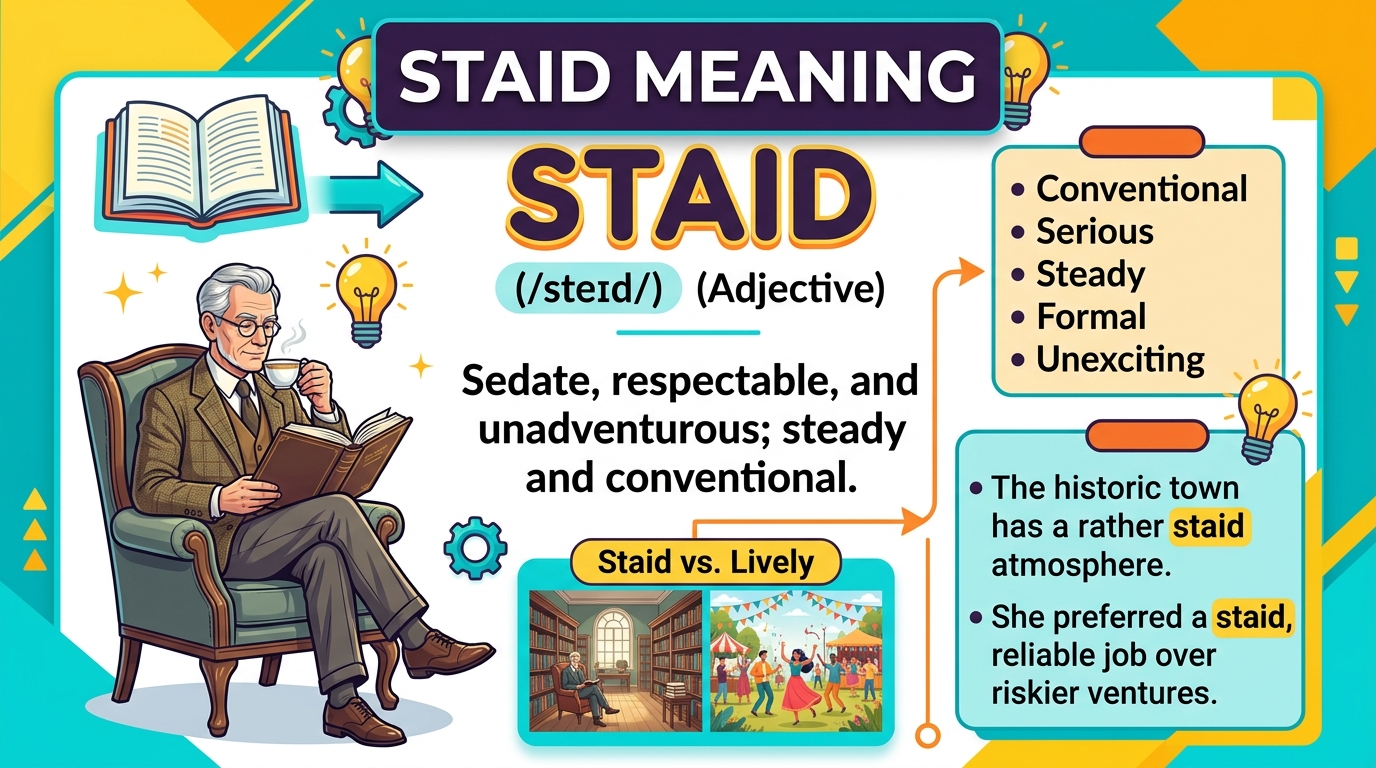
Staid means:
- Serious and calm
- Formal or traditional
- Not very emotional or exciting
- Respectable and controlled in behavior
In simple words, a staid person usually appears mature, careful, and reserved.
Short Examples
“Her staid personality made her seem very professional.”
“The event felt too staid for younger guests.”
“He prefers a staid lifestyle instead of partying every weekend.”
The word can be positive or negative, depending on context.
Origin & Background
The word “staid” comes from older English language roots connected to the idea of being settled, fixed, or stable. Historically, it described people who behaved with dignity and seriousness.
In earlier centuries, being called staid was often considered a compliment. Society valued discipline, emotional restraint, and formal manners. A staid person appeared trustworthy and dependable.
Over time, culture shifted. Modern communication celebrates humor, spontaneity, emotional openness, and individuality. Because of that, “staid” sometimes developed a slightly negative tone, especially among younger generations who associate it with being boring or overly conservative.
Social media also changed the perception of the word. On platforms like TikTok and Instagram, personality labels spread quickly. Users often compare:
- “chaotic energy”
- “main character energy”
- “quiet luxury”
- “staid personalities”
Today, the word sits somewhere between admiration and criticism depending on who says it and why.
Real-Life Conversations
WhatsApp Conversation
Person A:
Why didn’t Jake come to the party?
Person B:
He said the whole scene feels childish now.
Person A:
That’s such a staid answer honestly.
Instagram DM
Person A:
Your aesthetic is so classy and minimal.
Person B:
Thanks lol. Some people call it staid though.
Person A:
Not staid. Just elegant and mature.
TikTok Comments
User 1:
This outfit gives rich aunt energy.
User 2:
Very staid but in a fashionable way.
User 3:
Exactly. Quiet confidence.
Text Message
Person A:
My boss never laughs during meetings.
Person B:
Maybe he’s just naturally staid.
Person A:
Or secretly judging all of us.
Emotional & Psychological Meaning
Emotionally, the word “staid” often describes someone who values:
- control
- stability
- discipline
- predictability
- emotional restraint
Psychologically, people use the word when they notice someone avoiding chaos or dramatic behavior.
In modern communication, personality language has become deeply emotional. Calling someone “staid” can reveal how society views seriousness. Extroverted people may see it as dullness, while introverted or mature individuals may see it as emotional intelligence.
For example, imagine a friend group where everyone constantly posts loud jokes, relationship drama, and impulsive updates online. One person stays private, dresses simply, speaks carefully, and avoids public conflict. That person might be called “staid.”
But underneath that label could be:
- self-respect
- emotional boundaries
- professionalism
- anxiety about vulnerability
- or simply personal preference
This is why tone matters when using the word.
Usage in Different Contexts
Social Media
On social media, “staid” usually describes:
- minimalist lifestyles
- elegant fashion
- reserved personalities
- traditional opinions
Examples:
- “Her content is staid but calming.”
- “That luxury style feels very staid.”
Sometimes it means “classy.” Other times it means “too serious.”
Friends & Relationships
Among friends, the word can sound teasing or affectionate.
Example:
- “You’re so staid compared to the rest of us.”
In relationships, it may describe:
- emotional reserve
- predictable behavior
- maturity
- lack of spontaneity
Depending on tone, this can sound positive or critical.
Work & Professional Settings
In workplaces, “staid” is usually more positive.
A staid company may appear:
- reliable
- professional
- traditional
- financially stable
Example:
- “The firm has a staid corporate culture.”
Here, the word often suggests seriousness rather than boredom.
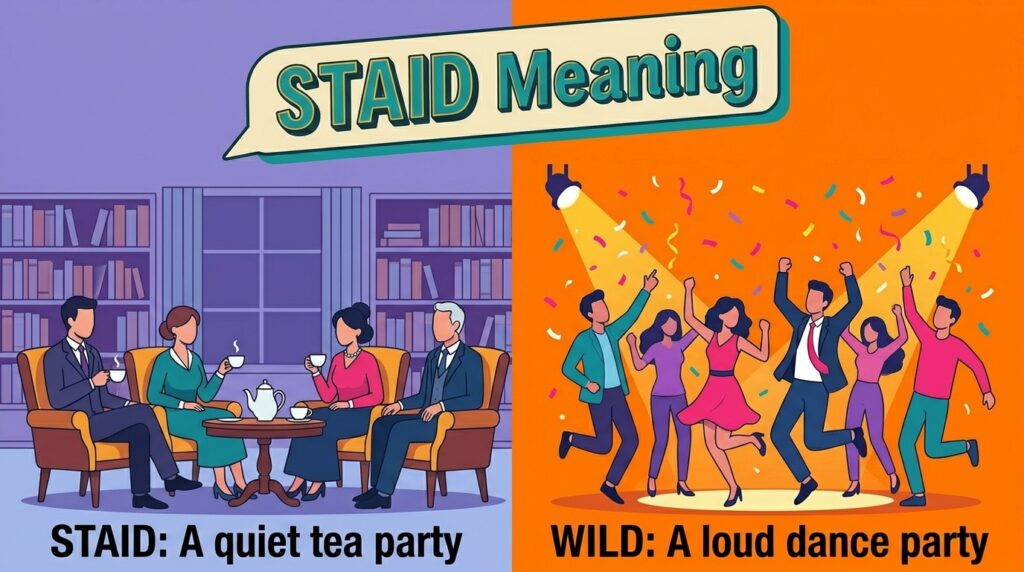
Casual vs Serious Tone
Casual Tone
Can imply:
- boring
- overly mature
- emotionally stiff
Serious Tone
Can imply:
- dignified
- disciplined
- dependable
Context changes everything.
When NOT to Use It
There are situations where using “staid” may create misunderstanding.
Avoid Using It:
- when describing someone emotionally sensitive
- during arguments or criticism
- in multicultural conversations without context
- sarcastically toward older people
- when professionalism is expected
Some people may interpret the word as:
- “boring”
- “cold”
- “judgmental”
- “socially awkward”
Always consider tone and relationship dynamics.
Common Misunderstandings
Many people misunderstand “staid” because it carries layered meanings.
Mistake 1: Thinking It Always Means Boring
Not true. Sometimes it means calm, elegant, and mature.
Mistake 2: Confusing It With “Strict”
A strict person enforces rules. A staid person is simply reserved or formal.
Mistake 3: Assuming It’s Always Negative
In professional environments, it can actually sound respectful.
Mistake 4: Literal vs Figurative Meaning
Literal meaning:
- serious and formal
Figurative modern usage:
- emotionally low-energy
- traditional
- aesthetically minimal
Comparison Table
| Phrase | Meaning / Intent |
|---|---|
| What Does staid Mean | Understanding the definition and emotional tone |
| How to Use staid | Learning correct sentence usage |
| Examples of staid | Seeing real-world conversation examples |
| staid vs boring | Comparing seriousness with lack of excitement |
| staid vs reserved | Understanding emotional restraint differences |
| staid vs formal | Comparing behavior and appearance |
| staid personality | Describing calm or emotionally controlled people |
| staid lifestyle | Referring to traditional or stable living |
Key Insight
The word “staid” becomes powerful because it sits between admiration and criticism. One person hears “mature and composed,” while another hears “emotionally distant.” Understanding that emotional nuance is the real key to using the word naturally.
Variations / Types
Staid meaning
Refers to someone serious, calm, and traditional.
Staid in text
Usually describes personality, style, or atmosphere in messages.
Example:
- “Your vibe is so staid lately.”
Staid abbreviation
There is no common abbreviation for “staid.”
Staid slang
Not exactly slang, but younger users sometimes use it jokingly online.
Staid in chat
Often used to describe:
- dry humor
- mature behavior
- reserved communication
Staid personality meaning
A person who appears emotionally controlled and composed.
Staid lifestyle meaning
A stable, predictable, traditional way of living.
Staid fashion meaning
Classic, elegant, understated clothing style.
Staid tone meaning
Speech or writing that sounds formal and restrained.
Staid behavior meaning
Calm actions without emotional exaggeration.
How to Respond When Someone Uses It
Casual Replies
- “I’ll take that as a compliment.”
- “Someone has to be the responsible one.”
- “Better than being chaotic.”
Funny Replies
- “I prefer the term emotionally premium.”
- “I’m not boring, I’m limited edition.”
- “Excitement is expensive these days.”
Mature Replies
- “I value stability more than drama.”
- “That’s just my personality.”
- “I like being thoughtful before reacting.”
Respectful Replies
- “I understand why you see me that way.”
- “I try to stay composed.”
- “Everyone expresses themselves differently.”
Regional & Cultural Usage
Western Culture
In Western societies, “staid” often describes:
- conservative personalities
- formal institutions
- traditional lifestyles
Younger generations may use it negatively.
Asian Culture
In many Asian cultures, traits linked with being staid can actually be respected:
- discipline
- emotional control
- modesty
- professionalism
A calm personality is often viewed positively.
Middle Eastern Culture
In Middle Eastern settings, seriousness and dignity are frequently associated with respectability and maturity. Calling someone staid may not automatically sound negative.
Global Internet Usage
Online culture changed the meaning slightly.
Today, “staid” can connect with:
- quiet luxury
- soft-spoken confidence
- minimalist aesthetics
- emotionally detached humor
Generational Differences
Gen Z
May associate “staid” with:
- boring energy
- emotionally unavailable people
- overly serious personalities
Millennials
Often connect it with:
- professionalism
- maturity
- reliability
- calm communication
Is It Safe for Kids?
Yes, the word “staid” is generally safe for kids. It is not offensive or inappropriate.
However, children may misunderstand it if used sarcastically. Adults should explain that the word describes behavior or personality style, not someone’s worth or likability.
Context and tone remain important.
FAQs
What does staid mean in simple words?
It means serious, calm, formal, or emotionally reserved.
Is staid a negative word?
Not always. It can be positive or negative depending on tone and context.
Can staid describe fashion?
Yes. It often describes classic, elegant, or understated fashion styles.
Is staid the same as boring?
No. Someone can be staid without being boring. The word mainly suggests restraint and seriousness.
How is staid used in conversation?
People use it to describe personalities, workplaces, lifestyles, or atmospheres that feel formal or traditional.
Is staid old-fashioned?
The word itself feels slightly traditional, but it is still widely understood and used today.
What is a staid personality?
A staid personality is calm, composed, emotionally controlled, and often mature.
Conclusion
Understanding the staid meaning goes beyond memorizing a dictionary definition. The word reflects how modern people view seriousness, emotional control, and maturity in a world driven by constant expression and fast communication. Sometimes “staid” describes elegance and reliability. Other times, it points to emotional distance or predictability. The real meaning depends on tone, culture, and context. Once you understand those emotional layers, you can use the word naturally and confidently in conversations, writing, work settings, and social media without sounding awkward or misunderstood.