If you’ve seen “WYM” in a message and felt confused, you’re not alone.
This popular texting abbreviation shows up everywhere—from WhatsApp and Instagram to gaming chats and workplace apps like Slack. As digital communication becomes faster and more informal, short forms like WYM are replacing full sentences.
So, what does WYM actually mean in text?
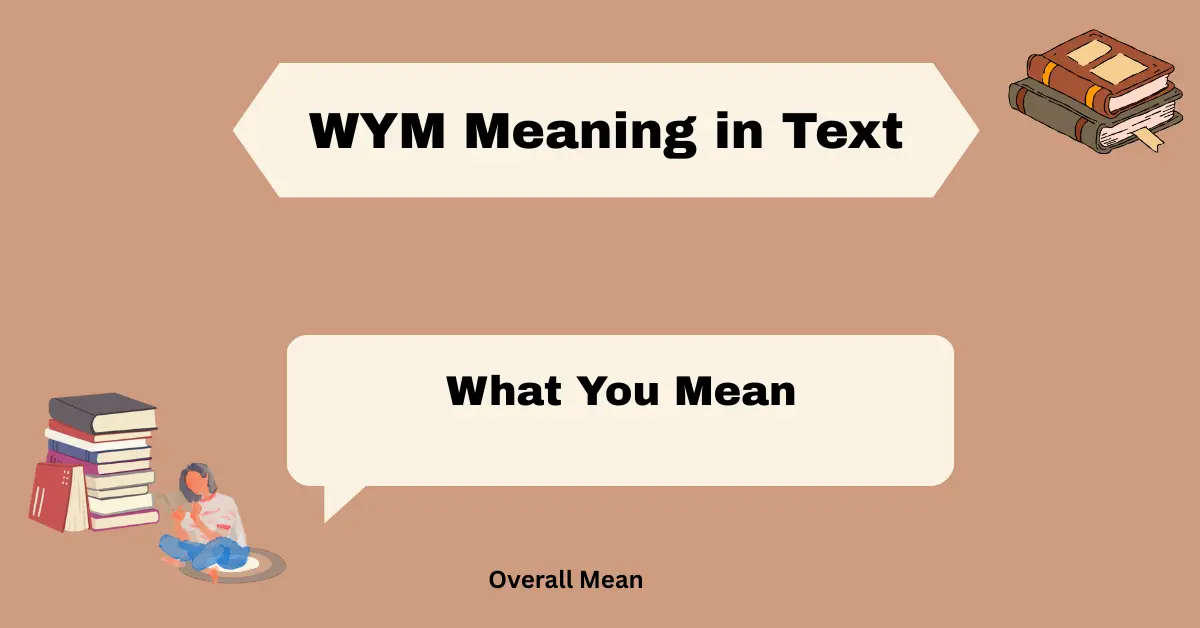
In simple terms, WYM stands for “What you mean?”—a quick way to ask someone for clarification. But depending on context, tone, and punctuation, it can also express surprise, confusion, or even mild disbelief.
In this complete 2026 guide, you’ll learn:
- The exact meaning of WYM
- How people use it in real conversations
- Whether it sounds polite or rude
- When to avoid it in professional settings
- Common mistakes and better alternatives
By the end, you’ll understand how to use and interpret WYM correctly in any situation.
2. What Does “WYM Meaning in Text” Mean?
Clear definition
WYM stands for:
“What You Mean?”
In standard English, this would normally appear as:
“What do you mean?”
WYM is simply the shortened, casual version used in texting and online chat.
Literal meaning
At its core, WYM asks for clarification. The sender did not fully understand what was said and wants more information.
Example:
“I might move next month.”
“WYM?”
Translation:
“What do you mean?”
Implied meaning
Depending on context, WYM can also imply:
- Confusion
- Surprise
- Mild disbelief
- Request for explanation
- Curiosity
Tone depends heavily on punctuation, emojis, and relationship.
Compare:
- “WYM?” → neutral clarification
- “WYM 😭” → emotional or shocked
- “wym” → casual, relaxed
- “WYM.” → can feel blunt or cold
When it does not mean what people assume
Some users mistakenly think WYM means:
- “What’s your mood”
- “Who you meeting”
- “Where you moving”
These interpretations are incorrect.
In mainstream digital English, WYM almost always means “What you mean?”
3. Is “WYM” a Slang, Typo, or Intentional Usage?
Short answer: it’s intentional slang.
Let’s break it down.
Slang usage
WYM belongs to modern internet shorthand — similar to:
- WYD (What you doing)
- IDK (I don’t know)
- SMH (Shaking my head)
- FR (For real)
It reflects how people naturally speak when typing quickly.
Typing behavior and keyboard influence
Mobile-first communication shaped WYM.
Typing “wym” requires only three taps.
Typing “what do you mean” takes over fifteen.
In fast-paced chats, especially on phones, efficiency wins.
Intentional stylistic usage
Many users choose WYM even when they could type the full sentence. Why?
Because WYM signals:
- Casual tone
- Informal connection
- Digital fluency
Using WYM often communicates “I’m relaxed” or “we’re on the same level.”
How to tell the difference using context
If someone regularly uses abbreviations, WYM is intentional.
If they normally write in full sentences and suddenly type “wym,” it may signal surprise or emotional reaction.
Context always matters.
4. Origin and Evolution of “WYM” in Digital Communication
Early chat and SMS influence
WYM emerged during early SMS and instant messaging days in the late 2000s and early 2010s.
Back then:
- Character limits existed
- Keypads were slow
- Messaging cost money
Shortened phrases saved time and space.
Social media and instant messaging growth
Platforms like:
- Facebook Messenger
- Snapchat
- Instagram DMs
accelerated adoption.
Gamers on Discord and Twitch further normalized abbreviations like WYM through rapid-fire chat environments.
How younger generations shaped usage
Gen Z and Gen Alpha refined WYM into everyday language.
They prefer:
- Minimal typing
- Lowercase style
- Emotion-packed shorthand
For younger users, WYM feels as natural as “ok.”
Why it still exists in 2026
Even with voice typing and AI keyboards, abbreviations persist because they:
- Signal belonging
- Save cognitive effort
- Express tone faster
- Match spoken rhythm
WYM survives because it fits modern conversational speed.
5. Real-World Usage Scenarios (Detailed Examples)
a) Casual Friend Conversations
Among friends, WYM feels relaxed and natural.
Examples:
Friend: “I might delete my socials.”
You: “wym?”
Or:
“WYM 😂 that makes no sense”
Here, WYM shows curiosity mixed with humor.
Tone: informal, friendly.
b) Workplace & Professional Chat (Formal vs Informal Teams)
In professional settings, usage varies.
Startup or casual team:
“WYM by revised deadline?”
Accepted, especially on Slack or Teams.
Corporate or formal environment:
Better to write:
“Could you clarify what you mean?”
WYM may feel too abrupt in client emails or executive communication.
Tone shifts dramatically based on company culture.
c) Social Media, Gaming, and Online Communities
WYM thrives in fast environments:
Gaming:
“WYM that boss is easy??”
Social media:
“WYM this outfit is ugly 😭”
Here, WYM often expresses disbelief or playful shock.
Tone: expressive, reactive, community-driven.
6. Emotional Tone and Intent Behind “WYM”
WYM itself is neutral. Emotion comes from context.
Friendly tone
- “wym haha”
- “WYM 😅”
Feels warm and conversational.
Neutral tone
- “WYM?”
Straightforward clarification.
Awkward or blunt tone
- “WYM.”
Period-ending WYM may feel cold.
How punctuation and emojis change meaning
Compare:
- “WYM” → flat
- “WYM?” → normal
- “WYM??” → surprised
- “wym 😭” → emotional
- “WYM bro” → casual
Small changes carry big emotional weight.
When it feels warm vs careless
WYM feels warm with emojis or extra words.
It feels careless when sent alone in professional contexts.
7. Cultural and Regional Differences in Usage
Native vs non-native English speakers
Non-native speakers often adopt WYM after exposure to social media, even if they don’t fully understand tone implications.
They may use it in formal situations unintentionally.
Regional texting habits
- US, UK, Canada: WYM common
- South Asia: rising usage via TikTok and gaming
- Middle East: used mostly by younger users
- Europe: mixed, depends on English proficiency
Cross-platform language adoption
TikTok and Discord accelerate global spread. One viral phrase can normalize WYM worldwide within weeks.
8. “WYM Meaning in Text” Compared With Similar Texting Terms
| Term | Meaning | Tone | Formality | Best Use Case |
|---|---|---|---|---|
| WYM | What you mean? | Casual | Low | Friends, chat apps |
| WDYM | What do you mean? | Neutral | Medium | Clearer clarification |
| Huh? | Confused | Casual | Low | Quick reactions |
| Can you clarify? | Request explanation | Polite | High | Workplace |
| Explain? | Direct | Medium | Medium | Informal work chats |
| IDGI | I don’t get it | Casual | Low | Friends |
WYM is the shortest and most informal option.
9. Common Misunderstandings and Mistakes
Misinterpretation cases
Some people read WYM as aggressive when it’s simply casual.
Others mistake it for sarcasm.
Autocorrect and keyboard issues
Auto-capitalization (“WYM”) can appear harsher than lowercase “wym.”
Overuse problems
Repeating WYM in conversations may feel lazy or dismissive.
How to avoid confusion
- Add emojis
- Add context
- Use full sentence when clarity matters
10. Is “WYM” Polite, Rude, or Unprofessional?
Relationship-based analysis
Friends: totally normal
Coworkers: depends on culture
Clients: avoid
Context-based analysis
Chat apps: acceptable
Emails: not recommended
Meetings: better spoken fully
Professional etiquette guidance
Use WYM only when:
- Relationship is casual
- Platform is informal
- Speed matters
Otherwise, write:
“Could you explain what you mean?”
11. Expert Linguistic Insight (Text Language in 2026)
Digital language continues evolving toward efficiency.
Three forces drive this:
- Speed of interaction
- Mobile-first typing
- Social belonging
Abbreviations persist because they mirror spoken rhythm.
People don’t say:
“What do you mean?”
They say:
“What you mean?”
WYM simply captures that spoken shortcut.
Grammar bends to conversational reality.
This is linguistic efficiency in action.
12. How and When You Should Use “WYM”
Do’s
- Use with friends
- Use in casual chats
- Add emojis for warmth
- Use lowercase for softness
Don’ts
- Don’t use with clients
- Don’t use in formal emails
- Don’t reply with only “WYM” in sensitive conversations
Safer alternatives
- “What do you mean?”
- “Could you explain?”
- “I’m not sure I follow — can you clarify?”
13. FAQs About “WYM Meaning in Text”
Q1: What does WYM mean in texting?
It means “What you mean?” — a casual way of asking for clarification.
Q2: Is WYM rude?
Not usually. It depends on context and tone.
Q3: Can I use WYM at work?
Only in informal teams or chat platforms. Avoid in emails.
Q4: Is WYM the same as WDYM?
Yes, but WDYM feels slightly more complete.
Q5: Why do people use WYM instead of full sentences?
Speed, convenience, and digital culture.
Q6: Does capitalization change meaning?
Yes. “wym” feels softer than “WYM.”
Q7: Is WYM used globally?
Yes, especially among younger users influenced by social media.
Q8: Should I respond seriously to WYM?
Yes. It signals someone needs clarification.
14. Final Summary and Key Takeaways
The WYM meaning in text is simple: it stands for “What you mean?”
But its impact depends on tone, context, and relationship.
WYM is:
- Casual
- Efficient
- Widely used in modern messaging
- Best suited for informal environments
It can feel friendly, neutral, or blunt depending on punctuation and emojis.
In professional spaces, safer alternatives work better.
Understanding WYM helps you:
- Avoid miscommunication
- Read emotional intent
- Respond appropriately
- Sound socially fluent in 2026’s digital world
Use it wisely, interpret it carefully, and always match the tone to your audience.