If you’ve come across the term “yaoi” online, in anime discussions, or even in casual chats, you’re not alone. It’s one of those words that sparks curiosity, confusion, and sometimes even awkward silence.
People search for yaoi meaning because the word feels specific yet unclear. Is it a genre? A relationship type? Something romantic—or something more explicit?
The truth is, yaoi carries cultural, emotional, and social layers. Its meaning has evolved far beyond its original roots, especially in today’s internet-driven world.
This guide breaks it down in a way that actually makes sense—no fluff, no jargon, just clear, real-world understanding.
Yaoi – Quick Meaning
Yaoi refers to a genre of Japanese media that focuses on romantic or sexual relationships between male characters.
Simple breakdown:
- Originates from Japanese manga and anime culture
- Focuses on male × male relationships
- Often created for a female audience
- Can range from emotional romance to explicit content
In simple words:
“Yaoi is a type of story about romantic or sexual relationships between male characters.”
Real-world usage examples:
- “I didn’t expect that anime to turn into yaoi.”
- “She reads a lot of yaoi manga.”
- “That fan art is definitely yaoi-coded.”
Origin & Background
The word “yaoi” comes from a Japanese phrase:
“Yama nashi, ochi nashi, imi nashi”
Which loosely means:
“No climax, no point, no meaning.”
Originally, it described fan-made stories that focused more on emotional or romantic interactions than structured plots.
Cultural roots:
- Emerged in 1970s–1980s Japan
- Gained popularity through doujinshi (fan-made comics)
- Closely related to the “Boys’ Love (BL)” genre
Evolution over time:
- Early yaoi was niche and underground
- It later became mainstream within anime communities
- Today, it exists globally through:
- TikTok fandoms
- Instagram fan pages
- Online reading platforms
Social media impact:
Platforms like TikTok and Twitter have:
- Popularized “yaoi ships”
- Turned fictional pairings into viral trends
- Blurred lines between fiction and fan interpretation
Real-Life Conversations
Here’s how “yaoi” naturally appears in modern conversations:
1. WhatsApp Chat
Person A: Did you finish that anime?
Person B: Yeah… wasn’t expecting it to turn into yaoi 😂
Person A: SAME. That plot twist caught me off guard
2. Instagram DMs
Person A: Why is everyone shipping them?
Person B: Because it’s giving strong yaoi vibes 😭
3. TikTok Comments
User 1: This scene is so intense
User 2: Nah this is straight-up yaoi at this point
4. Text Message
Person A: What are you reading these days?
Person B: Mostly yaoi… the stories hit different honestly
Emotional & Psychological Meaning
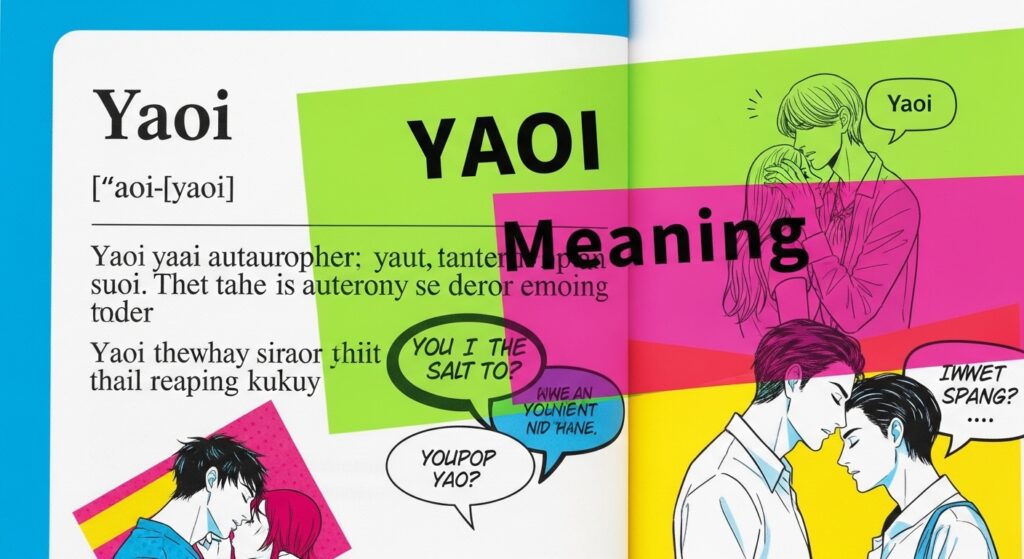
At its core, yaoi isn’t just about relationships—it’s about emotional storytelling.
What it expresses:
- Deep emotional connection
- Forbidden or unconventional love
- Vulnerability between characters
- Intense, often dramatic relationships
Why people are drawn to it:
- It explores emotions outside traditional norms
- Offers escapism and imaginative freedom
- Focuses heavily on character dynamics
What it reveals about modern communication:
People today are more open to:
- Exploring different identities
- Discussing non-traditional relationships
- Engaging with emotionally rich storytelling
Personal-style scenario:
You start watching an anime casually. At first, it’s action-packed. Then suddenly, two male characters share a moment that feels deeply personal.
You pause and think:
“Wait… is this turning into yaoi?”
That moment of realization is exactly why the term exists—it helps people label a specific emotional shift in storytelling.
Usage in Different Contexts
1. Social Media
- Used in fandom discussions
- Describes character relationships or “ships”
- Often appears in memes and edits
2. Friends & Relationships
- Casual conversation about anime or manga
- Shared interests among fans
- Sometimes used humorously
3. Work / Professional Settings
- Generally not appropriate
- Too niche and potentially sensitive
4. Casual vs Serious Tone
- Casual: “This show is low-key yaoi”
- Serious: “The narrative explores yaoi themes deeply”
When NOT to Use It
There are situations where using “yaoi” can backfire:
- In formal or professional environments
- Around people unfamiliar with anime culture
- In sensitive discussions about real-life relationships
- When it may come across as stereotyping
Important note:
Yaoi is fiction-based, so applying it to real people can feel inappropriate or disrespectful.
Common Misunderstandings
1. “Yaoi = All LGBTQ+ content”
Not true. Yaoi is a specific genre, not a universal term.
2. “It’s always explicit”
Some yaoi is romantic and emotional, not explicit.
3. “It’s only for one audience”
While historically aimed at women, today it has a global and diverse audience.
4. “It’s the same as BL”
They overlap, but:
- BL is broader
- Yaoi often implies more intense or explicit storytelling
Comparison Table
| Term | Meaning | Tone | Context |
|---|---|---|---|
| Yaoi | Male × male romantic/sexual content | Often intense | Anime/manga fandom |
| BL (Boys’ Love) | Broader category of male romance | Emotional to light | Media genre |
| Yuri | Female × female relationships | Romantic | Anime/manga |
| Slash | Western fanfiction pairing | Flexible | Online fandoms |
| Bromance | Deep male friendship (non-romantic) | Light | Pop culture |
Key Insight
Yaoi stands out because it blends emotional depth with romantic tension in a way that feels both fictional and deeply human.
Variations / Types
- Soft Yaoi – Focuses on romance rather than explicit content
- Hard Yaoi – More explicit storytelling
- Shounen-ai – Lighter, emotional male relationships
- BL (Boys’ Love) – Umbrella term
- Yaoi Ship – Fan-supported relationship
- Canon Yaoi – Officially part of a story
- Fanon Yaoi – Created by fans, not official
- Yaoi Manga – Printed or digital comics
- Yaoi Anime – Animated adaptations
- Yaoi Fanfiction – Stories written by fans
How to Respond When Someone Uses It
Casual replies:
- “Ohhh I see what you mean 😂”
- “That makes sense actually”
Funny replies:
- “Not the yaoi plot twist again 😭”
- “Anime never warns us beforehand”
Mature replies:
- “Yeah, it adds emotional depth to the story”
- “It’s interesting how the dynamic develops”
Respectful replies:
- “I get why people enjoy that genre”
- “Everyone connects with stories differently”
Regional & Cultural Usage
Western Culture
- Seen as part of fandom culture
- Often discussed openly online
Asian Culture
- Deep roots in Japanese media
- More structured genre classification
Middle Eastern Culture
- Usage is more private or niche
- Cultural sensitivity plays a role
Global Internet Usage
- Widely understood in anime communities
- Used casually in memes and discussions
Generational Differences
- Gen Z: Uses it casually, often humorously
- Millennials: More familiar with its origins and context
Is It Safe for Kids?
It depends on context.
- Some yaoi content is romantic and harmless
- Other content may be explicit and not age-appropriate
Best approach:
- Parents should understand the context
- Not all yaoi content is suitable for younger audiences
FAQs
1. What does yaoi mean in simple terms?
It refers to stories or media featuring romantic or sexual relationships between male characters.
2. Is yaoi the same as BL?
Not exactly. BL is broader, while yaoi often implies more intense or explicit themes.
3. Is yaoi inappropriate?
Some content can be explicit, but not all yaoi is inappropriate.
4. Why is yaoi popular?
Because it explores emotional relationships in unique and engaging ways.
5. Can men enjoy yaoi?
Yes. While historically aimed at women, it’s now enjoyed by a diverse audience.
6. Is yaoi only Japanese?
It originated in Japan but is now a global phenomenon.
Conclusion
Understanding yaoi meaning goes beyond a simple definition. It’s a term shaped by culture, storytelling, and modern online expression.
For some, it’s entertainment.
For others, it’s emotional connection.
And for many, it’s just another way to explore stories that feel different from the norm.
The key is knowing when and how to use it.
Once you understand the context, the confusion fades—and you can engage in conversations with clarity and confidence.