If you’ve spent even a little time on social media or chatting with friends, you’ve probably come across the word “bruh.” It pops up everywhere—memes, comments, texts, and even real-life conversations. But what does it actually mean?
People search for “bruh meaning” because it’s confusing. Sometimes it sounds funny, sometimes rude, and other times it feels like a reaction you can’t quite explain. That’s the beauty of it—it’s simple, yet emotionally loaded.
This guide clears up that confusion. You’ll not only understand what “bruh” means, but also when, why, and how to use it naturally—without sounding awkward or out of place.
Bruh Meaning – Quick Meaning
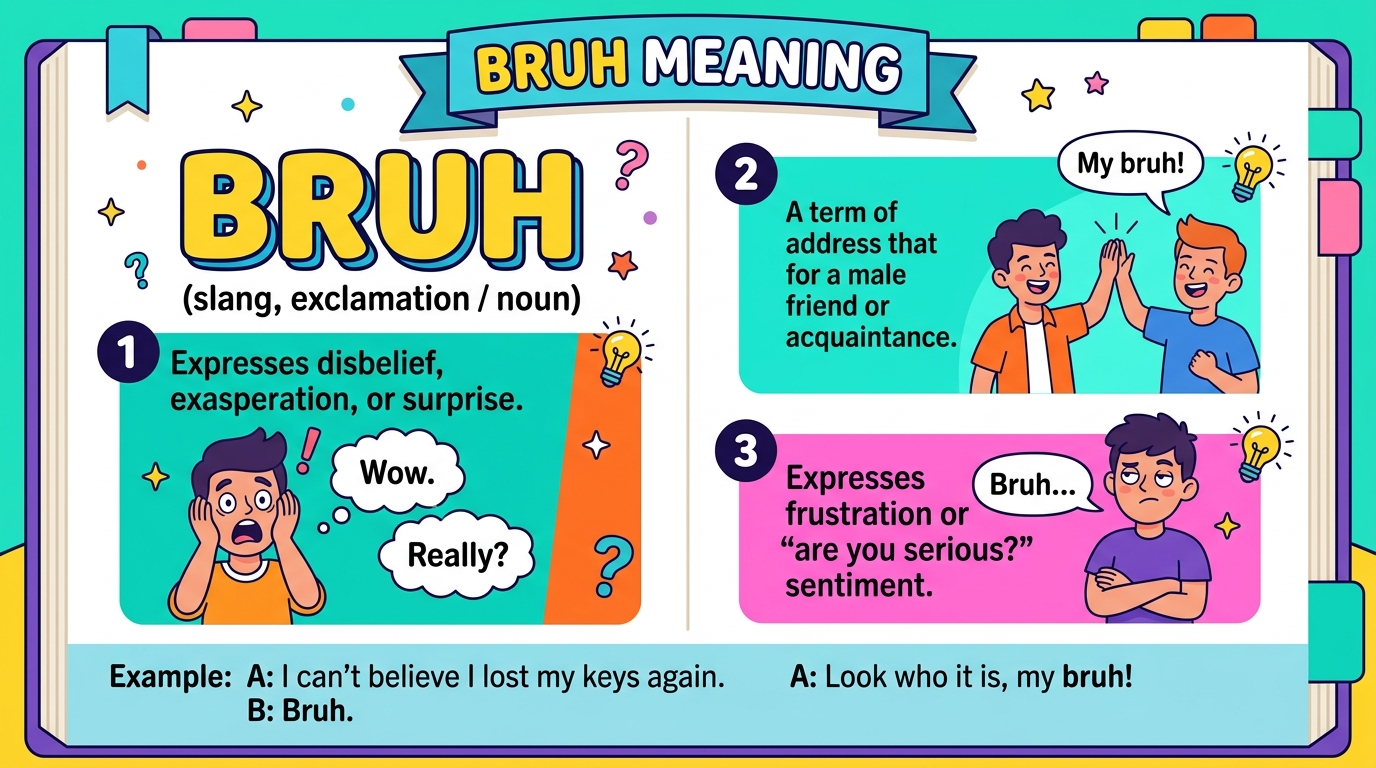
At its core, “bruh” is a casual slang term derived from “bro” or “brother.”
But in real usage, it’s more about reaction than relationship.
Quick definitions:
- A way to express disbelief or shock
- A reaction to something funny, st*pid, or unexpected
- A casual way to address someone (like “dude”)
Examples:
- “Bruh… did you really just say that?”
- “Bruh, that was ins*ne!”
- “Bruh 💀 I can’t believe this happened.”
It’s less about the word itself—and more about the tone behind it.
Origin & Background
“Bruh” didn’t just appear overnight. It evolved naturally from “bro,” which has been used for decades in casual speech, especially in American culture.
Over time, pronunciation shifted. “Bro” became “brah” in some regions, then “bruh”—a softer, more expressive version.
Its real explosion came with internet culture:
- Vine clips popularized exaggerated reactions
- Meme culture turned it into a universal response
- TikTok amplified its emotional range
Today, “bruh” is global. You’ll hear it from teenagers in the U.S., gamers in Asia, and content creators worldwide.
Its meaning hasn’t changed—it’s just become more emotionally flexible.
Real-Life Conversations
WhatsApp Chat
Person A: I forgot my wallet at home again.
Person B: Bruh… how do you even manage that every day?
Instagram DMs
Person A: I texted her “good morning” at 2pm 😭
Person B: Bruh 💀 just delete the whole conversation at this point.
TikTok Comments
Person A: This dude really tried to microwave ice cream.
Person B: Bruh… evolution is going backwards.
Text Messages
Person A: I waved back at someone who wasn’t waving at me.
Person B: Bruh that’s a lifetime memory now.
These examples show something important—“bruh” is rarely about information. It’s about emotion.
Emotional & Psychological Meaning
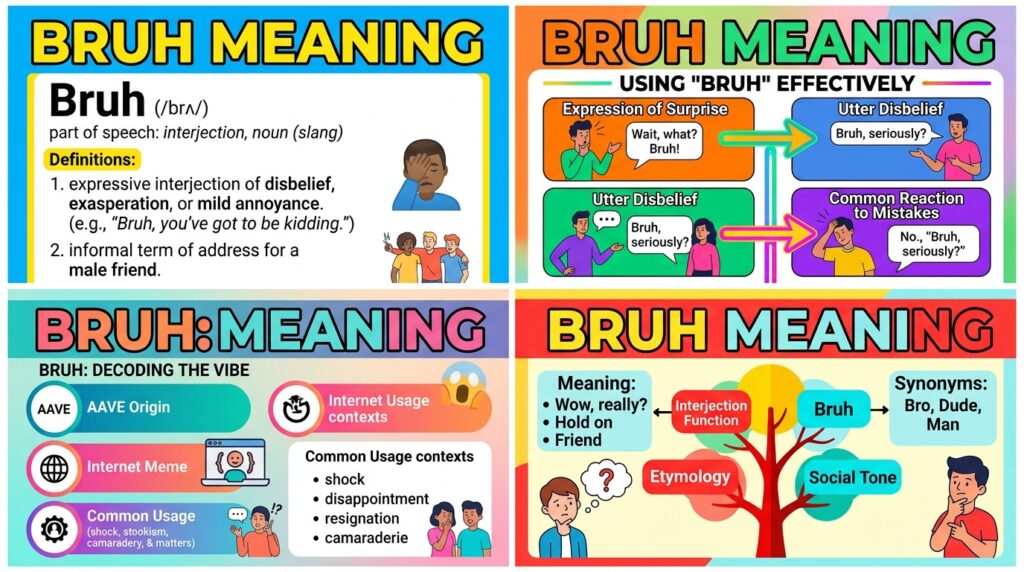
“Bruh” is a shortcut for feelings we don’t fully articulate.
It often expresses:
- Mild frustration
- Secondhand embarrassment
- Shock or disbelief
- Playful judgment
Instead of explaining a reaction in full sentences, people just say “bruh”—and the emotion is instantly understood.
Real-life scenario:
You’re sitting with friends, and someone tells a story so ridiculous that you don’t even know where to start reacting. You pause, shake your head, and just say, “bruh.”
That single word replaces an entire paragraph of thoughts.
It reflects how modern communication is evolving—faster, more emotional, and less formal.
Usage in Different Contexts
Social Media
“Bruh” thrives here. It’s used in comments, captions, and reactions.
- Short, punchy, relatable
- Often paired with emojis (💀😂)
Friends & Relationships
Among friends, it’s playful and casual.
- “Bruh, you’re late again.”
- Not offensive—just expressive
Work / Professional Settings
Avoid it here.
- It can sound unprofessional or immature
- Replace with neutral responses instead
Casual vs Serious Tone
- Casual: Funny, relaxed, harmless
- Serious situations: Can feel dismissive or disrespectful
Tone matters more than the word itself.
When NOT to Use It
There are moments where “bruh” doesn’t land well.
Avoid using it:
- In formal emails or interviews
- When someone is sharing something emotional or serious
- With people who may not understand slang
- In professional disagreements
In the wrong context, it can come off as careless or even rude.
Common Misunderstandings
1. It Always Means “Brother”
Not true. It rarely refers to an actual person.
2. It’s Always Funny
Sometimes it signals frustration or disappointment.
3. It’s Rude
Not necessarily. Tone and relationship define that.
4. It Has One Meaning
“Bruh” is fluid. Its meaning changes with context.
Comparison Table
| Phrase | Meaning | Intent |
|---|---|---|
| What Does bruh Mean | A reaction word showing emotion | Definition intent |
| How to Use bruh | Used casually in conversations | Usage intent |
| Examples of bruh | Real-life emotional reactions | Example intent |
| bruh vs bro | “Bruh” = reaction, “bro” = person | Comparison intent |
Key Insight:
“Bruh” isn’t just a word—it’s a reaction tool. Understanding tone is more important than memorizing definitions.
Variations / Types
Here are common variations and how they’re used:
- Bruhhh meaning – Extended disbelief or frustration
- Bruh moment meaning – A situation that feels awkward or ridiculous
- Bruh in text – Quick emotional response in chats
- Bruh abbreviation – Casual shorthand for reaction
- Bruh slang – Internet-based expressive term
- Bruh in chat – Used to react instantly without explanation
- Bro vs bruh meaning – “Bro” is direct, “bruh” is reactive
- Bruh meme meaning – Often tied to humorous or absurd content
- Bruh sound effect meaning – Viral audio expressing disappointment
- Bruh response meaning – Minimal effort, maximum emotion
Each variation adds tone, not complexity.
How to Respond When Someone Uses It
Casual Replies
- “I know, right?”
- “Exactly what I was thinking.”
Funny Replies
- “Certified bruh moment 😂”
- “We’re not recovering from this one.”
Mature Replies
- “Yeah, that situation was frustrating.”
- “I understand why you feel that way.”
Respectful Replies
- “I get your reaction.”
- “That does sound surprising.”
Your response should match the tone behind the “bruh.”
Regional & Cultural Usage
Western Culture
Very common. Used freely in daily speech and online.
Asian Culture
Popular among younger audiences, especially in gaming and social media.
Middle Eastern Culture
Used in English-speaking circles and online communities.
Global Internet Usage
A universal reaction word. Language barriers don’t limit it.
Generational Differences
- Gen Z: Uses it naturally and frequently
- Millennials: Understand it, but use it more selectively
It’s a generational tone marker as much as a word.
Is It Safe for Kids?
Yes, generally.
“Bruh” is harmless slang when used casually. However:
- It can sound disrespectful if used toward elders
- Context still matters
Teaching kids when not to use it is just as important as understanding what it means.
FAQs
1. Is “bruh” a bad word?
No, it’s informal slang, not offensive by itself.
2. Can “bruh” be used seriously?
Not usually. It’s mostly used for reactions.
3. What’s the difference between “bro” and “bruh”?
“Bro” addresses someone. “Bruh” reacts to something.
4. Why do people say “bruh” instead of full sentences?
It’s quicker and emotionally expressive.
5. Is “bruh” rude in arguments?
It can be, depending on tone.
6. Can adults use “bruh”?
Yes, but it’s more common in younger, casual communication.
7. What does “bruh moment” mean?
An awkward, shocking, or ridiculous situation.
Conclusion
“Bruh” may look like just another internet word, but it carries surprising emotional weight. It captures reactions we often struggle to put into full sentences—shock, humor, frustration, and disbelief—all in one breath. When used naturally, it makes communication feel more human and relatable. The key is awareness: understand your audience, your tone, and your context. Use it casually, avoid it professionally, and you’ll never sound out of place.