We’ve all had moments when knowing less felt strangely comforting. Maybe you avoided reading a message, skipped the news, or chose not to ask a question because deep down, you sensed the answer might disturb your peace. That quiet instinct is captured perfectly in the phrase “ignorance is bliss.”
People search for this expression because it sounds simple—but its meaning carries emotional weight. Is it wisdom, denial, or self-protection? Is it healthy to not know, or is it just avoidance in disguise?
This article clears that confusion. You’ll understand not just the definition, but how this phrase shows up in real conversations, emotions, and everyday life decisions.
Ignorance Is Bliss – Quick Meaning
Definition:
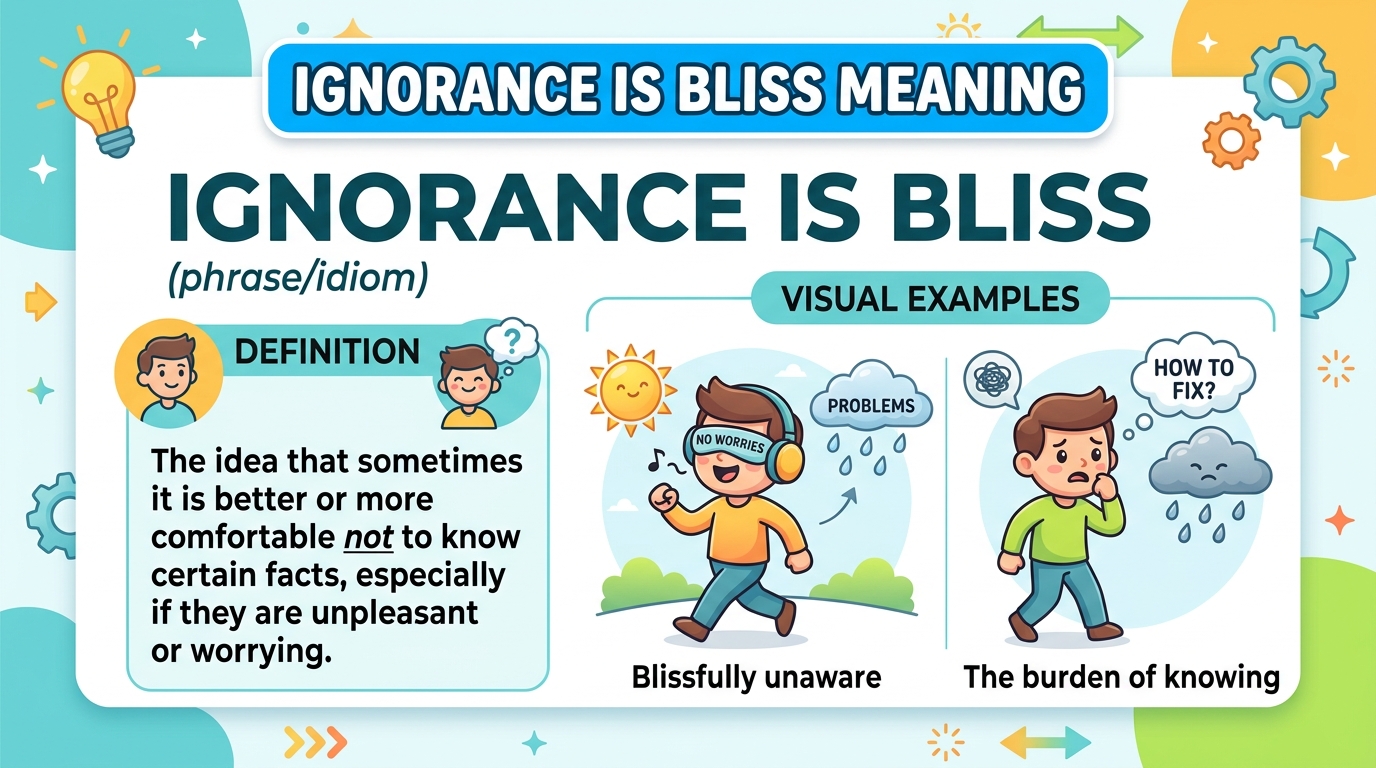
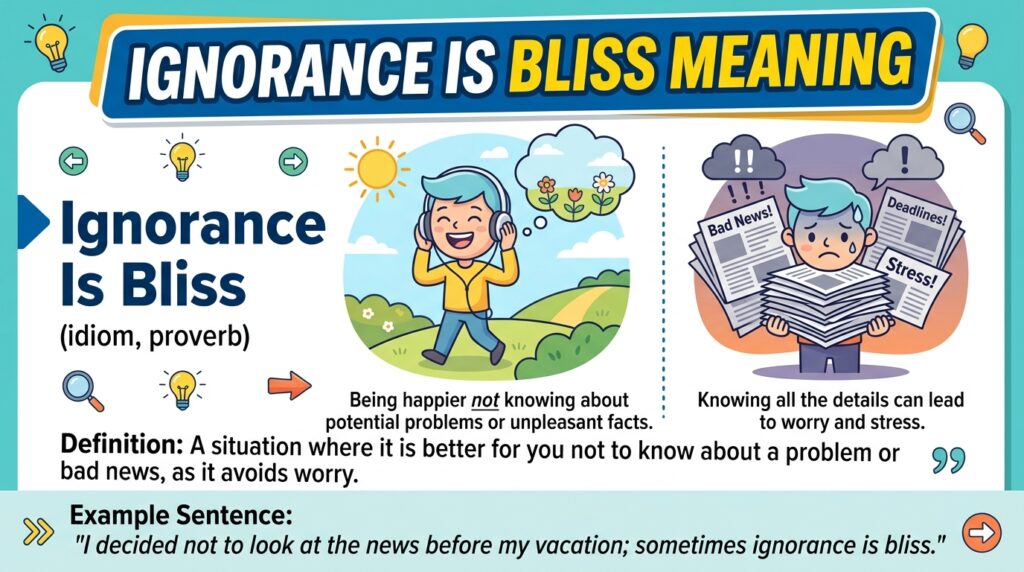
“Ignorance is bliss” means that sometimes, not knowing something can make you happier or less stressed.
In simple terms:
- Lack of knowledge can protect your peace
- Awareness can bring worry or discomfort
- Choosing not to know can feel emotionally easier
Examples:
- “I didn’t check my exam result yet. Ignorance is bliss.”
- “Don’t tell me what they said—I’d rather stay calm.”
- “Honestly, ignorance is bliss when it comes to office gossip.”
Origin & Background
The phrase dates back to 18th-century poetry. It was popularized by the English poet Thomas Gray, who wrote, “Where ignorance is bliss, ’tis folly to be wise.”
Originally, it reflected a philosophical idea: sometimes knowledge brings burden, not freedom.
Over time, the phrase moved from literature into everyday speech. Today, it appears everywhere—from casual conversations to social media captions.
On platforms like Instagram and TikTok, people use it humorously or sarcastically. A person ignoring drama might caption their post: “Peace > knowing everything. Ignorance is bliss.”
The meaning hasn’t changed much, but its tone has evolved. It now ranges from playful avoidance to deep emotional self-protection.
Real-Life Conversations
WhatsApp Chat:
- Person A: “Did you hear what they said about you?”
- Person B: “Nope, and I don’t want to. Ignorance is bliss.”
Instagram DMs:
- Person A: “Should I check his following list?”
- Person B: “Girl… ignorance is bliss sometimes 😂”
TikTok Comments:
- Commenter 1: “I stayed out of the drama.”
- Commenter 2: “Same. Ignorance is bliss fr.”
Text Message:
- Person A: “Results are out!”
- Person B: “I’m not checking yet. Let me live in peace 😭 ignorance is bliss.”
These conversations show how naturally the phrase fits into modern communication.
Emotional & Psychological Meaning
At its core, “ignorance is bliss” expresses a desire for emotional safety.
Sometimes, knowledge creates anxiety:
- Knowing someone dislikes you
- Discovering uncomfortable truths
- Facing uncertain outcomes
In these moments, the mind leans toward protection. Avoidance isn’t always weakness—it can be a temporary shield.
Why people use it:
- To reduce stress
- To delay emotional pain
- To maintain peace in uncertain situations
A real-life scenario:
Imagine you suspect a friend is upset with you. You could ask directly—or stay silent. Choosing silence might feel easier because it avoids confrontation. In that moment, “ignorance is bliss” becomes a coping mechanism.
But there’s a balance. Long-term avoidance can create bigger problems.
Usage in Different Contexts
Social Media
Used humorously or sarcastically:
- “Didn’t read the comments. Ignorance is bliss 😌”
Friends & Relationships
Often reflects emotional avoidance:
- Avoiding jealousy, conflict, or overthinking
Work / Professional Settings
Used cautiously:
- “I stayed out of that issue—ignorance is bliss.”
(This can sound unprofessional if overused.)
Casual vs Serious Tone
- Casual: Light, joking
- Serious: Emotional boundary or coping strategy
When NOT to Use It
There are moments when this phrase can feel inappropriate:
- Serious conversations: It may sound dismissive
- Important responsibilities: Avoiding knowledge can seem careless
- Emotional discussions: It might hurt someone seeking honesty
- Cultural sensitivity: Some may interpret it as ignorance in a negative sense
Use it carefully when stakes are high.
Common Misunderstandings
1. It promotes stupidity
Not true. It reflects emotional choice, not lack of intelligence.
2. It always means avoidance
Sometimes it’s temporary self-protection, not permanent denial.
3. It’s always positive
It can be comforting—but also limiting.
4. Literal vs figurative confusion
It’s rarely about actual ignorance. It’s about emotional impact.
Comparison Table
| Phrase Intent | Meaning |
|---|---|
| What Does ignorance is bliss Mean | Not knowing something can protect your happiness |
| How to Use ignorance is bliss | Used when avoiding information feels emotionally easier |
| Examples of ignorance is bliss | Ignoring gossip, delaying results, avoiding conflict |
| ignorance is bliss Other | Related ideas: “what you don’t know won’t hurt you” |
Key Insight:
The phrase is less about ignorance itself and more about how knowledge affects emotional well-being.
Variations / Types
- Ignorance is bliss meaning
Not knowing brings peace - Ignorance is bliss in text
Used casually in chats to avoid stress - Ignorance is bliss abbreviation
No formal abbreviation, but implied tone - Ignorance is bliss slang
“Better not to know” - Ignorance is bliss in chat
Expresses playful avoidance - What you don’t know won’t hurt you
Similar meaning, slightly more defensive - Out of sight, out of mind
Emotional detachment variation - Stay clueless, stay happy
Modern humorous version - No news is good news
Positive spin on absence of information - Don’t tell me, I’m happier this way
Direct conversational form
How to Respond When Someone Uses It
Casual Replies
- “Haha, fair enough!”
- “Peace over drama, I get it.”
Funny Replies
- “Until reality knocks 😅”
- “Temporary happiness unlocked!”
Mature Replies
- “Sometimes that’s true, but clarity helps too.”
- “Just don’t avoid things that matter.”
Respectful Replies
- “I understand. Take your time.”
- “Do what feels right for your peace.”
Regional & Cultural Usage
Western Culture
Often used humorously or philosophically.
Asian Culture
Sometimes linked with emotional restraint and harmony.
Middle Eastern Culture
May be seen as avoiding unnecessary conflict.
Global Internet Usage
Widely used in memes, captions, and casual chats.
Generational Differences
- Gen Z: Uses it jokingly, often sarcastic
- Millennials: More reflective, emotional context
Is It Safe for Kids?
Yes, the phrase itself is safe.
However, children should understand that while avoiding small worries is okay, ignoring important truths—like schoolwork or responsibilities—is not healthy.
Context matters.
FAQs
1. Is “ignorance is bliss” positive or negative?
It can be both, depending on the situation.
2. Is it okay to use in professional settings?
Only casually and carefully—it may sound unprofessional.
3. Does it mean avoiding problems?
Sometimes, but not always permanently.
4. Can it be sarcastic?
Yes, very often in social media.
5. Is it rude to say?
It can be, if used in serious conversations.
6. What’s a similar phrase?
“What you don’t know won’t hurt you.”
7. Why do people relate to it?
Because everyone seeks peace in overwhelming situations.
Conclusion
“Ignorance is bliss” isn’t just a phrase—it reflects a deeply human instinct to protect our peace when life feels overwhelming. Sometimes, stepping back from information gives us space to breathe, think, and regain emotional balance. But real strength lies in knowing when to stay unaware and when to face the truth. Used wisely, this expression becomes less about avoidance and more about emotional intelligence—choosing clarity or calm based on what truly serves you.