People use short forms in texting every day, but some abbreviations still confuse users — and “WTH” is one of the most searched in 2026. You may have seen messages like “WTH just happened?” or “Bro, WTH 😳” and wondered what the sender actually meant.
In texting, social media, gaming chats, and apps like Snapchat, Instagram, WhatsApp, and TikTok, WTH is commonly used to express surprise, confusion, disbelief, or mild frustration. However, its tone can change depending on the situation, punctuation, and emojis used with it.
This guide explains the full meaning of WTH in text, where it came from, how people use it online, whether it is rude or professional, and the safest ways to use it in modern digital conversations.
2. What Does “WTH Meaning in Text” Actually Mean?
Literal Meaning
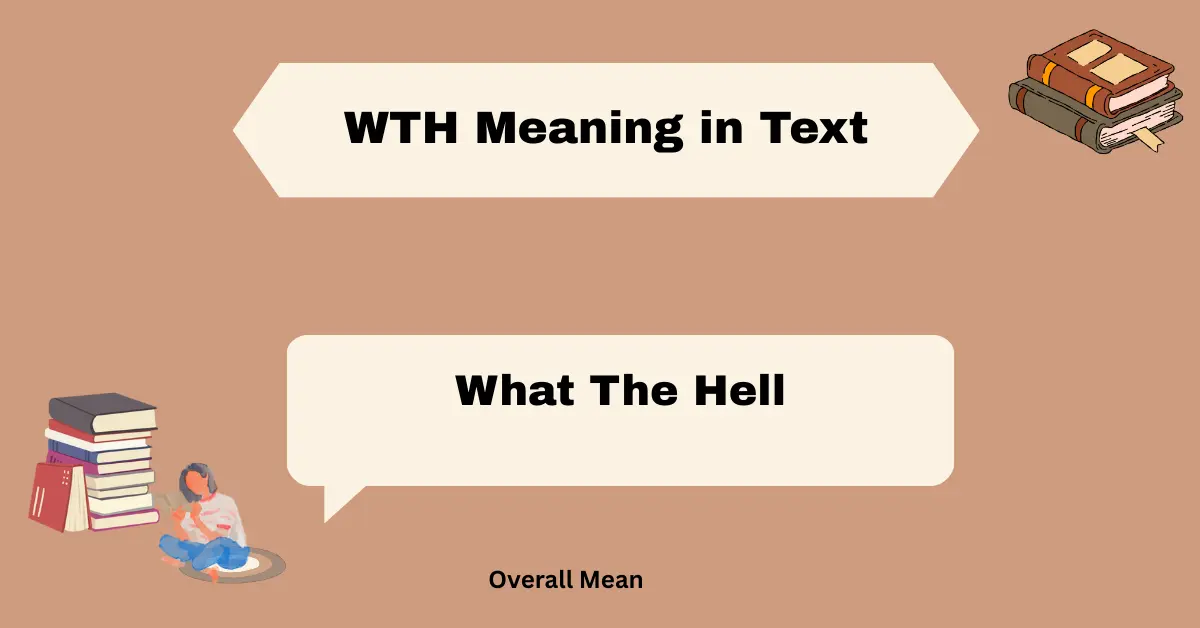
WTH stands for:
“What The Hell”
It is a shortened form of the full phrase, designed for texting, chatting, and fast online communication.
Implied Meaning
In text, WTH is not just a question. It expresses:
- Surprise
- Confusion
- Shock
- Disbelief
- Mild frustration
- Emotional reaction
When someone writes WTH, they are reacting to something unexpected.
What WTH Does NOT Always Mean
Many people think WTH is always rude or angry — but that is not true.
It does not always mean:
- Someone is furious
- Someone is insulting you
- Someone is being aggressive
Most of the time, it means:
“I didn’t expect this” or “This is surprising”
Tone depends entirely on context.
3. Is “WTH” a Slang, Typo, or Intentional Usage?
WTH is Slang
WTH is a digital slang abbreviation. It was created to:
- Save typing
- Avoid writing a swear-like word
- Express emotion quickly
Not a Typo
It is not an error or keyboard mistake.
It is intentionally written.
People choose WTH because:
- “What the hell” feels too long
- “WTF” feels too harsh
- WTH feels safer and lighter
How to Tell Its Meaning by Context
Look at:
- Emojis 😅 😳 😂 😡
- Capitalization
- The sentence
Example:
“WTH 😂” → surprised or amused
“WTH are you doing??” → frustrated
“wth…” → confused or disappointed
4. Origin and Evolution of “WTH” in Digital Communication
Early SMS and Chat Rooms
WTH appeared in the late 1990s and early 2000s when:
- SMS had character limits
- AOL, MSN, Yahoo Messenger were popular
- People shortened everything
It was a cleaner version of WTF.
Social Media Expansion
As Facebook, Twitter, and later Instagram grew, WTH became:
- A reaction phrase
- A meme caption
- A comment response
It was seen as:
Expressive but not vulgar
Gen Z and Gen Alpha Influence
Younger users kept WTH alive because:
- It sounds funny
- It feels sarcastic
- It avoids swearing
Why It Still Exists in 2026
Even with voice messages and AI typing:
- Short emotional reactions are still needed
- WTH is fast, safe, and expressive
- It fits meme culture and texting tone
5. Real-World Usage Scenarios
a) Casual Friend Conversations
Used for:
- Jokes
- Surprises
- Funny mistakes
Example:
“WTH 😂 how did you fail that level?”
Tone: playful, teasing
b) Workplace & Professional Chat
Used in informal teams only.
Example:
“WTH, the server went down again 😅”
Tone: casual frustration
Not suitable for emails to bosses or clients.
c) Social Media, Gaming, and Online Communities
Very common.
Example:
“WTH was that ending??”
Tone: shock, reaction, engagement
6. Emotional Tone and Intent Behind “WTH”
| Style | Meaning |
|---|---|
| WTH! | Shock or anger |
| WTH 😂 | Funny surprise |
| wth… | Confused or disappointed |
| WTH??? | Strong disbelief |
| WTH 😳 | Unexpected or awkward |
Small symbols completely change meaning.
7. Cultural and Regional Differences
- US & UK: Mild slang, normal in casual chat
- South Asia: Seen as strong or rude sometimes
- Europe: Neutral online reaction
- Non-native speakers: Often think it is harsher than it is
Platform also matters:
- TikTok & Discord → casual
- LinkedIn → unprofessional
8. WTH Compared With Similar Terms
| Term | Meaning | Tone | Formality | Best Use |
|---|---|---|---|---|
| WTH | What the hell | Mild shock | Casual | Texting |
| WTF | What the f*** | Strong | Very informal | Close friends |
| OMG | Oh my God | Surprise | Neutral | Everyone |
| Huh | Confused | Soft | Any | |
| Seriously? | Disbelief | Polite | Work safe |
9. Common Misunderstandings
People think:
- It is always rude → ❌
- It is swearing → ❌
- It means anger → ❌
It actually means:
Emotional reaction to something unexpected
Autocorrect does not create WTH — people choose it.
10. Is “WTH” Polite, Rude, or Unprofessional?
- With friends → fine
- In memes → normal
- In office chat → risky
- In emails → avoid
It is not polite, but also not obscene.
11. Expert Linguistic Insight (2026)
Modern language values:
- Speed
- Emotion
- Efficiency
WTH survives because:
- It compresses feeling into 3 letters
- It avoids explicit profanity
- It fits digital tone
12. How and When You Should Use WTH
Use it when
- Talking casually
- Reacting to surprise
- Chatting with friends
Avoid it when
- Writing to clients
- Talking to authority
- In serious discussions
Safer alternatives
- “What just happened?”
- “I’m confused”
- “That’s unexpected”
13. FAQs About WTH Meaning in Text
1. Does WTH mean something bad?
No, it means surprise or disbelief.
2. Is WTH a swear word?
No, it avoids profanity.
3. Can I use WTH at work?
Only in casual internal chats.
4. Is WTH the same as WTF?
No, WTH is softer.
5. Why do people type WTH instead of full words?
For speed and emotion.
6. Does WTH sound angry?
Only if used with harsh punctuation.
7. Is WTH outdated?
No, it’s still used widely in 2026.
8. Can WTH be funny?
Yes, especially with emojis.
14. Final Summary and Key Takeaways
WTH meaning in text stands for “What the hell.”
It expresses surprise, confusion, or emotional reaction — not necessarily anger.
It is:
- Casual
- Expressive
- Not formal
- Still widely used in 2026
Use it with friends and online. Avoid it in professional or sensitive settings.