If you’ve been scrolling through TikTok, Instagram comments, or casual text chats lately, you’ve probably seen the word “jit” pop up in unexpected ways. Sometimes it sounds playful, sometimes confusing, and sometimes even a little disrespectful depending on the tone.
That’s exactly why people search for “jit meaning”—because this tiny word carries multiple identities across slang, business, software, and tech culture.
At first glance, it feels simple. But once you dig in, you realize “jit” is one of those words that shifts meaning depending on who says it, where it’s used, and the emotion behind it. From street slang to corporate strategies like “Just In Time,” this word has a surprisingly wide life.
Let’s break it down in a way that actually makes sense in real conversations, not textbook definitions.
Jit Meaning Slang
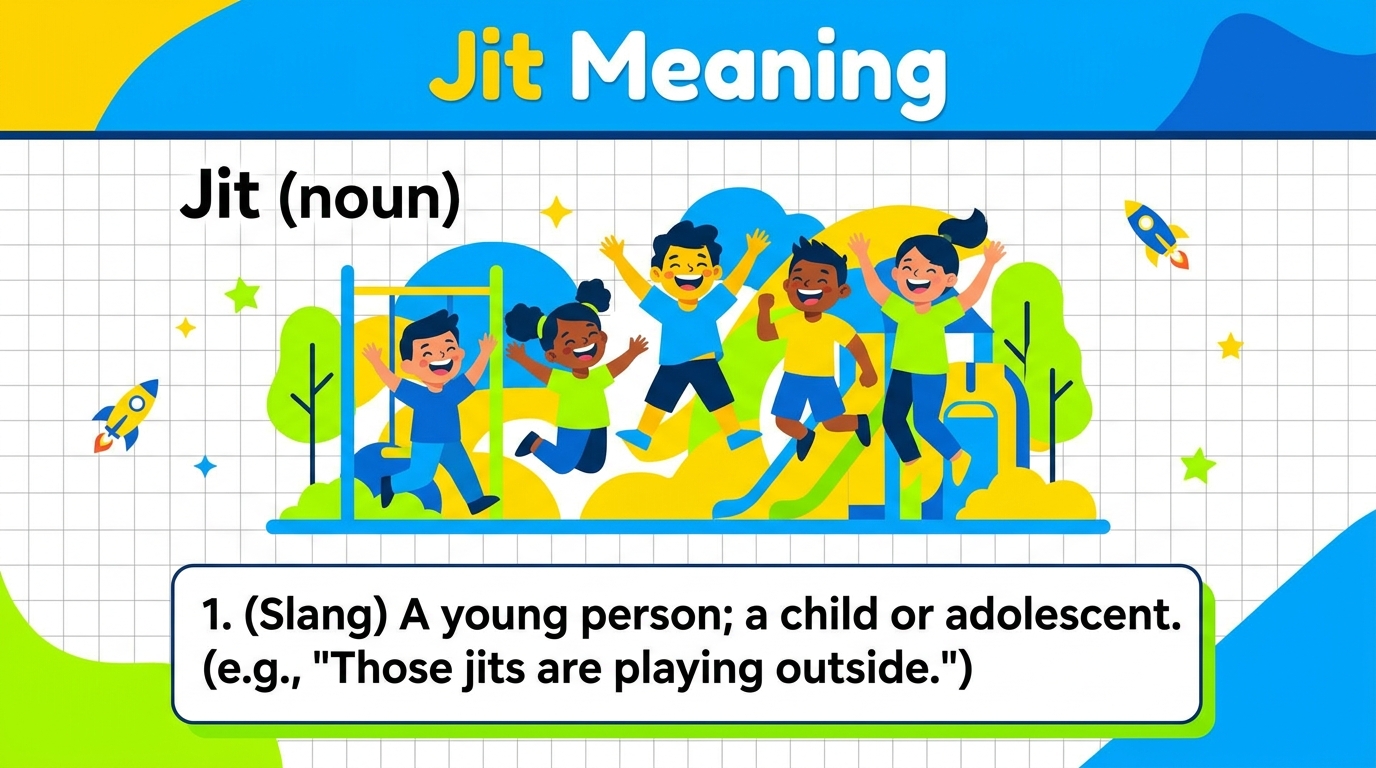
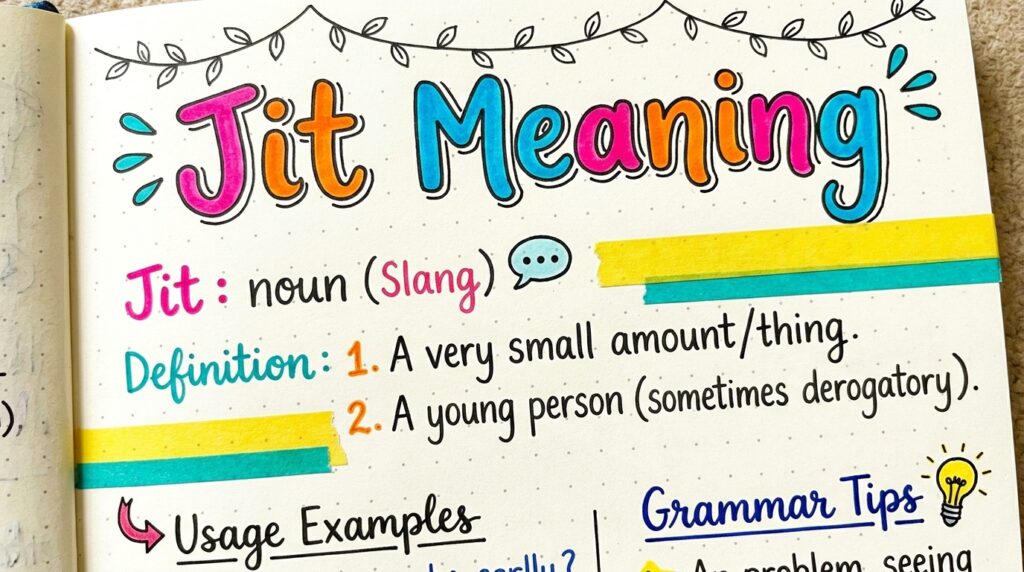
In modern slang, especially in parts of the United States (like Florida street culture), “jit” is a casual term used to refer to a younger person, usually a kid or someone inexperienced.
It can be playful, teasing, or slightly disrespectful depending on tone.
Quick meaning:
- A young person or kid
- Someone inexperienced
- Sometimes used playfully among friends
Examples:
- “That jit is fast on the court.”
- “Chill, jit, you just started learning.”
- “He’s just a jit, don’t take him seriously.”
In many cases, tone decides everything. Said with a smile, it’s harmless. Said sharply, it can sound dismissive.
JIT meaning business
In business, JIT stands for “Just In Time”, a production strategy that focuses on efficiency and reducing waste.
Instead of storing large amounts of inventory, companies produce or receive goods exactly when they are needed.
This system is widely used in manufacturing and supply chain management.
Key idea:
- Reduce storage costs
- Improve efficiency
- Produce only what is needed, when needed
Example:
A car company only receives engine parts right before assembly instead of storing them for weeks.
This method keeps operations lean but requires extremely precise planning.
Jit meaning slang origin
The slang “jit” has deep cultural roots, especially in Southern U.S. street language.
It is believed to have originated as a shortened or evolved form of “youngster” slang used in urban communities.
Over time, it became widely used in Florida hip-hop culture and spread through music, social media, and gaming communities.
What’s interesting is how it shifted:
- From local street slang
- To mainstream TikTok vocabulary
- To meme culture expression
Today, many people use it without even knowing its regional origin.
Jit meaning TikTok
On TikTok, “jit” is often used in captions, comments, and jokes to refer to someone younger, inexperienced, or acting overly confident.
But TikTok has also changed its tone completely.
Now it can mean:
- A funny insult among friends
- A playful roast
- A meme reaction word
Examples you’ll see:
- “Bro thinks he’s tough 😭 jit calm down”
- “That jit learned one dance and went viral”
- “Old heads vs jits on TikTok be wild”
On TikTok, it’s less about age and more about attitude.
Jit meaning software
In software engineering, “JIT” stands for Just-In-Time compilation.
This is a performance technique used in programming languages to improve execution speed.
Instead of compiling all code at once, JIT compiles code while the program is running.
Benefits:
- Faster execution
- Optimized performance
- Smarter memory usage
Example:
Languages like Java and .NET use JIT compilation to balance speed and flexibility.
Jit meaning just in time
The phrase “Just in Time” (JIT) is widely used beyond business too.
It simply means something happens at the exact needed moment—no delay, no early arrival.
Everyday example:
- “You came just in time!”
- “The delivery arrived just in time for the event.”
Emotionally, this phrase often carries relief or urgency depending on context.
JIT meaning in logistics
In logistics, JIT is a supply chain method where goods are delivered exactly when needed in the production process.
It helps companies:
- Reduce warehouse costs
- Avoid overstocking
- Increase operational efficiency
However, it also has risks:
- Supply delays can disrupt production
- Requires highly reliable suppliers
Example:
A smartphone factory receives screens only when assembly starts, not weeks before.
JIT meaning Java
In Java, JIT (Just-In-Time compiler) is a core part of the Java Virtual Machine (JVM).
It improves performance by converting bytecode into machine code at runtime.
Why it matters:
- Makes Java applications faster
- Reduces interpretation delays
- Optimizes repeated code execution
Without JIT, Java programs would run significantly slower because they would rely only on interpretation.
Real-Life Conversations (MANDATORY)
WhatsApp Conversation:
Person A:
“Why you calling him jit like that?”
Person B:
“Bro chill, he’s just a beginner 😂”
Instagram DM:
Person A:
“That jit really thinks he’s a pro editor now”
Person B:
“Let him cook, everyone starts somewhere”
TikTok Comment Section:
Person A:
“This jit just learned one trick and made a tutorial 💀”
Person B:
“Don’t hate, we all started like that”
Text Message:
Person A:
“You reached the meeting just in time”
Person B:
“Yeah, JIT timing saved me today 😅”
Emotional & Psychological Meaning
The word “jit” carries more emotional weight than it appears to.
In slang, it often reflects:
- Hierarchy (older vs younger)
- Experience levels
- Social teasing or bonding
People use it because it feels:
- Casual and fast
- Emotionally expressive
- Perfect for online humor
In modern communication, short words like this help people express identity quickly.
Personal-style scenario:
Imagine a group of friends learning basketball. One keeps missing shots, and another laughs saying, “Come on jit, focus!” It’s not meant to hurt—it’s a mix of teasing and encouragement wrapped together.
That’s how language evolves in real life.
Usage in Different Contexts
Social media:
Used for jokes, memes, and commentary.
Friends & relationships:
Playful teasing or light roasting.
Work / professional settings:
Avoid slang usage; stick to formal “Just In Time” meaning.
Casual vs serious tone:
Slang version is casual; business/software versions are formal and technical.
When NOT to Use It
Avoid using “jit” in:
- Formal emails
- Professional meetings
- Academic writing
- Conversations with unfamiliar people
Also, be careful because in some contexts it can sound disrespectful if the tone is wrong.
Common Misunderstandings
Many people confuse:
- Slang “jit” vs business “JIT”
- TikTok humor vs real insult
- Playful teasing vs disrespect
Another misunderstanding is assuming it always means something negative. In reality, tone completely changes meaning.
Comparison Table
| Aspect | Meaning Intent | Usage Intent | Example Intent | Comparison |
|---|---|---|---|---|
| Jit meaning | Refers to slang or systems | Depends on context | “That jit is fast” | Slang vs technical |
| How to use JIT | Depends on field | Business, tech, slang | “Just in time delivery” | Formal vs informal |
| Examples of JIT | Real-world usage | Shows application | Manufacturing timing | Practical vs conceptual |
| JIT vs slang use | Different meanings | Tech vs casual speech | Java vs TikTok | Technical vs cultural |
Key Insight:
The meaning of “jit” completely depends on context, showing how modern language blends tech, culture, and slang into one evolving expression.
Variations / Types (8–10)
- jit meaning slang
- Refers to a young or inexperienced person.
- jit in text
- Used casually in chats for teasing.
- JIT abbreviation
- Stands for Just In Time.
- JIT slang
- Informal teasing term.
- jit meaning in chat
- Friendly insult or joke.
- JIT meaning business
- Inventory efficiency system.
- JIT meaning logistics
- Delivery timing strategy.
- JIT meaning software
- Runtime code optimization.
- JIT meaning Java
- Performance compiler in JVM.
- JIT meaning TikTok
- Meme-based slang usage.
How to Respond When Someone Uses It
Casual replies:
- “Haha alright jit 😄”
- “Calm down bro”
Funny replies:
- “Respect your elders jit 😤”
- “I’m learning, don’t expose me 😂”
Mature replies:
- “Still improving, appreciate feedback.”
Respectful replies:
- “Got it, I’ll work on it.”
Regional & Cultural Usage
- Western culture: Common slang in youth and internet communities.
- Asian culture: Mostly known through TikTok and gaming.
- Middle Eastern culture: Used mainly in online slang spaces.
- Global internet: Mixed usage across memes and tech discussions.
- Gen Z vs Millennials: Gen Z uses it casually; Millennials often recognize business meaning first.
Is It Safe for Kids?
Yes, but with context awareness. The slang version is mostly harmless, but it can sound teasing or slightly rude depending on tone.
Kids should understand both meanings to avoid confusion in school or online chats.
FAQs
What does the slang JIT mean?
JIT in slang usually refers to a younger person or someone inexperienced. It’s often used in a teasing or playful way among friends.
What is a JIT Gen Z?
For Gen Z, “JIT” is internet slang used to call someone a kid, newbie, or less experienced person, usually in a humorous or light roast context.
How to use JIT slang?
You can use “JIT” casually in conversations with friends when joking or teasing, like: “That jit is learning fast 😂”. Tone matters a lot.
Is JIT a word in English?
Yes, but mainly as an abbreviation or slang. It’s not a formal dictionary word in standard English usage.
Is JIT offensive?
It can be mildly insulting if used harshly, but among friends it’s usually playful and not meant to offend.
Where is JIT slang commonly used?
It is mostly used in U.S. street culture, social media platforms like TikTok, Instagram, and in gaming chats.
Can JIT be used in professional conversations?
No, it is informal slang and should be avoided in workplace or formal communication.
Does JIT mean the same in all contexts?
No, in tech and business it means “Just In Time,” while in slang it refers to a young or inexperienced person.
Why do people use JIT in chats?
People use it because it’s short, expressive, and fits naturally into humorous or casual online conversations.
Is JIT only used by Gen Z?
Mostly yes, but it has also spread across other age groups through memes, TikTok, and online culture.
Conclusion
The word “jit” is a perfect example of how language evolves across cultures, industries, and generations. From playful slang in TikTok comments to serious applications in business, logistics, and software engineering, it carries completely different meanings depending on context. Understanding it helps you avoid confusion and communicate more naturally online and offline. Whether you hear it in a meme or a meeting, knowing its layers gives you confidence to respond the right way every time.