If you spend time on social media, texting friends, scrolling memes, or reading comment sections, you’ve probably seen “mfw” pop up everywhere. At first glance, it looks confusing. Some people think it’s a typo, while others assume it’s a random internet code.
But “mfw” actually carries emotion, humor, sarcasm, embarrassment, frustration, and even silent pain in just three letters.
People search for the meaning of “mfw” because internet slang changes fast. One week everyone says something new, and suddenly it becomes part of daily online conversations. If you don’t understand the context, you can easily misread the tone.
This guide explains what “mfw” really means, where it came from, how people use it today, and why it became such a powerful expression in online culture.
MFW Meaning – Quick Meaning
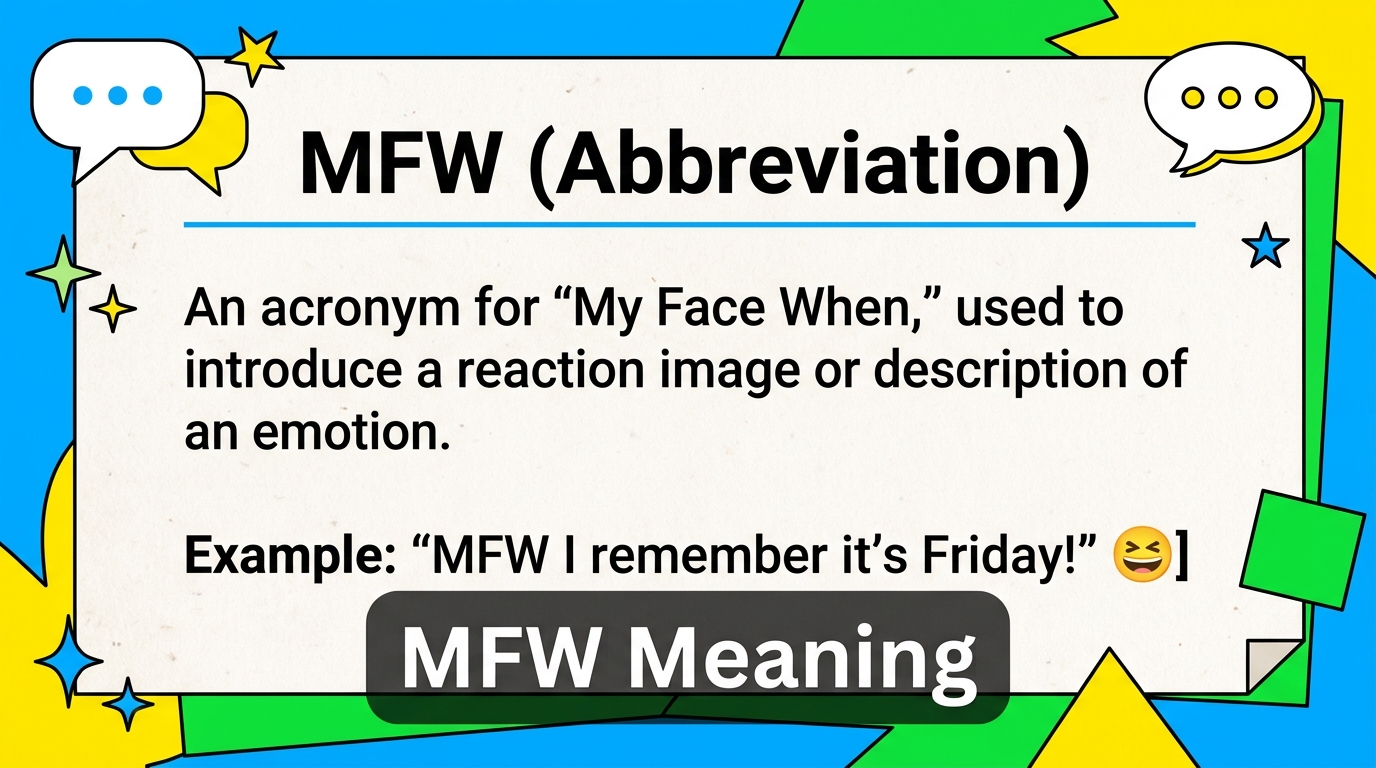
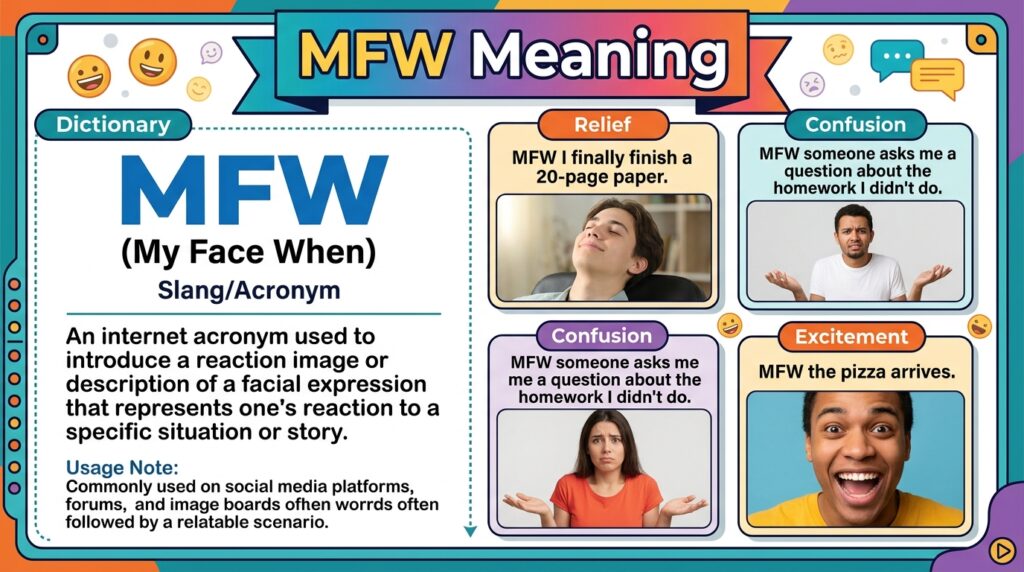
“MFW” stands for:
“My Face When”
It is usually used before a reaction image, meme, or emotional statement to show how someone feels about a situation.
People use it to express:
- Shock
- Embarrassment
- Excitement
- Disappointment
- Sarcasm
- Awkwardness
- Relatable emotions
Simple Examples
“mfw I realize the exam is today.”
“mfw my phone battery dies at 1%.”
“mfw someone eats my fries without asking.”
In most cases, “mfw” introduces a reaction rather than a full sentence.
Origin & Background
The phrase “mfw” became popular during the early meme culture of internet forums and image-sharing communities in the late 2000s and early 2010s.
It first spread through:
- Meme forums
- Reddit communities
- Tumblr posts
- Reaction-image websites
- GIF culture
Originally, people paired “mfw” with funny reaction faces or exaggerated emotional images. The humor came from showing a dramatic reaction to everyday situations.
For example:
“mfw the teacher says the homework is due today.”
Then users would attach a shocked face or crying meme.
Over time, the phrase evolved beyond memes. It became part of regular texting and social media language. Today, people use “mfw” even without images because readers already understand the emotional setup.
TikTok, Instagram, and X (formerly Twitter) helped the phrase survive across generations of internet users. Instead of typing long emotional explanations, people simply use “mfw” to instantly create emotional context.
That’s why the phrase feels so natural online. It mirrors how humans react emotionally in real life.
Real-Life Conversations
WhatsApp Conversation
Person A:
I studied the wrong chapter all night.
Person B:
mfw the exam questions are from the other unit 💀
Instagram DMs
Person A:
He left me on seen again.
Person B:
mfw people act interested then disappear.
TikTok Comments
Person A:
This song reminds me of my 2024 situationship.
Person B:
mfw I finally healed and this audio shows up again.
Text Messages
Person A:
Mom found my hidden snacks.
Person B:
mfw there’s no safe place in the house anymore 😭
These examples show why “mfw” feels emotionally relatable. It turns ordinary experiences into shared internet humor.
Emotional & Psychological Meaning
“Mfw” is more than slang. It reflects how modern communication became emotionally compressed.
Instead of writing:
“I feel awkward, embarrassed, and slightly annoyed.”
Someone can simply write:
“mfw everyone stares after I trip.”
The brain instantly understands the emotion.
People use “mfw” because it creates connection quickly. It tells others:
- “You’ve probably felt this too.”
- “This moment is painfully relatable.”
- “I’m joking, but I’m serious.”
Internet culture rewards emotional relatability. That’s why reaction-based slang spreads so quickly.
There’s also a psychological comfort in hiding emotions behind humor. Many people use “mfw” to soften embarrassment, sadness, or disappointment.
For example, someone might post:
“mfw I pretend I’m okay after failing the interview.”
It sounds humorous on the surface, but emotionally it reveals vulnerability.
A lot of online communication works this way now. Humor became a socially acceptable form of emotional honesty.
Usage in Different Contexts
Social Media
This is where “mfw” appears most often.
People use it in:
- Meme captions
- TikTok comments
- Twitter/X posts
- Instagram reels
- Reddit threads
It helps users react instantly without overexplaining emotions.
Example:
“mfw the WiFi stops during the final boss fight.”
Friends & Relationships
Among friends, “mfw” feels casual and expressive.
It often appears during:
- Inside jokes
- Relationship complaints
- Funny daily struggles
- Shared emotional experiences
Example:
“mfw my best friend cancels plans again.”
In relationships, it can sound playful or passive-aggressive depending on tone.
Work & Professional Settings
Using “mfw” at work is risky unless the environment is very casual.
Professional communication usually avoids internet slang because:
- Older coworkers may not understand it
- It can appear immature
- Tone can become unclear
Example of poor workplace use:
“mfw the client changes everything last minute.”
That may sound unprofessional in emails or meetings.
Casual vs Serious Tone
“Mfw” works best in casual conversations.
It is ideal for:
- Humor
- Light sarcasm
- Relatable storytelling
- Emotional reactions
It is less appropriate for:
- Serious apologies
- Formal discussions
- Academic writing
- Sensitive conversations
Tone matters heavily online.
When NOT to Use It
There are situations where “mfw” can feel insensitive or confusing.
Avoid using it during:
- Serious grief discussions
- Medical emergencies
- Professional conflicts
- Formal interviews
- Sensitive cultural topics
Example of inappropriate use:
“mfw someone gets fired.”
Even if intended humorously, it can sound emotionally cold.
It can also create misunderstandings across cultures because not everyone recognizes meme-style sarcasm.
Another issue is emotional timing. Some moments need sincerity, not internet humor.
Common Misunderstandings
One common misunderstanding is believing “mfw” always means something funny.
It doesn’t.
Sometimes people use it for sadness, stress, or disappointment.
Another confusion comes from tone.
Example:
“mfw nobody remembers my birthday.”
Some readers see humor. Others see loneliness.
That emotional ambiguity is part of modern internet communication.
Another mistake is interpreting it literally. “My face when” does not always describe an actual facial expression. Often it represents emotional reaction more generally.
Some beginners also confuse it with similar slang like:
- “tfw” (that feeling when)
- “mrw” (my reaction when)
They are related but slightly different in emotional style.
Comparison Table
| Phrase | Meaning | Main Intent |
|---|---|---|
| What Does mfw Mean | “My Face When” | Definition intent |
| How to Use mfw | Shows emotional reaction | Usage intent |
| Examples of mfw | Meme-style emotional situations | Example intent |
| mfw vs tfw | mfw focuses more on reactions, tfw focuses more on feelings | Comparison intent |
| mfw in Text | Casual internet slang expression | Chat intent |
| mfw in Memes | Used before reaction images | Meme intent |
Key Insight
“Mfw” became popular because humans naturally connect through shared reactions. The phrase turns ordinary emotions into instantly relatable online experiences.
Variations / Types
mfw meaning
The core meaning is “My Face When,” used to show emotional reaction.
mfw in text
In texting, it introduces a relatable feeling or moment.
mfw abbreviation
It is a shortened internet expression commonly used in memes and chats.
mfw slang
As slang, it reflects modern online humor and emotional expression.
mfw in chat
People use it casually during conversations to react dramatically or humorously.
mfw meme meaning
Usually paired with reaction images, GIFs, or exaggerated expressions.
mfw on TikTok
Often appears in relatable comment sections and emotional trend videos.
mfw on Instagram
Used in captions, meme pages, and humorous DM conversations.
mfw vs tfw
“Mfw” focuses more on visible reaction, while “tfw” emphasizes emotional feeling.
mfw reaction meaning
It acts like a digital emotional shortcut that replaces long explanations.
How to Respond When Someone Uses It
Casual Replies
- “That’s so real.”
- “I felt that.”
- “Same honestly.”
- “Literally me.”
Funny Replies
- “Internet trauma unlocked.”
- “Why is this painfully accurate?”
- “You didn’t have to expose us like that.”
Mature Replies
- “That actually sounds frustrating.”
- “I understand why you’d feel that way.”
- “Hope things get better.”
Respectful Replies
- “I get what you mean.”
- “That situation sounds difficult.”
- “Thanks for sharing honestly.”
Your response should match the emotional tone behind the message.
Regional & Cultural Usage
Western Culture
In Western internet culture, “mfw” is strongly connected to memes, sarcasm, and self-aware humor.
People often use it casually without needing explanation.
Asian Culture
In many Asian online communities, meme culture is also huge, but emotional expression can be more subtle. Younger users understand “mfw” easily through global social media exposure.
Middle Eastern Culture
Internet slang spreads quickly among younger audiences in Middle Eastern countries, especially through TikTok and gaming communities. However, older generations may not recognize the phrase.
Global Internet Usage
Today, “mfw” is understood internationally because meme culture became global. Even non-native English speakers use it naturally online.
Generational Differences
Gen Z
Gen Z uses “mfw” fluently and often mixes it with emojis, irony, and layered humor.
Millennials
Millennials helped popularize the phrase during early meme culture, though usage today is slightly less frequent than among Gen Z.
Older generations may misunderstand the tone completely.
Is It Safe for Kids?
Yes, “mfw” itself is generally safe for kids because it simply means “My Face When.”
However, context matters.
Some memes or conversations using the phrase may contain:
- Sarcasm
- Dark humor
- Mature jokes
- Emotional themes
Parents should focus more on surrounding content than the abbreviation itself.
FAQs
What does mfw mean in texting?
“MFW” means “My Face When.” It describes someone’s emotional reaction to a situation.
Is mfw rude?
No, not usually. It’s mostly playful or expressive, though tone depends on context.
What is the difference between mfw and tfw?
“MFW” means “My Face When,” while “TFW” means “That Feeling When.” Both express emotions differently.
Is mfw still popular?
Yes. It remains common on TikTok, Reddit, Instagram, and meme communities.
Can adults use mfw?
Absolutely. People of all ages use internet slang casually online.
Does mfw always need a picture?
No. Many people now use it as plain text without reaction images.
Is mfw formal English?
No. It’s internet slang and should stay in casual communication.
Conclusion
“Mfw” may look like simple internet slang, but it represents something bigger about modern communication. People want faster, more emotional, and more relatable ways to express themselves online. That’s exactly why this phrase survived for years across memes, chats, and social media culture. When used naturally, “mfw” helps people turn everyday emotions into shared experiences that others instantly understand. Whether funny, awkward, or emotional, it remains one of the internet’s most relatable expressions.
Discover more posts:
- ASL Meaning in Text: Definition, Usage, Origin & Real Examples (2026 Guide)
- MYF Meaning in Text: Full Guide, Usage, and Real Examples (2026)
- IYKYK Meaning in Text: Definition, Usage, and Examples
- WBY Meaning in Text: Definition, Tone, Examples & Usage Guide
- RD Meaning in Text: What It Means and How People Use It in 2026