If you’ve ever been texting someone and suddenly received “nvm,” you probably paused for a second. It feels small, almost careless—but it can change the entire tone of a conversation.
“NVM” is one of those internet abbreviations that looks simple but carries layered meaning depending on who sends it and how it’s used. People search for it because it appears everywhere—chat apps, social media comments, gaming chats, and even emotional conversations.
At its core, “nvm” stands for “never mind.” But in real communication, it is much more than just a phrase. It can mean dismissal, disappointment, politeness, emotional withdrawal, or even subtle frustration.
Let’s break it down in a way that actually feels real, not textbook.
NVM Meaning – Quick Meaning
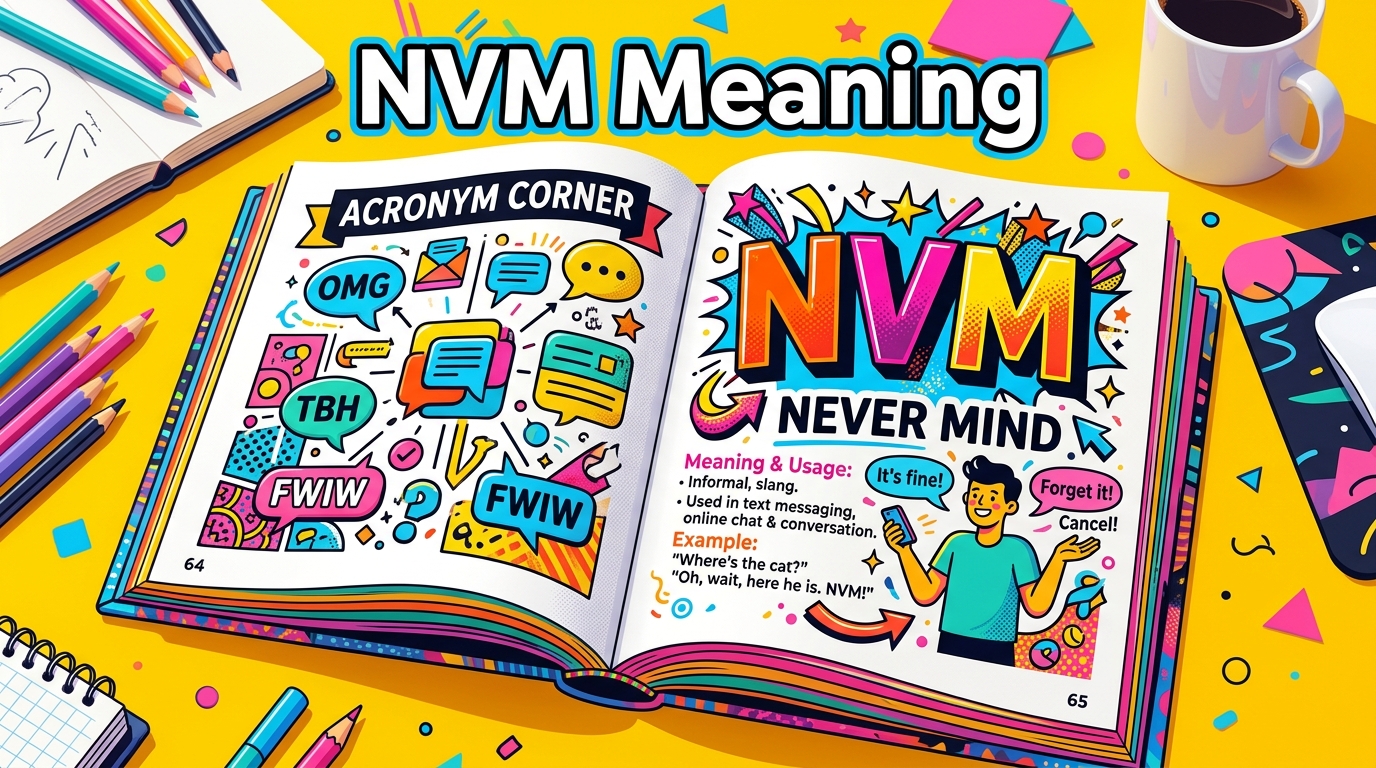
“NVM” is an internet slang abbreviation for “never mind.”
It is used when someone:
- Cancels a thought
- Withdraws a question
- Stops explaining something
- Doesn’t want to continue a topic
Simple examples:
- “Oh nvm, I figured it out.”
- “Nvm, it’s not important.”
- “Nvm forget what I said.”
Sometimes it sounds casual. Other times, it feels emotionally loaded depending on timing and tone.
Origin & Background
“NVM” comes from early internet chat culture—think MSN Messenger, early Facebook chats, and SMS texting when character limits mattered.
People shortened phrases to type faster, and “never mind” naturally became “nvm.”
Over time, it spread into:
- Instagram DMs
- WhatsApp chats
- Gaming platforms like Discord
- TikTok comment sections
What changed isn’t the spelling—it’s the emotion behind it. Earlier, it was just convenience. Now, it often signals feelings like hesitation, awkwardness, or emotional withdrawal.
Real-Life Conversations (MANDATORY)
WhatsApp Chat Example
Person A: Are you mad at me?
Person B: Why would you think that?
Person A: Because you replied late…
Person B: nvm
👉 Here, “nvm” feels like emotional shutdown.
Instagram DM Example
Person A: I think I like you…
Person B: Really?
Person A: nvm forget I said anything 😅
👉 This shows hesitation and fear of rejection.
TikTok Comment Example
User A: What happened in the ending??
User B: I’ll explain it—
User B: nvm too complicated lol
👉 Casual withdrawal, no emotional weight.
Gaming Chat Example
Player 1: Where are you going?
Player 2: nvm I died anyway
👉 Frustration mixed with resignation.
Emotional & Psychological Meaning
“NVM” is not just a shortcut—it often hides emotion.
People use it when:
- They feel ignored
- They don’t want to seem needy
- They are embarrassed
- They want to avoid conflict
- They lose interest mid-conversation
Psychologically, it acts like a soft exit button. Instead of explaining feelings, users retreat quietly.
Real-life style scenario:
Imagine you’re texting someone you care about. You ask a question twice and get no response. Finally, you type “nvm.”
You didn’t stop caring—you just stopped expecting.
That’s the emotional weight behind it.
In modern communication, “nvm” often says:
“I wanted to say more, but I won’t.”
Usage in Different Contexts
Social Media
Used to cancel thoughts, jokes, or comments quickly. It keeps conversations fast and informal.
Friends & Relationships
Can show emotional distance or casual forgiveness. Tone matters heavily here.
Work / Professional Settings
Rarely appropriate. It can look unprofessional or dismissive.
Casual vs Serious Tone
- Casual: harmless, friendly
- Serious: can signal hurt feelings or emotional withdrawal
When NOT to Use It
“NVM” may seem harmless, but there are moments where it creates confusion:
- When discussing serious emotional topics
- In professional emails or workplace chats
- During misunderstandings that need clarity
- When the other person needs reassurance
Using “nvm” in sensitive moments can feel like shutting the door without explanation.
Common Misunderstandings
Many people misread “nvm.”
Some think:
- It means anger (not always true)
- It means disinterest (sometimes yes, sometimes no)
- It is always rude (depends on context)
The biggest misunderstanding is tone. Without emojis or explanation, “nvm” can feel colder than intended.
Comparison Table
| Term | Meaning | Usage Intent | Example |
|---|---|---|---|
| NVM | Never mind | Cancel thought or topic | “nvm I got it” |
| IDK | I don’t know | Express uncertainty | “idk what happened” |
| BRB | Be right back | Temporary pause | “brb 5 mins” |
| TBH | To be honest | Express honesty | “tbh I don’t like it” |
| IMO | In my opinion | Share viewpoint | “imo it’s fine” |
| NVM vs IDK | Withdrawal vs uncertainty | Emotional vs factual difference | “nvm” ends topic, “idk” continues confusion |
Key Insight:
“NVM” is not about information—it is about stopping communication flow, while most slang continues it.
Variations / Types (8–10)
1. nvm meaning in text
Short cancellation of a thought in messaging.
2. nvm meaning in chat
Used to drop a topic quickly in conversation.
3. nvm abbreviation
Short form of “never mind.”
4. nvm slang meaning
Casual internet expression to dismiss a message.
5. nvm in WhatsApp
Commonly used when someone changes their mind mid-chat.
6. nvm in DM
Used in Instagram or Snapchat to retract statements.
7. nvm in gaming
Signals frustration or quick topic drop after an event.
8. nvm emotional meaning
Can reflect hesitation or emotional withdrawal.
9. nvm casual use
Light and harmless in friendly conversations.
10. nvm serious use
May indicate discomfort or emotional distance.
How to Respond When Someone Uses It
Casual Replies
- “Alright 👍”
- “Got it”
- “Okay no worries”
Funny Replies
- “Too late, I already minded it 😂”
- “Now I’m curious though…”
Mature Replies
- “If something’s wrong, you can tell me.”
- “We can talk about it if you want.”
Respectful Replies
- “Okay, I understand.”
- “No problem, take your time.”
The best response depends on emotional context, not just the word itself.
Regional & Cultural Usage
Western Culture
Mostly casual slang, heavily used in texting and social media.
Asian Culture
Used widely among youth, often influenced by English internet slang.
Middle Eastern Culture
Common in bilingual chats, especially among younger users.
Global Internet Usage
Universal abbreviation, understood across platforms.
Generational Differences
- Gen Z: fast, emotional, frequent usage
- Millennials: more structured, sometimes avoid ambiguity
Is It Safe for Kids?
Yes, “nvm” is safe and non-offensive.
However, children may misunderstand its emotional tone in conversations, especially if used in conflict situations.
FAQs
What is NVM slang for?
NVM is slang for “never mind.” It is used when someone wants to cancel, drop, or ignore what they just said in a chat.
What is NVM in Gen Z?
In Gen Z texting culture, NVM is used as a quick emotional exit from a conversation. It can show disinterest, hesitation, or simply moving on fast.
What is the meaning of NVM?
NVM means “never mind,” often used to withdraw a statement, question, or thought without explaining further.
What does NVM mean from a boy?
When a boy says “nvm,” it can mean:
- He doesn’t want to explain further
- He is slightly annoyed or tired
- Or he is just casually dropping the topic
👉 Meaning depends on tone and context, not gender.
What does NVM mean in chat?
In chat, NVM means “forget it” or “ignore what I said.” It is used to quickly end a topic or correct oneself.
Is NVM rude?
Not always. It can sound rude only if used in an emotional or frustrated tone, but in casual texting it is completely normal.
Why do people use NVM?
People use NVM to:
- Avoid long explanations
- Save time while texting
- Hide embarrassment
- Drop awkward topics
What does NVM mean in WhatsApp?
On WhatsApp, NVM is commonly used when someone:
- Changes their mind
- Gets no reply
- Or decides not to continue a conversation
What is NVM in Gen Z texting style?
Gen Z uses NVM as a fast emotional reset button in chats—quick, minimal, and sometimes emotionally loaded depending on the situation.
Does NVM show feelings?
Yes, sometimes. NVM can express:
- Frustration 😕
- Disappointment
- Indifference
- Or simple forgetfulness
Conclusion
“NVM” may look like a small shortcut, but it carries more emotional weight than most people realize. It can gently close a topic, hide hesitation, or signal quiet frustration without saying much. In digital conversations, where tone is often missing, this tiny abbreviation sometimes speaks louder than full sentences. Understanding its context helps you respond better and avoid misreading intent. Used wisely, it keeps communication smooth—but when misunderstood, it can create distance where none was intended.