The term passover meaning carries far more depth than most people expect. It is not just a religious phrase. It is a story of freedom, survival, identity, and faith that has traveled across thousands of years.
People search for it because they often hear it during Easter season, religious discussions, or cultural conversations but don’t fully understand what it represents. Some confuse it with Christian traditions, while others see it as only a historical event.
The truth is simpler and more powerful. Passover explains how a community remembers liberation from oppression and how that memory still shapes belief, rituals, and identity today.
Passover Meaning – Quick Meaning
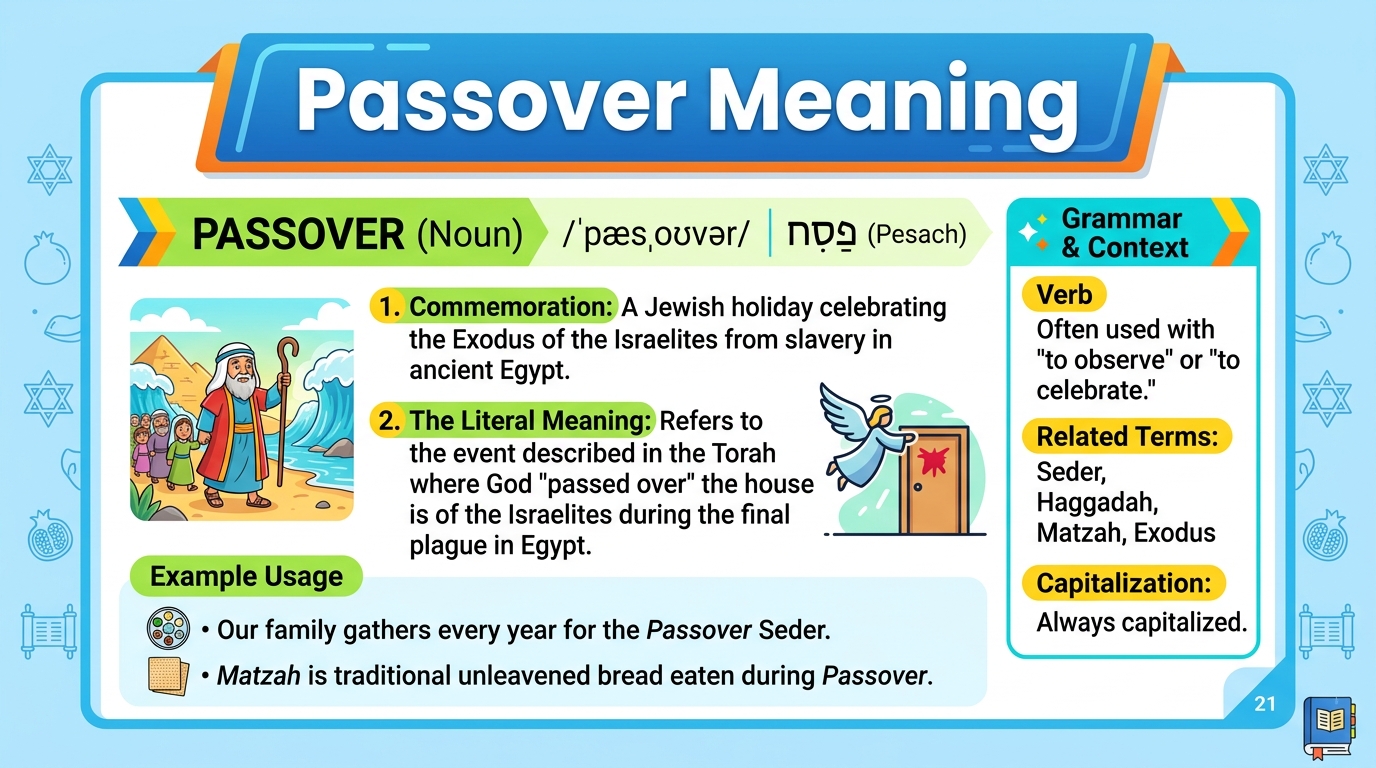
Passover is a major Jewish festival that remembers the liberation of the Israelites from slavery in ancient Egypt.
In simple terms, Passover meaning refers to:
- A remembrance of freedom from slavery
- A religious story found in the Bible
- A symbolic celebration of survival and faith
- A time of family gathering and spiritual reflection
Short examples:
- “They are preparing for Passover this week.”
- “Passover reminds them of freedom and faith.”
- “The meaning of Passover is deeply spiritual and historical.”
Origin & Background
The origin of Passover is rooted in the biblical story of Exodus. According to tradition, the Israelites were enslaved in Egypt for centuries. God sent Moses to lead them out of slavery.
Before the final plague, God “passed over” the homes marked with lamb’s blood, sparing the firstborn children of the Israelites. This event became the foundation of the festival’s name and meaning.
Over time, Passover became:
- A central Jewish tradition
- A symbol of divine protection
- A reminder of resilience and identity
In modern times, it is observed not only as a religious ritual but also as a cultural heritage celebration. Families across the world still retell the story during the Seder meal, keeping ancient history alive in everyday life.
When is Passover in the Bible
In the Bible, Passover is described in the Book of Exodus. It is linked to the time when Moses confronted Pharaoh and demanded the release of the Israelites.
The Bible explains:
- It happens in the spring season
- It begins on the 14th day of the Hebrew month of Nisan
- It marks the night of the final plague in Egypt
This timing is important because it connects spiritual liberation with seasonal renewal, symbolizing new beginnings and hope.
Passover meaning in the bible
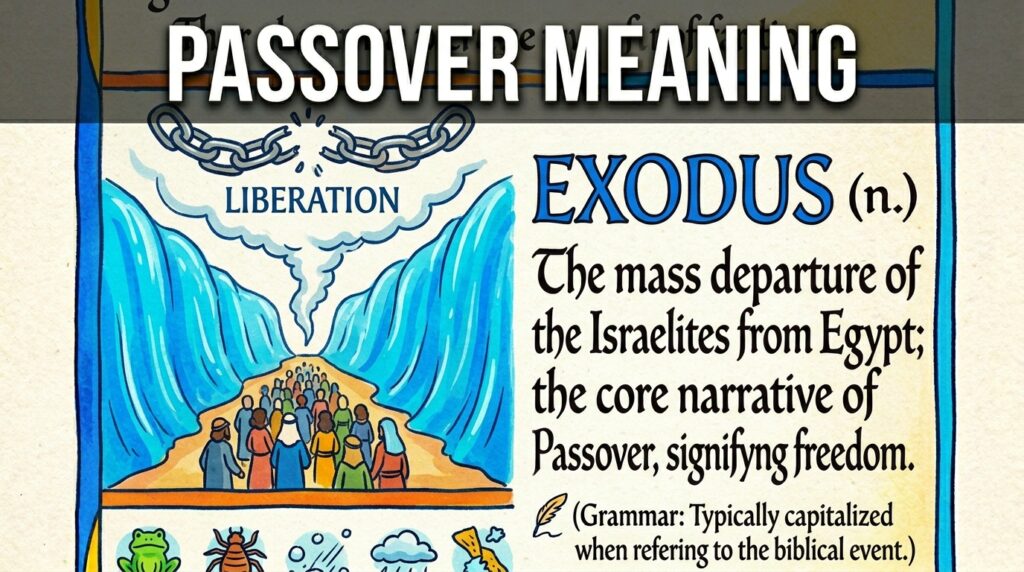
In the Bible, Passover meaning in the bible is deeply symbolic. It represents God’s mercy, protection, and justice.
Key biblical meanings include:
- God’s intervention in human suffering
- Freedom from slavery and oppression
- A covenant between God and His people
- The importance of obedience and faith
It is not only a historical event but also a spiritual lesson about trust and deliverance.
Passover meaning in English
In English, the passover meaning in english is often translated as “to skip over” or “to protect by passing over.”
This refers to the moment when the divine force passed over the marked homes, sparing them from destruction.
Simple English meaning:
- “Pass over” = to move past or avoid something
- Symbolically = protection from harm
So, Passover literally means “the act of being spared or protected.”
How is Passover celebrated
Passover is celebrated with deep tradition and structured rituals. The most important part is the Seder meal.
Key practices include:
- Eating unleavened bread (matzah)
- Retelling the Exodus story
- Drinking symbolic cups of wine
- Avoiding leavened foods for several days
- Family gatherings and prayers
The Seder plate contains symbolic foods that represent suffering, hope, and renewal. Every item has meaning, turning the meal into a storytelling experience rather than just a dinner.
For many families, it becomes a moment of emotional connection across generations.
Spiritual significance of Passover
The spiritual significance of Passover goes far beyond history.
It represents:
- Inner freedom from personal struggles
- Breaking mental and emotional “slavery”
- Strength through faith and patience
- Renewal of hope and identity
Many people relate Passover to their own life journeys. Just as the Israelites left Egypt, individuals see it as a metaphor for leaving behind fear, trauma, or limitations.
It is not only about ancient history. It is about human transformation.
Why is it called Passover
It is called Passover because of the biblical moment when destruction “passed over” the homes of the Israelites during the final plague in Egypt.
This name reflects:
- Divine protection
- Separation between suffering and safety
- A defining moment in religious history
The word carries both literal and symbolic meaning, making it one of the most powerful names in religious tradition.
Happy Passover meaning
When people say Happy Passover, they are offering a respectful and joyful greeting during the festival.
It means:
- Wishing peace and blessings
- Celebrating freedom and renewal
- Acknowledging cultural tradition
It is similar to saying “Happy Holidays,” but with a deeper spiritual connection. The phrase reflects joy mixed with remembrance.
Catholic passover meaning
The Catholic passover meaning is often linked symbolically rather than directly observed as a festival.
In Christianity, Passover is connected to:
- The Last Supper of Jesus
- The concept of sacrifice and redemption
- The transition into Easter traditions
For Catholics, Passover is seen as a historical foundation that influences Christian theology, especially the idea of salvation and spiritual liberation.
While it is not celebrated in the same way, it holds deep religious significance in understanding biblical history.
Real-Life Conversations (MANDATORY)
WhatsApp Chat
Person A:
Are you doing anything for Passover this year?
Person B:
Yes, my family is planning a small Seder dinner. It’s more about remembering the meaning than the food.
Instagram DM
Person A:
I keep seeing “Happy Passover” everywhere. What does it actually mean?
Person B:
It’s a greeting for a Jewish festival that celebrates freedom from slavery. Very meaningful tradition.
TikTok Comments
Person A:
Wait, is Passover the same as Easter?
Person B:
Not exactly. They are different, but both come from ancient biblical stories.
Text Message
Person A:
Why is Passover so important?
Person B:
Because it reminds people of survival, freedom, and faith through hard times.
Emotional & Psychological Meaning
Passover carries strong emotional weight. It is not just a historical memory. It is a story of overcoming fear and uncertainty.
People use it to feel:
- Connected to heritage
- Grounded in identity
- Inspired by resilience
In modern life, it often reflects personal struggles too. Someone going through a difficult phase may relate Passover to their own “escape” from emotional hardship.
It becomes a symbol of hope when life feels restrictive.
Usage in Different Contexts
Social media
Used in posts, greetings, and cultural awareness content.
Friends & relationships
Used when wishing someone during the festival or discussing traditions.
Work / professional settings
Used in respectful greetings in multicultural workplaces.
Casual vs serious tone
- Casual: “Happy Passover!”
- Serious: “Wishing you a meaningful Passover celebration.”
When NOT to Use It
Avoid using Passover casually in:
- Jokes or sarcasm about religion
- Situations where religious sensitivity is required
- Misusing it in unrelated contexts
Respect is important because it is a sacred observance for many people.
Common Misunderstandings
Many people confuse Passover with Easter or think it is just a dinner celebration.
Common errors:
- Thinking it is only about food
- Mixing it with unrelated holidays
- Ignoring its historical meaning
- Assuming it has no spiritual depth
In reality, it is deeply symbolic and rooted in ancient faith traditions.
Comparison Table
| Concept | Meaning Intent |
|---|---|
| Passover meaning | Freedom, faith, and liberation story |
| How to use Passover | Cultural or religious reference |
| Examples of Passover | Celebrations, Seder meals, greetings |
| Passover vs Easter | Different religions, shared biblical roots |
Key Insight:
Passover is not just a historical remembrance. It is a living story of freedom that continues to shape identity, faith, and emotional resilience across generations.
Variations / Types (8–10)
- Passover meaning in text – used in messages about the festival
- Passover abbreviation – often shortened in notes or chats
- Passover slang – informal cultural references online
- Passover in chat – greetings like “Happy Passover”
- Passover meaning in Bible – religious interpretation
- Passover meaning in English – literal “passing over” definition
- Passover celebration meaning – focus on rituals and meals
- Passover spiritual meaning – inner freedom and faith
- Happy Passover meaning – festive greeting of goodwill
- Catholic Passover meaning – symbolic Christian interpretation
How to Respond When Someone Uses It
Casual replies:
- “Happy Passover to you too!”
- “That sounds like a meaningful celebration.”
Funny replies:
- “Looks like a big family dinner tradition!”
- “So basically history night with food?”
Mature replies:
- “Wishing you peace and reflection during Passover.”
- “Hope your celebration is meaningful and peaceful.”
Respectful replies:
- “Thank you, same to you and your family.”
- “Appreciate the wishes, hope it’s a blessed time.”
Regional & Cultural Usage
In Western cultures, Passover is widely recognized and respectfully acknowledged.
In Asian cultures, awareness is growing mainly through global media and education.
In Middle Eastern cultures, it is often understood in a historical and religious context.
Globally, it appears in multicultural workplaces and online spaces as a symbol of respect and diversity.
Younger generations often learn about it through social media, while older generations tend to understand it through religious teachings.
Is It Safe for Kids?
Yes, Passover is safe for kids to learn about. It is often taught as a historical and moral story about freedom, courage, and hope. However, explanations should be age-appropriate and simple.
FAQs
Why do Christians celebrate Passover?
Christians do not traditionally celebrate Passover as a religious festival. However, they remember its significance because it connects to the Last Supper of Jesus, which took place during Passover. Many Christians see it as part of biblical history that points toward Jesus’ sacrifice and Easter themes of redemption.
What happens during Passover?
During Passover, Jewish families hold a special meal called the Seder. They read the story of Exodus, eat symbolic foods like matzah (unleavened bread), and remember the journey from slavery to freedom. It is both a storytelling ritual and a family gathering filled with meaning.
What is Passover called in the Bible?
In the Bible, Passover is called “Pesach.” It appears in the Book of Exodus, where God instructs the Israelites to mark their doorposts so the plague would “pass over” their homes.
Is there a Passover in Islam?
Islam does not have Passover as a religious holiday. However, Muslims recognize Prophet Musa (Moses) and the story of the Exodus. The day of Ashura is sometimes associated with fasting in remembrance of Moses being saved from Pharaoh.
What is the main meaning of Passover?
Passover symbolizes freedom, divine protection, and liberation from slavery. It is a reminder of survival, faith, and new beginnings.
How long does Passover last?
Passover typically lasts:
- 7 days in Israel
- 8 days in many Jewish communities outside Israel
It includes special rituals throughout the entire period.
What foods are eaten during Passover?
People eat symbolic foods such as:
- Matzah (unleavened bread)
- Bitter herbs (to remember suffering)
- Wine (used in ceremonial cups)
Leavened bread is avoided during the festival.
What is the Seder meal?
The Seder meal is the central ritual of Passover. It includes reading the Haggadah (story of Exodus), eating symbolic foods, and retelling the journey from Egypt to freedom in a structured order.
Why is Passover important?
Passover is important because it preserves a powerful story of liberation and identity. It strengthens cultural memory and teaches lessons about resilience, faith, and hope.
Is Passover still celebrated today?
Yes, Passover is still widely celebrated by Jewish communities around the world. It remains one of the most significant religious and cultural festivals, passed down through generations.
Conclusion
Passover is more than a historical event. It is a powerful reminder of freedom, faith, and human resilience. Its meaning connects ancient stories with modern emotional experiences, showing how liberation is both physical and spiritual. Whether viewed through religious tradition or cultural understanding, Passover continues to inspire reflection and gratitude. It teaches that even in the hardest moments, change is possible. Understanding its meaning helps you appreciate its depth, respect its roots, and recognize its timeless message of hope and renewal.