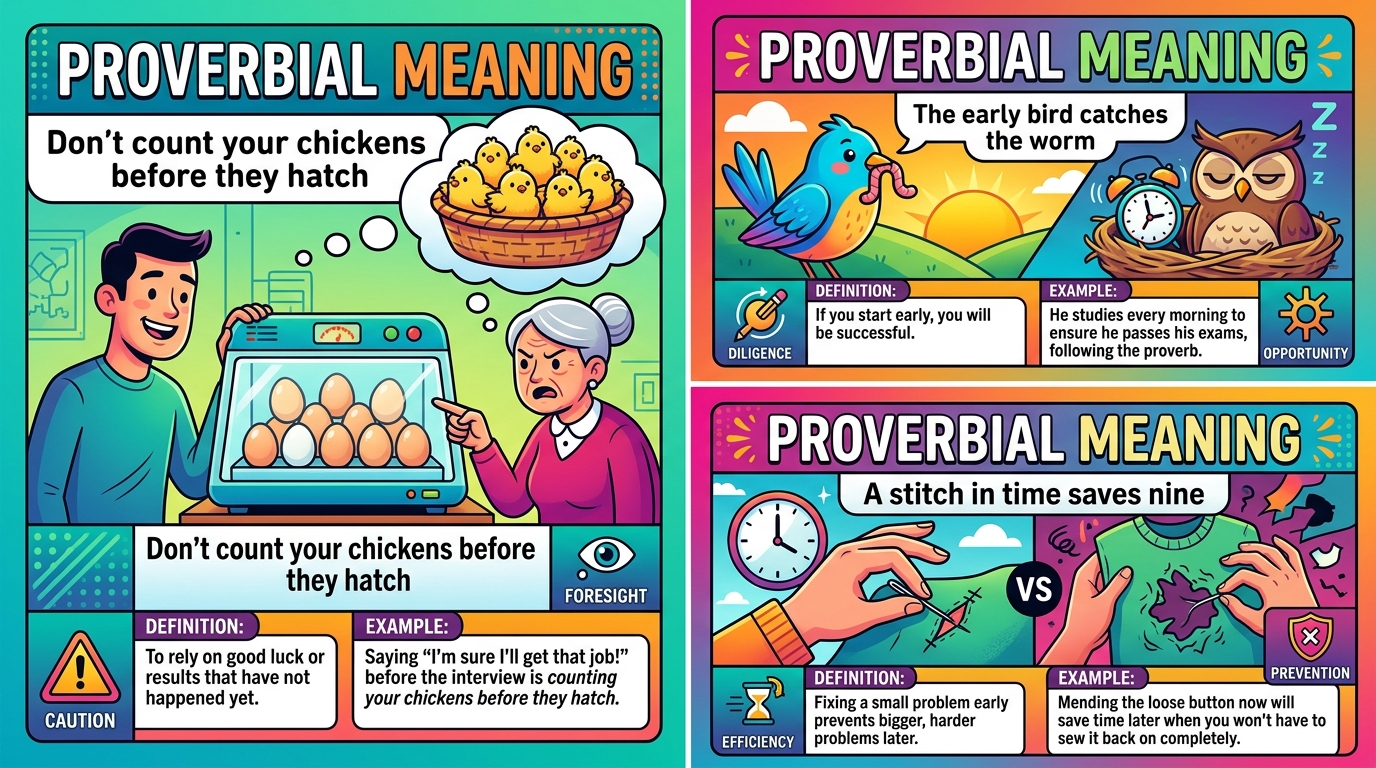
Language often carries more than words. Sometimes, it carries history, culture, and shared human experience. The proverbial meaning is one of those expressions that feels simple on the surface but opens a deeper layer of communication once you truly understand it.
People search for it when they feel confused by phrases like “proverbial wisdom,” “proverbial saying,” or even when someone says something like “the proverbial elephant in the room.” It sounds familiar yet slightly mysterious.
This guide breaks it all down in a clear, human way so you finally understand how and why “proverbial” is used in modern English.
Proverbial Meaning – Quick Meaning
At its core, proverbial meaning refers to something widely known, commonly referenced, or based on a proverb-like idea that people understand without needing full explanation.
In simple terms:
- It describes something famous or well-known in expression
- It often refers to a typical example of something
- It comes from sayings, proverbs, or cultural references
Quick examples:
- “He’s the proverbial late student.”
- “We hit the proverbial jackpot.”
- “It was the proverbial elephant in the room.”
👉 Notice how “proverbial” doesn’t always mean literal—it adds a figurative layer.
Origin & Background
The word “proverbial” comes from “proverb,” which means a short, traditional saying that gives advice or wisdom.
Historically, proverbs were used in:
- Oral storytelling traditions
- Religious texts and teachings
- Cultural wisdom passed through generations
Over time, “proverbial” evolved beyond actual proverbs. It started describing things that are commonly recognized in speech or culture, even if they are not direct proverbs.
Cultural evolution:
- In older English, it stayed closely tied to biblical and classical sayings
- In modern usage, it became more flexible and humorous
- In internet culture, it is now often used sarcastically or creatively
Today, it’s common in social media captions, memes, and casual conversations where people want to sound expressive without being too direct.
Proverbial Meaning Bible
In biblical context, “proverbial” is strongly connected to wisdom literature, especially the Book of Proverbs.
In the Bible, proverbs were used to:
- Teach moral lessons
- Guide behavior
- Offer life wisdom in short, powerful statements
So when people say “proverbial meaning in Bible,” they usually refer to:
- Wisdom-based sayings
- Moral truths
- Symbolic lessons rather than literal instructions
Example idea:
“Pride goes before destruction” – a proverb-style teaching about human behavior.
In biblical interpretation, “proverbial” often signals symbolic wisdom rather than direct command.
Proverbial Meaning in Farsi
In Farsi (Persian), the concept of proverb is deeply rooted in culture. Persian literature is rich with poetic wisdom and sayings.
The idea of proverbial meaning in Farsi aligns with:
- ضربالمثل (Zarbolmasal) = proverb
- Wise sayings passed through generations
- Poetic expressions of truth
Cultural understanding:
- Used in storytelling and daily speech
- Often poetic and emotional
- Carries moral or philosophical depth
Example:
A Persian proverb might express life truth in metaphorical form, similar to English “proverbial” usage.
So in Farsi context, “proverbial meaning” feels more poetic and expressive than technical.
Proverbial Synonym
Here are common synonyms or near-equivalents of proverbial:
- Famous
- Well-known
- Legendary
- Iconic
- Typical
- Notorious (context-dependent)
- Symbolic
- Representative
Each synonym slightly changes tone.
For example:
- “Proverbial mistake” → typical or well-known mistake
- “Legendary mistake” → more dramatic tone
- “Notorious mistake” → negative reputation
Proverbial Meaning in English
In modern English, proverbial meaning is used to:
- Refer to something widely recognized
- Add figurative emphasis
- Express shared cultural understanding
It often appears in phrases like:
- “The proverbial needle in a haystack”
- “The proverbial light at the end of the tunnel”
- “The proverbial elephant in the room”
👉 In short, it signals that the listener already knows the reference, even if it’s not explained.
Proverbial Meaning Examples
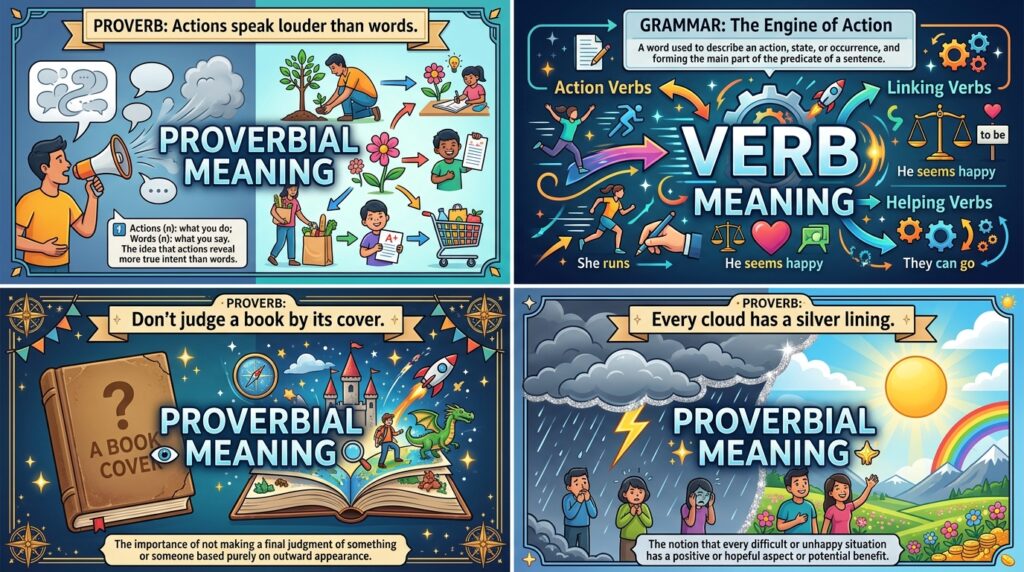
Here are simple, real-world examples:
- “After hours of searching, we found the proverbial solution.”
- “She opened the proverbial can of worms.”
- “It was the proverbial storm before calm.”
What these mean:
They are not literal storms or cans. They represent situations people commonly understand emotionally or socially.
Proverbial Meaning in Chinese
In Chinese culture, proverb-like expressions are known as:
- 成语 (Chéngyǔ) – idioms
- 谚语 (Yànyǔ) – proverbs
The idea of proverbial meaning in Chinese aligns with:
- Short, symbolic wisdom phrases
- Deep cultural storytelling
- Historical lessons in compact form
Example:
- “画蛇添足” (Adding feet to a snake) = doing unnecessary extra work
So, “proverbial meaning” in Chinese communication is deeply metaphorical and culturally rich.
Proverbial Meaning for Kids
For kids, the simplest explanation is:
👉 A “proverbial meaning” is when we use a phrase that everyone understands without explaining everything.
Easy explanation:
- It’s like a shortcut for ideas
- It helps us talk about common situations
- It often sounds like a wise saying
Example for kids:
- “He was the proverbial last one to finish” = he was always last
It teaches children how language can be creative and symbolic.
Taking the Proverbial Meaning
“Taking the proverbial meaning” usually means:
- Understanding the deeper message behind words
- Not interpreting everything literally
- Recognizing symbolic language
Example:
If someone says:
“Don’t open that proverbial door”
It means:
👉 Don’t start a topic that will create problems.
It’s about reading between the lines rather than focusing on surface meaning.
Real-Life Conversations (MANDATORY)
WhatsApp Chat:
Person A: I finally got the job!
Person B: Wow, you hit the proverbial jackpot!
Instagram DM:
Person A: My exam results are out…
Person B: Let me guess, the proverbial rollercoaster of emotions?
TikTok Comment Section:
Person A: Why is life so confusing lately?
Person B: Because we’re all stuck in the proverbial chaos era 😭
Text Message:
Person A: I forgot my keys again
Person B: You’re the proverbial forgetful friend at this point
Emotional & Psychological Meaning
The phrase “proverbial” carries emotional weight because it:
- Connects people through shared understanding
- Makes communication feel smarter and layered
- Adds humor or irony in everyday speech
Psychologically, people use it to:
- Sound expressive without long explanations
- Create cultural connection
- Add storytelling depth to simple situations
Real-life scenario:
You’re tired after a long day and say:
“It was the proverbial long Monday.”
You’re not describing a literal proverb. You’re expressing shared emotional exhaustion everyone understands.
Usage in Different Contexts
Social Media:
Used in captions, memes, and comments
Example: “The proverbial glow-up is real”
Friends & Relationships:
Used for humor or exaggeration
Example: “You’re the proverbial drama queen”
Work / Professional Settings:
Used carefully, often in presentations or writing
Example: “We faced the proverbial challenge of scaling”
Casual vs Serious Tone:
- Casual: humorous, expressive
- Serious: symbolic, analytical
When NOT to Use It
Avoid using “proverbial” when:
- Speaking with people unfamiliar with English idioms
- Writing very formal legal or technical documents
- Clarity is more important than style
- It could confuse literal interpretation
Common Misunderstandings
Many people think:
- It means an actual proverb (it doesn’t always)
- It is always formal (it’s often casual too)
- It changes literal meaning (it doesn’t—it adds tone)
Key confusion:
People often overthink it, but “proverbial” is mostly about shared understanding.
Comparison Table
| Concept | Meaning Intent | Usage Intent | Example Intent | Comparison |
|---|---|---|---|---|
| Proverbial Meaning | Figurative shared reference | Adds cultural tone | “Proverbial elephant in the room” | More expressive than literal speech |
| Literal Meaning | Direct definition | Exact interpretation | “Open the door” | No symbolism |
| Idiomatic Meaning | Fixed phrase meaning | Everyday expression | “Break the ice” | Similar but more structured |
| Figurative Language | Symbolic expression | Emotional communication | “Time is a thief” | Broader category |
Key Insight:
“Proverbial” strengthens language by linking everyday speech with shared cultural memory, making communication richer and more expressive.
Variations / Types (10 Examples)
- Proverbial meaning in text → symbolic phrase in messaging
- Proverbial meaning slang → casual cultural reference
- Proverbial meaning in chat → humorous or expressive use
- Proverbial expression → general figurative saying
- Proverbial phrase → common referenced phrase
- Proverbial usage → how it is applied in speech
- Proverbial reference → indirect cultural mention
- Proverbial tone → expressive or symbolic tone
- Proverbial context → situation-based meaning
- Proverbial interpretation → understanding beyond literal meaning
How to Respond When Someone Uses It
Casual replies:
- “That’s exactly what it feels like!”
- “True, classic situation 😂”
Funny replies:
- “Living in a proverbial mess right now”
- “You just described my life in one phrase”
Mature replies:
- “That’s a good way to describe it.”
- “Makes sense in that context.”
Respectful replies:
- “I understand what you mean.”
- “That’s a thoughtful way to put it.”
Regional & Cultural Usage
- Western culture: Common in literature, media, and humor
- Asian culture: Strong link to traditional proverbs and teachings
- Middle Eastern culture: Often poetic and wisdom-based
- Global internet usage: Used for memes and expressive captions
- Gen Z: Casual, ironic, and playful
- Millennials: Slightly more structured and contextual
Is It Safe for Kids?
Yes, it is safe for kids.
However, children may need simple explanation because the meaning is not literal. It’s best used as a teaching tool for figurative language and creative expression.
FAQs
What does the term proverbial mean?
The term proverbial means something that is widely known, commonly referred to, or used in a symbolic or figurative way. It often connects to shared cultural expressions or sayings.
What is another word for proverbial?
Some common synonyms for proverbial include:
- Famous
- Well-known
- Typical
- Iconic
- Legendary
- Symbolic
Each word changes the tone slightly depending on context.
What does proverbial they mean?
“Proverbial they” refers to a general or unnamed group of people often mentioned in sayings or expressions. It does not point to specific individuals but represents society or “people in general.”
Example:
- “They say money doesn’t grow on trees” → here “they” is proverbial, meaning people in general.
How do you use proverbial?
You use proverbial before a noun to show something is commonly known or symbolic.
Examples:
- “The proverbial elephant in the room”
- “He hit the proverbial jackpot”
- “She opened the proverbial can of worms”
Is proverbial literal or figurative?
It is figurative, not literal. It adds symbolic meaning to a phrase instead of describing something directly.
Why do people use the word proverbial?
People use it to:
- Sound expressive or refined
- Refer to shared cultural ideas
- Add humor or irony
- Avoid long explanations
Can proverbial be used in formal writing?
Yes, it can be used in formal writing, especially in essays, literature analysis, or speeches. However, it should be used carefully to ensure clarity.
What is an example of proverbial in a sentence?
- “After hours of delay, we finally saw the proverbial light at the end of the tunnel.”
- “He became the proverbial last-minute savior.”
Is proverbial the same as idiom?
Not exactly.
- Proverbial refers to something widely recognized or symbolic
- Idiom is a fixed phrase with a special meaning
They are related but not identical.
What does proverbial meaning help you understand?
It helps you understand hidden or cultural meaning in language, especially when words are not meant to be taken literally but symbolically or socially understood.
Conclusion
The proverbial meaning shows how language carries more than direct definitions. It connects culture, emotion, and shared understanding into a single expressive tool. When people use “proverbial,” they are not just speaking—they are referencing a collective idea everyone recognizes. It makes communication richer, more human, and often more vivid. Once you understand it, you start noticing it everywhere in conversations, social media, and storytelling. It quietly adds depth to everyday language in a natural, meaningful way.