If you have ever seen someone write “Subhanallah” in a text message, social media comment, or everyday conversation, you may have wondered what it truly means. Many people know it is an Islamic phrase, but they are often unsure when to use it, what emotion it expresses, and why it appears so frequently online.
The phrase carries much deeper meaning than a simple religious expression. It reflects admiration, wonder, gratitude, humility, and recognition of perfection beyond human limitations.
Today, people use Subhanallah in conversations, captions, comments, and messages to express amazement at beautiful moments, incredible achievements, breathtaking nature, or even unexpected life events.
This guide explains the meaning, history, emotional significance, pronunciation, cultural usage, and practical examples of Subhanallah in a way that feels natural and easy to understand.
Subhanallah Meaning – Quick Meaning
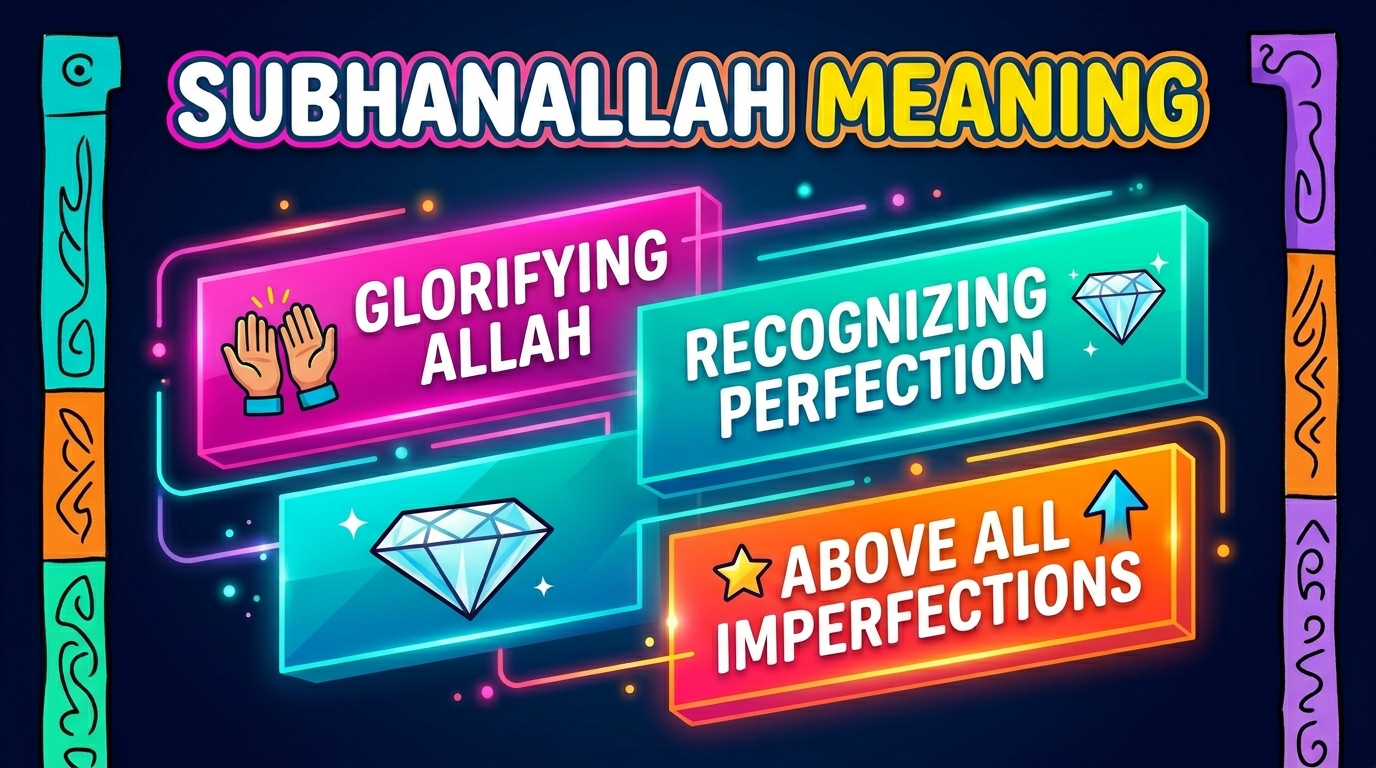
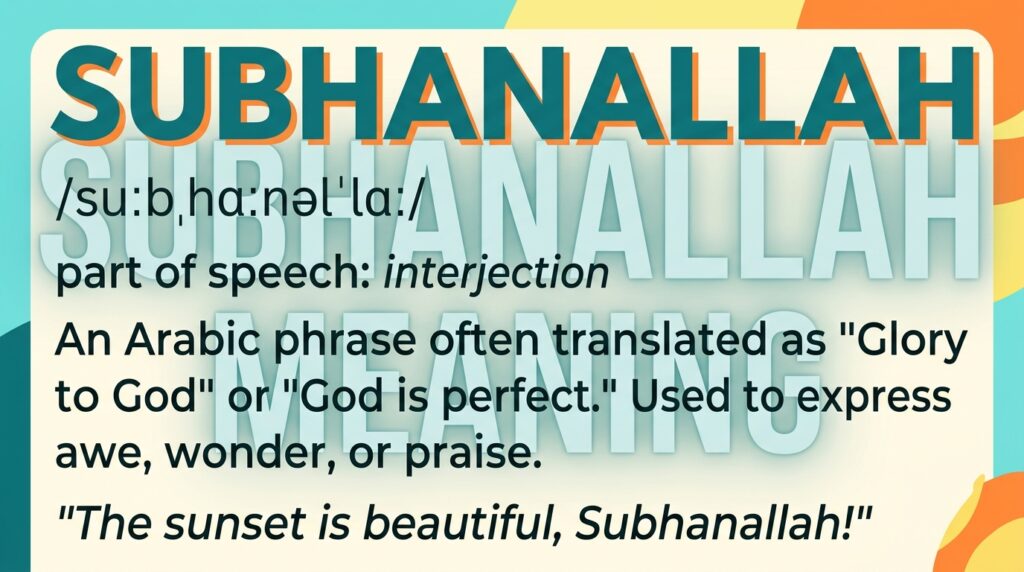
Subhanallah (سُبْحَانَ ٱللَّٰهِ) means:
“Glory be to Allah” or “Allah is free from all imperfections.”
People commonly use it when they feel:
- Amazed
- Grateful
- Inspired
- Moved by beauty
- Surprised by something extraordinary
Examples
“Subhanallah, the sunset looks incredible today.”
“Subhanallah, what a beautiful recitation.”
“Subhanallah, I never expected such good news.”
In everyday communication, it often expresses admiration and appreciation while acknowledging God’s greatness.
Origin & Background
Subhanallah originates from the Arabic language and has been used for centuries within Islamic tradition.
The word comes from the Arabic root س ب ح (S-B-H), which relates to glorification and declaring purity from flaws or imperfections.
Muslims around the world recite Subhanallah during prayer, remembrance (dhikr), and daily conversations.
Over time, the phrase moved beyond religious gatherings and became part of everyday speech across many cultures.
Today, social media has introduced the expression to global audiences. You can find it in:
- Instagram captions
- TikTok videos
- Facebook comments
- YouTube reactions
- WhatsApp conversations
Its meaning has remained consistent, but its visibility has expanded dramatically through modern communication.
Subhanallah Meaning in Urdu
Subhanallah meaning in Urdu:
“اللہ پاک ہے”
or
“اللہ ہر عیب اور کمی سے پاک ہے”
Urdu speakers often use Subhanallah when they witness something beautiful, inspiring, or surprising.
Examples include:
- A beautiful landscape
- A newborn baby
- Academic success
- A touching story
- A powerful Quran recitation
The phrase carries both admiration and respect.
Subhanallah in Arabic
In Arabic, Subhanallah is written as:
سُبْحَانَ ٱللَّٰهِ
Literal understanding:
- Subhan = Glory, purity, transcendence
- Allah = God
Together, the phrase declares that Allah is perfect and beyond all shortcomings.
Arabic speakers use it naturally in both religious and everyday contexts.
Alhamdulillah Subhanallah Meaning
Many people use these two phrases together.
Alhamdulillah
Means:
“Praise be to Allah.”
Subhanallah
Means:
“Glory be to Allah.”
The difference is subtle but important.
Alhamdulillah focuses on gratitude and thankfulness.
Subhanallah focuses on admiration, wonder, and recognizing divine perfection.
Example:
“Alhamdulillah for this blessing. Subhanallah, everything worked out beautifully.”
Mashallah Subhanallah Meaning
These phrases often appear together, but they serve different purposes.
Mashallah
Means:
“What Allah has willed.”
Used when appreciating something positive.
Subhanallah
Means:
“Glory be to Allah.”
Used when expressing amazement or admiration.
Example:
“Mashallah, your daughter is so talented.”
“Subhanallah, she memorized the entire chapter at such a young age.”
One recognizes blessing; the other expresses awe.
Subhanallah Meaning Pronunciation
Correct pronunciation:
Sub-ha-na-lah
Phonetic form:
Soo-bhaa-na-llah
Breakdown:
- Subh
- a
- na
- llah
Many non-Arabic speakers pronounce it slightly differently, and that is perfectly normal while learning.
The most important part is understanding and respecting its meaning.
SubhanAllah Meaning in Urdu and English
English Meaning
“Glory be to Allah.”
“Allah is free from imperfections.”
Urdu Meaning
“اللہ پاک ہے”
“اللہ ہر قسم کی کمی اور عیب سے پاک ہے”
Both meanings highlight divine perfection and inspire humility in the person saying it.
Subhanallah Meaning in Turkish
In Turkish-speaking communities, Subhanallah carries nearly the same meaning as in Arabic.
It is commonly understood as:
“Allah ne kadar yücedir.”
Meaning:
“How great and glorious Allah is.”
Turkish families often say Subhanallah when seeing beautiful children, impressive achievements, or remarkable events.
Subhanallah Meaning Tagalog
In Tagalog-speaking Muslim communities, Subhanallah is generally translated as:
“Luwalhati sa Allah.”
Meaning:
“Glory be to Allah.”
Many Filipino Muslims use it exactly as Arabic speakers do—to express amazement, gratitude, and admiration.
Real-Life Conversations
WhatsApp Conversation
Person A: I just got accepted into my dream university.
Person B: Subhanallah! That’s amazing news. You worked so hard for it.
Instagram DM
Person A: Look at these photos from the mountains.
Person B: Subhanallah, the scenery is absolutely beautiful.
TikTok Comments
Creator: Shares a video of a stunning waterfall.
Commenter: Subhanallah, nature never stops reminding us how incredible creation is.
Text Message
Person A: My sister safely delivered a healthy baby girl.
Person B: Subhanallah! Congratulations to your whole family.
Emotional & Psychological Meaning
Words often reveal emotions that ordinary language struggles to express.
Subhanallah communicates a feeling of awe.
It reflects a moment when someone encounters beauty, kindness, success, or wonder and feels that simple words are not enough.
Psychologically, the phrase encourages gratitude and mindfulness.
Instead of focusing solely on the event itself, it shifts attention toward appreciation and reflection.
I remember hearing someone whisper “Subhanallah” while watching a sunset after a difficult week. It wasn’t merely a religious statement. It was an emotional acknowledgment that beauty still existed despite life’s challenges.
That emotional depth explains why the phrase remains powerful across generations.
Usage in Different Contexts
Social Media
People use Subhanallah in:
- Captions
- Comments
- Story replies
- Video reactions
It often accompanies beautiful images, inspiring stories, or meaningful achievements.
Friends & Relationships
Friends use it to celebrate milestones and express admiration.
Example:
“Subhanallah, you achieved so much this year.”
Work & Professional Settings
In Muslim-majority environments, it may appear naturally in conversations about success or impressive accomplishments.
Professional use should remain respectful and context-appropriate.
Casual vs Serious Tone
Casually:
“Subhanallah, that view is stunning.”
Seriously:
“Subhanallah, may Allah continue to bless and guide us.”
The phrase adapts easily to both situations.
When NOT to Use It
Certain situations require sensitivity.
Avoid using Subhanallah:
- As a joke or mockery
- To imitate religious language sarcastically
- In disrespectful memes
- In contexts intended to offend religious beliefs
Because it carries spiritual significance, using it carelessly may create misunderstandings.
Respectful usage always matters.
Common Misunderstandings
Mistaking It for “Thank You”
Subhanallah expresses admiration and glorification, not direct thanks.
Assuming It Means Only Surprise
The phrase can express wonder, gratitude, beauty, and spiritual reflection.
Thinking It Is Limited to Prayer
Many people use it naturally in daily life.
Confusing It with Mashallah
Both are positive expressions, but their meanings and intentions differ.
Comparison Table
| Phrase | Definition Intent |
|---|---|
| What Does Subhanallah Mean | Explains the core meaning |
| How to Use Subhanallah | Shows practical usage |
| Examples of Subhanallah | Demonstrates real conversations |
| Subhanallah vs Mashallah | Compares admiration and blessing |
| Subhanallah vs Alhamdulillah | Compares awe and gratitude |
| Subhanallah in Text | Explains digital communication use |
| Subhanallah in Islam | Explains religious significance |
Key Insight
Subhanallah is not simply a word. It is an emotional reaction wrapped in faith, gratitude, admiration, and reflection. That combination makes it meaningful in both spiritual and everyday conversations.
Variations & Types
Subhanallah Meaning
Glory be to Allah; Allah is free from imperfections.
Subhanallah in Text
Used to express amazement or admiration in messages.
Subhanallah Abbreviation
Some users write SA in informal chats.
Subhanallah Slang
Not technically slang, but often used casually online.
Subhanallah in Chat
A respectful reaction to beautiful or inspiring content.
Subhanallah Caption
Common under travel, family, and nature photos.
Subhanallah Comment
Used to appreciate achievements or blessings.
Subhanallah Expression
Shows wonder and spiritual reflection.
Subhanallah Response
Can acknowledge beauty, success, or gratitude.
Subhanallah Online Usage
Widely used across social platforms globally.
How to Respond When Someone Uses It
Casual Replies
- Absolutely beautiful.
- I thought the same.
- It really is amazing.
Funny Replies
- Right? I couldn’t stop staring at it.
- Nature definitely showed off today.
Mature Replies
- It truly reminds us to stay grateful.
- Moments like these deserve appreciation.
Respectful Replies
- May Allah continue to bless it.
- Ameen, thank you for sharing.
Regional & Cultural Usage
Western Culture
Often used within Muslim communities while educating non-Muslims about Islamic expressions.
Asian Culture
Common in Pakistan, Bangladesh, India, Malaysia, and Indonesia.
Middle Eastern Culture
Used naturally in everyday speech and religious practice.
Global Internet Usage
Frequently appears in comments, captions, and reactions worldwide.
Generational Differences
Gen Z: Uses it in social media interactions and captions.
Millennials: Often use it in both religious and personal conversations.
Despite different communication styles, the meaning remains remarkably consistent.
Is It Safe for Kids?
Yes.
Subhanallah is a respectful and positive expression.
Children often learn it early because it encourages gratitude, appreciation, humility, and awareness of blessings around them.
Parents can comfortably teach its meaning within age-appropriate cultural and religious contexts.
FAQs
What is the actual meaning of Subhanallah?
Subhanallah means “Glory be to Allah” or “Allah is free from all imperfections.” People use it to express awe, admiration, gratitude, or amazement when witnessing something beautiful or extraordinary.
When should I use Subhanallah?
You can use Subhanallah when you see something inspiring, beautiful, surprising, or remarkable. Many people say it during moments of gratitude, reflection, or appreciation for Allah’s creation.
Do Muslims go to bed early?
Some Muslims prefer sleeping early because Islamic teachings encourage healthy routines and early morning worship. However, sleeping habits vary widely depending on lifestyle, culture, work, and personal schedules.
What’s the difference between Subhanallah and Alhamdulillah?
Subhanallah expresses admiration and glorifies Allah’s perfection, while Alhamdulillah expresses gratitude and praise for blessings. People often use both together to show wonder and thankfulness.
Can I say Subhanallah in everyday conversation?
Yes, many Muslims use Subhanallah naturally in daily conversations. It can be said when reacting to good news, beautiful scenery, personal achievements, or inspiring stories.
Is Subhanallah only used by Muslims?
Subhanallah is primarily an Islamic expression, but anyone can say it respectfully if they understand its meaning. The phrase carries religious and cultural significance for Muslims worldwide.
Why do people write Subhanallah on social media?
People often write Subhanallah in captions and comments to express admiration for beautiful photos, inspiring videos, achievements, or moments that remind them of Allah’s greatness.
How do you pronounce Subhanallah correctly?
Subhanallah is commonly pronounced as “Soo-bhaa-na-llah.” While accents may differ across cultures, the intention and understanding of the phrase are more important than perfect pronunciation.
Is Subhanallah mentioned in the Quran?
Yes, forms of glorifying Allah with phrases related to Subhanallah appear throughout the Quran. The expression is deeply connected to Islamic remembrance and worship.
Can children learn and use Subhanallah?
Yes, children can easily learn and use Subhanallah in appropriate situations. Teaching the phrase helps encourage gratitude, appreciation, humility, and awareness of blessings from an early age.
Conclusion
Subhanallah is far more than a simple phrase. It captures moments of awe, gratitude, beauty, and reflection in a way few words can. Whether you hear it in a mosque, read it in a WhatsApp message, or see it under a stunning photo online, its purpose remains the same: recognizing greatness and appreciating blessings. Understanding its meaning helps you communicate with greater cultural awareness and respect while allowing you to use the expression confidently whenever life presents something truly remarkable.