If you’ve ever watched a movie, listened to Latin music, scrolled through TikTok, or chatted with Spanish-speaking friends, you’ve probably heard the word vato. At first glance, it may seem like just another slang term, but its meaning goes much deeper than that.
People often search for vato meaning because they hear it in conversations and wonder whether it is friendly, offensive, or culturally significant. The answer depends on the situation, tone, and relationship between the people using it.
In this guide, you’ll learn exactly what vato means, where it came from, how people use it today, and when you should avoid using it.
Vato Meaning – Quick Meaning
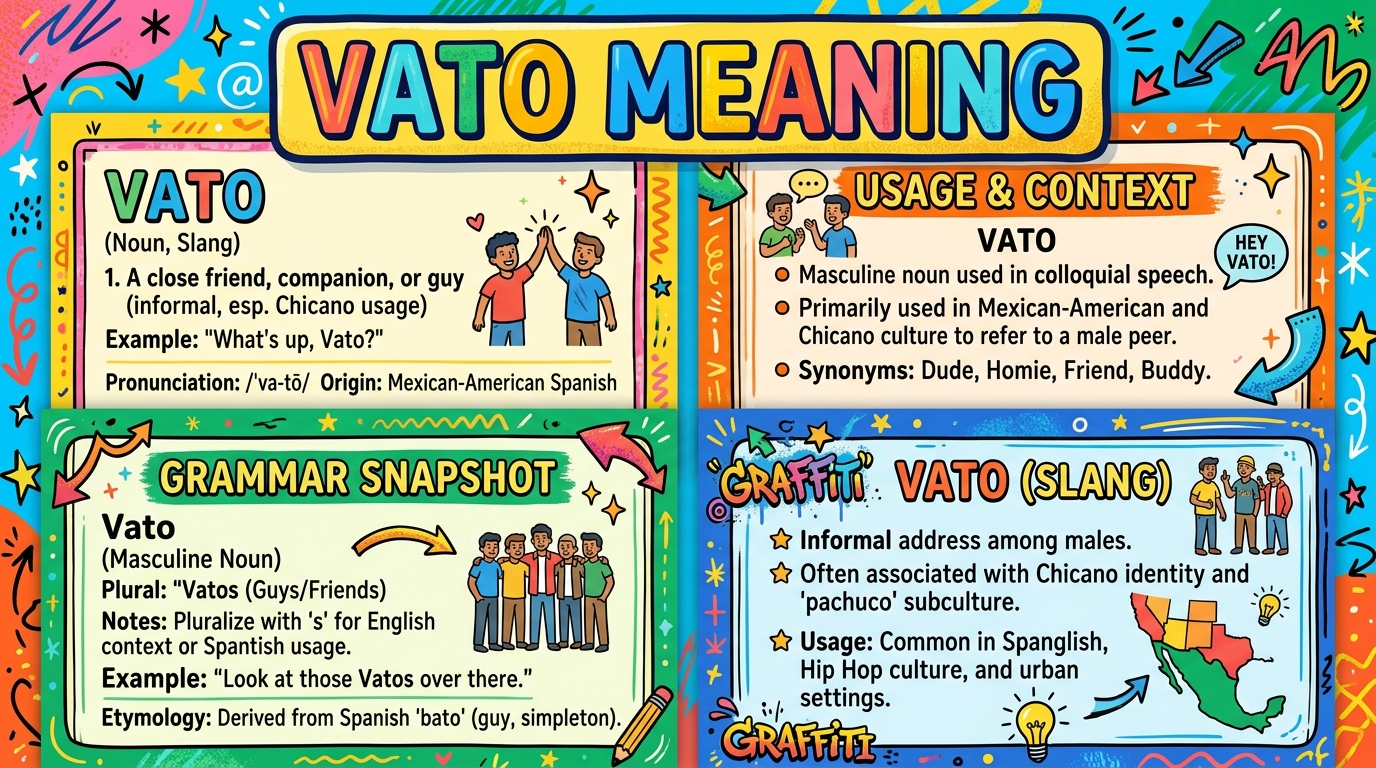
Vato is a Mexican Spanish slang word that generally means:
- Guy
- Dude
- Man
- Bro
- Friend
Depending on the context, it can refer to someone casually, affectionately, or sometimes disrespectfully.
Quick Examples
“That vato helped me fix my car.”
“What’s up, vato?”
“That vato thinks he’s famous.”
In English conversations, the closest translations are often dude, bro, or guy.
Origin & Background
The word vato has roots in Mexican Spanish and has been used for generations in various regions of Mexico.
Historically, it was associated with working-class communities and street culture. Over time, it became a common slang expression among friends and local communities.
As Mexican culture influenced American media, especially in areas with large Hispanic populations, the term spread beyond Mexico. Movies, music, hip-hop culture, and social media played major roles in making the word recognizable worldwide.
Today, people hear it in:
- TikTok videos
- YouTube content
- Rap lyrics
- TV shows
- Online memes
- Everyday conversations
Its meaning has evolved from regional slang into a globally recognized cultural expression.
Vato Loco Meaning
One of the most popular phrases containing the word is vato loco.
Vato loco literally translates to:
“Cr*zy dude” or “cr*zy guy.”
However, the phrase often carries a stronger cultural tone. It may describe someone who is:
- Wild
- Fearless
- Rebellious
- Unpredictable
- Street-smart
Example
“That vato loco jumped off the roof into the pool.”
In movies and popular culture, the phrase is often associated with confidence, toughness, and unconventional behavior.
Is Vato a Bad Word?
Not usually.
In most situations, vato is simply informal slang.
Whether it sounds friendly or rude depends on:
- Tone of voice
- Relationship between speakers
- Cultural setting
- Context
Among friends, it often feels warm and familiar.
Friendly Example
“Hey vato, good to see you.”
Negative Example
“That vato doesn’t know what he’s talking about.”
Because it can sound rough or overly casual, it may not be appropriate in formal situations.
Vato Meaning in English
The closest English equivalents include:
- Dude
- Bro
- Guy
- Man
- Buddy
There is no perfect one-word translation because vato carries cultural meaning that goes beyond simple vocabulary.
For example:
“What’s up, vato?”
could become:
“What’s up, dude?”
or
“How’s it going, bro?”
Ese Vato Meaning
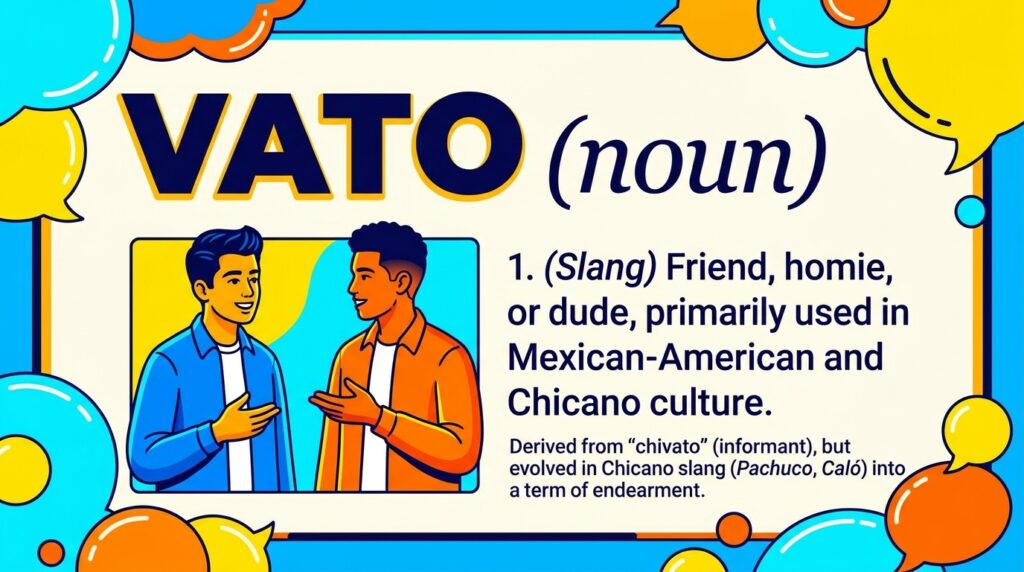
Ese vato is another common phrase.
Ese means “that” but is often used like “hey” or “yo” in slang.
Meaning
Ese vato = “that dude” or “that guy.”
Example
“Ese vato always makes everyone laugh.”
Depending on the tone, it can show admiration, familiarity, or criticism.
Órale Vato Meaning
Órale vato combines two popular Mexican slang expressions.
Meaning
It can translate to:
- Come on, dude!
- Let’s go, man!
- Alright, bro!
Example
“Órale vato, we’re going to be late.”
This phrase often expresses excitement, encouragement, surprise, or urgency.
Mi Vato Meaning
Mi vato literally means:
“My guy” or “my man.”
In some relationships, particularly romantic ones, it may refer to:
- Boyfriend
- Partner
- Significant other
Example
“I’m spending the weekend with my vato.”
The meaning depends heavily on context.
Vato Meaning Italian
Many people search for “vato meaning Italian,” but vato is not an Italian word.
It originates from Mexican Spanish.
If an Italian speaker uses the term, they are usually borrowing it from Spanish-language culture, movies, music, or social media.
What Is a Female Vato?
There is no direct female equivalent that is universally accepted.
However, some commonly used alternatives include:
- Vata (informal adaptation)
- Chica
- Muchacha
- Amiga
In casual slang, some people jokingly use vata, but it is far less common than vato.
The exact female counterpart varies by region and community.
Real-Life Conversations
WhatsApp Chat
Person A: Where are you?
Person B: Hanging out with my vato at the mall.
Person A: Tell him I said hi.
Instagram DM
Person A: Who’s that in your photo?
Person B: That’s my vato from high school.
Person A: You guys look like you’ve been friends forever.
TikTok Comments
Person A: That vato dances better than the professionals.
Person B: Facts. He’s got serious talent.
Text Message
Person A: You still coming tonight?
Person B: Of course, vato. Save me a seat.
Emotional & Psychological Meaning
Language often reveals more than information. It reveals connection.
When someone says vato, they’re usually creating a sense of familiarity. The word can instantly reduce social distance and make conversations feel relaxed.
People use it because it communicates:
- Friendship
- Brotherhood
- Trust
- Shared identity
- Cultural pride
I once heard a group of lifelong friends greet each other using “vato” repeatedly. What stood out wasn’t the word itself but the feeling behind it. The term acted like a shortcut to years of shared experiences and mutual respect.
That emotional layer is why the word continues to thrive.
Usage in Different Contexts
Social Media
Vato appears frequently in:
- Memes
- TikTok videos
- Instagram captions
- YouTube comments
It helps create a casual and relatable tone.
Friends & Relationships
This is where the word is most common.
Friends often use it as a sign of closeness and comfort.
Work & Professional Settings
Generally not recommended.
Professional communication usually requires more neutral language.
Casual vs Serious Tone
In casual settings, vato feels natural.
In serious discussions, it can sound too informal and may distract from the message.
When NOT to Use It
Avoid using vato when:
- Speaking in formal business environments
- Communicating with people who may not understand the slang
- Discussing sensitive topics
- Interacting with older individuals who may find it disrespectful
- Using cultures you are unfamiliar with in a mocking way
Context always matters.
Common Misunderstandings
Many people assume vato is:
Always Offensive
It isn’t.
Most of the time, it’s simply casual slang.
Always Friendly
Not necessarily.
Tone can change its meaning dramatically.
A Universal Spanish Word
It is strongly associated with Mexican Spanish and certain communities.
Equivalent to Every English Slang Word
Not exactly.
Its cultural identity makes it unique.
Comparison Table
| Search Intent | Meaning |
|---|---|
| What Does Vato Mean | Understanding the definition |
| How to Use Vato | Learning proper usage |
| Examples of Vato | Seeing real conversations |
| Vato vs Dude | Comparing cultural slang terms |
Key Insight
While “dude” and “bro” are close English equivalents, vato carries cultural history and identity that make it more meaningful than a simple translation.
Variations / Types
Vato Meaning
A guy, man, or friend.
Vato in Text
Used casually when messaging friends.
Vato Abbreviation
No widely recognized abbreviation exists.
Vato Slang
Mexican Spanish slang for a male person.
Vato in Chat
A friendly way to address someone online.
Vato Loco Meaning
Cra*y guy or rebellious dude.
Ese Vato Meaning
That guy or that dude.
Mi Vato Meaning
My boyfriend, partner, or close friend.
Órale Vato Meaning
Come on, dude.
Vato Culture Meaning
A symbol of friendship and community identity.
How to Respond When Someone Uses It
Casual Replies
- What’s up, man?
- Not much, bro.
- Good to see you.
Funny Replies
- The legend has arrived.
- That’s me, vato.
- You called the right guy.
Mature Replies
- Thanks, I appreciate that.
- Glad to hear from you.
- Hope everything is going well.
Respectful Replies
- Nice talking with you.
- Thank you, my friend.
- Wishing you the best.
Regional & Cultural Usage
Western Culture
Often viewed as a cool slang term associated with Latino identity.
Asian Culture
Usually recognized through movies, music, and internet content.
Middle Eastern Culture
Less commonly used but increasingly understood through social media.
Global Internet Usage
TikTok and meme culture have expanded its reach worldwide.
Generational Differences
Gen Z: Uses it playfully and online.
Millennials: More likely to understand its cultural roots and traditional usage.
Is It Safe for Kids?
Generally yes.
The word itself is not offensive. However, parents should pay attention to the context because some phrases containing vato may appear in mature or street-oriented content.
Understanding the surrounding conversation is more important than the word alone.
FAQs
What is a vato in slang?
In Mexican Spanish slang, vato means a guy, dude, bro, or friend. People commonly use it in casual conversations to refer to someone they know or are talking about.
What is the Mexican slang for homie?
Common Mexican slang words for homie include vato, carnal, compa, and cuate. These terms often express friendship, trust, and a close personal bond.
What is the feminine version of Vato?
There is no universally accepted feminine version of vato. Some people informally use vata, but terms like amiga, chica, or muchacha are more commonly used.
Do people still say vato?
Yes, many people still use vato, especially in Mexico, Mexican-American communities, and online culture. Its popularity continues through social media, music, movies, and everyday conversations.
Is vato considered rude?
Vato is usually not rude when used among friends. However, the tone and situation matter, and it can sound disrespectful if used aggressively or with strangers.
What does ese vato mean?
Ese vato typically means “that guy” or “that dude.” It is often used when talking about someone in a casual or familiar way.
Can vato mean boyfriend?
In some contexts, especially in phrases like mi vato, the word can refer to a boyfriend, partner, or significant other. The exact meaning depends on the relationship and conversation.
Is vato used only in Mexico?
While the term originated in Mexican Spanish, it is also widely used in Mexican-American communities and recognized by many Spanish speakers around the world.
What is the difference between vato and carnal?
Vato generally means a guy or friend, while carnal suggests a closer relationship, similar to calling someone a brother, best friend, or trusted companion.
Is vato popular on social media?
Yes, vato frequently appears in TikTok videos, Instagram captions, memes, and online comments. Many people use it to create a casual, humorous, or culturally connected tone.
Conclusion
Understanding the vato meaning goes beyond learning a simple translation. The word carries friendship, identity, cultural pride, and everyday human connection. While it often translates to “dude” or “bro,” its true meaning depends on context, tone, and community. Whether you encounter it in a text message, social media post, or real-life conversation, knowing how and when to use it helps you communicate more naturally and respectfully. With this understanding, you can recognize the word confidently and appreciate the culture behind it.