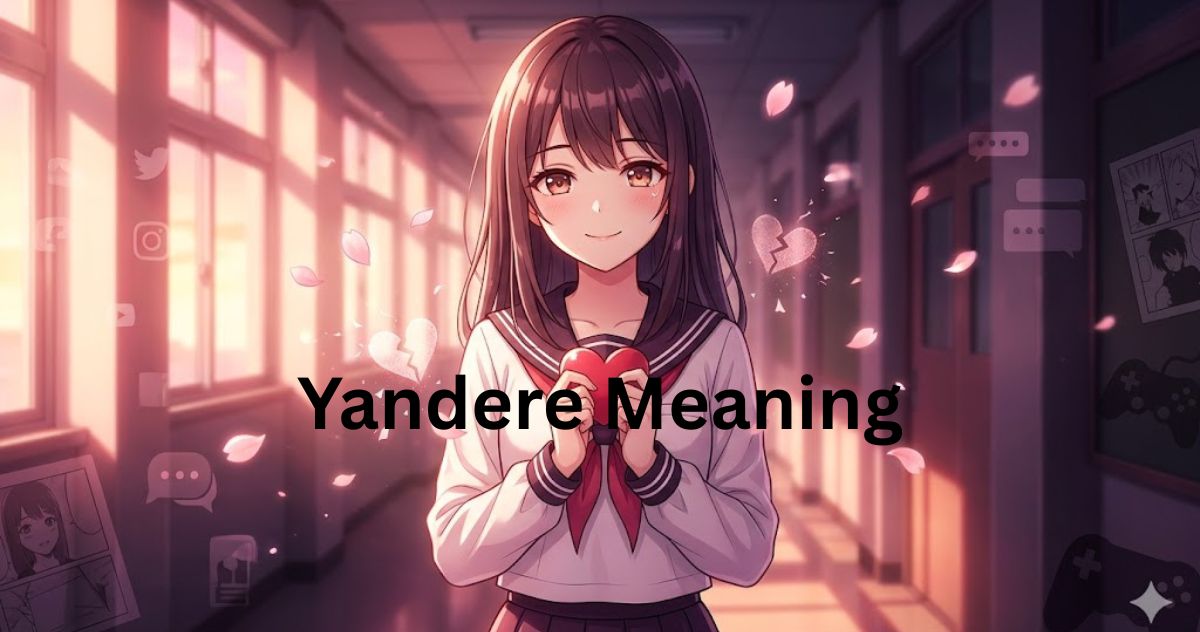
If you’ve spent time on TikTok, Instagram, anime forums, or gaming communities, you’ve probably come across the word yandere. Sometimes it’s used as a joke. Other times it’s a serious way to describe a fictional character whose love turns into obsession.
Many people search for yandere meaning because the word sounds mysterious and is often misunderstood. Is it just an anime term? Is it slang? Does it describe a real personality, or is it simply a fictional trope?
The answer is a little more complex than a simple dictionary definition.
In modern internet culture, yandere represents a character—or occasionally a person—whose affection becomes so intense that it leads to possessiveness, jealousy, or even violence. While the term is mostly used humorously online, its roots come from Japanese pop culture and psychology-inspired storytelling.
This guide explains what yandere really means, where it came from, how people use it today, and when you should avoid using it.
Yandere Meaning – Quick Meaning
Yandere is a Japanese pop culture term describing someone who begins as loving and caring but becomes emotionally obsessed, possessive, or dangerously protective of the person they love.
Quick Definition
- Originates from Japanese anime and manga.
- Describes obsessive romantic love.
- Often used jokingly online.
- Usually refers to fictional characters.
- Sometimes used as internet slang for clingy behavior.
Examples
“She’s acting so yandere whenever another girl talks to him.”
“That anime has one of the most famous yandere characters.”
“Relax, I’m not yandere—I just like texting you.”
Origin & Background
The word yandere comes from two Japanese expressions:
- Yanderu (病んでる) – to be mentally or emotionally ill.
- Dere Dere (デレデレ) – to be deeply affectionate or lovestruck.
Together, they create the idea of someone whose love becomes emotionally unhealthy.
The term first became popular in Japanese visual novels, manga, and anime during the early 2000s. Writers created characters who appeared sweet and caring but slowly revealed obsessive or violent tendencies.
As anime gained global popularity, social media platforms like TikTok, Reddit, Instagram, and YouTube introduced the word to millions of people outside Japan.
Today, many people use yandere casually to describe someone who acts extremely jealous or possessive, even if they aren’t actually dangerous.
Yandere Meaning in English
In English, yandere means:
A person whose romantic love becomes obsessive, possessive, and emotionally unstable.
Unlike ordinary jealousy, a yandere character may believe that controlling or harming others is acceptable if it protects their relationship.
English speakers usually use the word in:
- Anime discussions
- Gaming communities
- Memes
- Fan fiction
- Social media jokes
Outside those communities, many people simply understand it as “obsessively in love.”
Yandere Meaning in Urdu
The word yandere does not have a direct Urdu translation, but its meaning can be explained as:
حد سے زیادہ محبت کرنے والا مگر حد سے زیادہ حسد کرنے والا شخص
or
ایسا شخص جس کی محبت جنون میں بدل جائے۔
Another simple explanation is:
انتہائی جنونی عاشق
The Urdu meaning focuses on excessive emotional attachment rather than the fictional anime stereotype.
Tsundere and Yandere Meaning
These two anime personality types are often confused.
| Term | Meaning |
|---|---|
| Tsundere | Cold or rude at first but secretly loving and caring. |
| Yandere | Sweet and loving at first but becomes obsessive and possessive. |
Example
A tsundere might say:
“I don’t like you… okay maybe I do.”
A yandere might say:
“If I can’t have you, nobody can.”
The biggest difference is emotional intensity.
A tsundere struggles to express love.
A yandere expresses love too intensely.
Key Insight
Both personality types are fictional storytelling devices. While they can be entertaining in anime, real-life relationships should always be built on trust, respect, and healthy boundaries.
Yandere Meaning in Japanese
In Japanese, ヤンデレ (Yandere) combines:
- 病んでる (Yanderu) = mentally or emotionally sick.
- デレデレ (Dere Dere) = affectionate and lovestruck.
Japanese audiences understand the term as a fictional character archetype rather than a medical diagnosis.
Most anime fans recognize it immediately because it has become one of the best-known personality types in Japanese media.
Yandere Boy Meaning
Although many famous yandere characters are female, boys can also be yandere.
A yandere boy is someone who:
- Becomes obsessed with his romantic partner.
- Gets extremely jealous.
- Wants constant attention.
- May isolate the person he loves.
- Believes controlling behavior proves love.
Online, people sometimes describe fictional male characters as “green flag outside, red flag inside.”
Again, this is mainly used when discussing fictional stories.
Yandere Meaning in Relationship
When people say someone is “acting yandere” in a relationship, they usually mean the person is becoming:
- Overly jealous
- Extremely possessive
- Constantly checking messages
- Angry when ignored
- Emotionally dependent
Healthy love includes trust.
Yandere behavior represents unhealthy attachment, which is why the term is usually used jokingly or when discussing fictional characters.
Personal Scenario
A friend once joked that her boyfriend became “a little yandere” because he wanted updates every hour. Everyone laughed, but later she explained that constant monitoring made her uncomfortable. The conversation reminded us that jokes about possessiveness should never hide controlling behavior. Healthy relationships grow through communication, not surveillance.
Yandere Pronunciation
The correct pronunciation is:
Yan-deh-reh
It sounds like:
YAHN-deh-reh
Break it into three parts:
Yan • De • Re
Many English speakers incorrectly pronounce it as “Yan-deer.”
Yandere Meaning Slang
On today’s internet, yandere has become slang for someone who is:
- Extremely clingy
- Intensely loyal
- Overly jealous
- Possessive in a humorous way
- “C*azy in love”
Examples include comments like:
“She’s giving major yandere energy.”
“Bro turned full yandere after one date.”
Most of the time, these comments are playful exaggerations rather than literal descriptions.
Real-Life Conversations
Person A: Why are you online but not replying?
Person B: Relax 😂 Don’t go all yandere on me.
Instagram DM
Person A: You liked every photo on my profile.
Person B: That’s called appreciation.
Person A: That’s called yandere behavior 😂
TikTok Comments
Person A: This anime girl scares me.
Person B: Definitely the biggest yandere this season.
Text Messages
Person A: Who were you talking to?
Person B: Just my cousin.
Person A: Okay… I was starting to feel a little jealous.
Person B: Don’t worry—you aren’t becoming yandere.
Emotional & Psychological Meaning
The popularity of yandere reflects how fascinated people are by intense emotions. Stories featuring yandere characters explore themes like fear of abandonment, insecurity, and the desire for exclusive affection.
In fiction, these exaggerated emotions create suspense and drama. In real life, however, obsessive behavior can be harmful. Constant monitoring, isolation, or manipulation are not signs of healthy love.
Many fans enjoy yandere characters because they are unpredictable, but most understand that these traits belong in stories, not in everyday relationships.
Usage in Different Contexts
Social Media
People often use yandere in memes, fan edits, and humorous posts to describe fictional characters or exaggerated jealousy.
Friends & Relationships
Friends may jokingly call someone “yandere” when they become overly protective or possessive. The joke works only when everyone understands it’s lighthearted.
Work / Professional Settings
Avoid using yandere in workplaces or formal communication. Many people may not know the term, and it can sound unprofessional or insensitive.
Casual vs Serious Tone
In casual conversations among anime fans, the word is common. In serious discussions about relationships or mental health, it’s better to use precise language like “controlling,” “possessive,” or “obsessive.”
When NOT to Use It
Avoid calling someone yandere when:
- They are experiencing mental health challenges.
- You don’t know if they understand anime culture.
- You’re in a professional or academic setting.
- The relationship involves emotional abuse or controlling behavior.
- It could minimize someone’s real experiences.
Using the term carelessly may cause misunderstandings or make light of serious issues.
Common Misunderstandings
Many people think yandere simply means “c*azy girlfriend” or “clingy boyfriend.” That’s not entirely accurate.
Common misconceptions include:
- It doesn’t describe every jealous person.
- It isn’t a medical diagnosis.
- It isn’t meant to romanticize abusive behavior.
- It originated in Japanese fiction, not Western slang.
- Most online uses are exaggerated for humor.
Understanding the context helps prevent confusion.
Comparison Table
| Search Term | Definition Intent |
|---|---|
| What Does Yandere Mean | Understand the basic meaning of the word. |
| How to Use Yandere | Learn when and how the term fits conversations. |
| Examples of Yandere | See realistic situations where the word appears. |
| Yandere vs Tsundere | Compare two popular anime personality archetypes. |
Key Insight
The meaning of yandere changes slightly depending on context. Among anime fans, it’s a well-known character archetype. On social media, it’s often playful slang. In real life, however, behaviors associated with the term should never be confused with healthy expressions of love.
Variations / Types
Yandere meaning
Someone whose love becomes obsessive or possessive.
Yandere in text
Used to describe extreme romantic attachment in chats.
Yandere abbreviation
There is no official abbreviation for yandere.
Yandere slang
Internet slang for exaggerated obsessive affection.
Yandere in chat
Often used jokingly among anime fans and friends.
Female yandere meaning
A female character with obsessive romantic behavior.
Male yandere meaning
A male character who becomes dangerously attached.
Yandere personality meaning
A fictional personality archetype centered on unhealthy obsession.
Yandere anime meaning
A common anime trope featuring obsessive lovers.
Yandere meme meaning
An exaggerated internet joke about clingy or jealous behavior.
How to Respond When Someone Uses It
Casual Replies
- “Haha, not that obsessed.”
- “I know exactly what you mean.”
Funny Replies
- “Don’t worry, I’m keeping the knives away.”
- “I’m only 5% yandere today.”
Mature Replies
- “Healthy relationships need trust, not obsession.”
- “Let’s keep it fictional.”
Respectful Replies
- “I understand the reference.”
- “Interesting comparison.”
Regional & Cultural Usage
Western Culture
People mainly use yandere in anime communities, memes, and online discussions.
Asian Culture
The term is more familiar because of Japanese media and is recognized as a classic fictional character type.
Middle Eastern Culture
Anime fans understand the reference, but the general public may not recognize the word.
Global Internet Usage
TikTok, Discord, Reddit, and gaming communities have made yandere part of everyday internet slang.
Gen Z vs Millennials
Gen Z uses the term more frequently in memes and online conversations. Millennials who enjoy anime also recognize it, while others may be unfamiliar with its meaning.
Is It Safe for Kids?
The word itself is not offensive, but many yandere characters appear in stories involving violence, manipulation, or mature themes. Parents should consider the context in which children encounter the term and discuss the difference between fictional storytelling and healthy real-life relationships.
FAQs
What is a yandere and tsundere?
A yandere is someone whose love becomes obsessive or possessive, while a tsundere is someone who appears cold or harsh at first but gradually shows a caring and affectionate side.
What makes someone yandere?
In fiction, a yandere is driven by intense love, jealousy, and fear of losing someone. Their affection becomes unhealthy and overly possessive, making them a popular anime character archetype.
What is a yandere boy?
A yandere boy is a male character whose romantic feelings become obsessive. He may act overly protective, jealous, or controlling because of his intense attachment.
How to know if a girl is a yandere?
The term is mainly used for fictional characters. In real life, you shouldn’t label someone as a yandere. However, if someone shows extreme jealousy, possessiveness, or controlling behavior, it’s important to focus on healthy relationship boundaries rather than using anime labels.
Is yandere a real personality type?
No. Yandere is not a medical or psychological personality type. It is a fictional character trope commonly found in anime, manga, and video games.
Is being yandere considered romantic?
In anime, yandere behavior is often exaggerated for drama and entertainment. In real life, obsessive or controlling behavior is unhealthy and should not be viewed as a sign of true love.
What is the opposite of a yandere?
There is no exact opposite, but tsundere is often compared because tsundere characters struggle to express affection rather than becoming obsessively attached.
Why is yandere so popular in anime?
Yandere characters create suspense, emotional conflict, and unexpected plot twists. Their unpredictable behavior makes them memorable and popular among anime fans.
Can someone jokingly call a friend yandere?
Yes. Online, people often use “yandere” as playful slang to describe someone acting extra clingy or jealous. However, it should be used carefully to avoid misunderstanding.
Is the word yandere offensive?
The word itself is not offensive, but using it to describe a real person’s mental health or serious relationship issues can be insensitive. It is generally best reserved for fictional characters or lighthearted anime discussions.
Conclusion
The meaning of yandere goes far beyond a simple anime label. It represents a fictional character whose deep affection gradually transforms into unhealthy obsession, making it one of the most recognizable personality archetypes in Japanese pop culture. Today, the term is also widely used as internet slang, often in a playful or exaggerated way. Understanding its origins and context helps you recognize when it’s meant as a joke and when it points to unhealthy relationship behaviors. By knowing the true meaning, you can use the word confidently, respectfully, and with a clearer understanding of both its cultural roots and modern online usage.