In today’s digital world, the word “clout” appears everywhere—on TikTok comments, Instagram captions, Twitter debates, and even everyday conversations. Yet, its meaning often feels unclear or misunderstood.
People search “clout meaning” because they hear it used in different ways. Sometimes it sounds positive, like respect or influence. Other times, it feels negative, like someone trying too hard for attention.
This confusion is normal. Language is evolving fast, especially online. “Clout” is not just a slang word anymore—it reflects how modern society measures value, popularity, and even identity.
To truly understand it, we need to go beyond dictionary definitions and look at how people actually use it in real life, emotions, and digital culture.
Clout Meaning – Quick Meaning
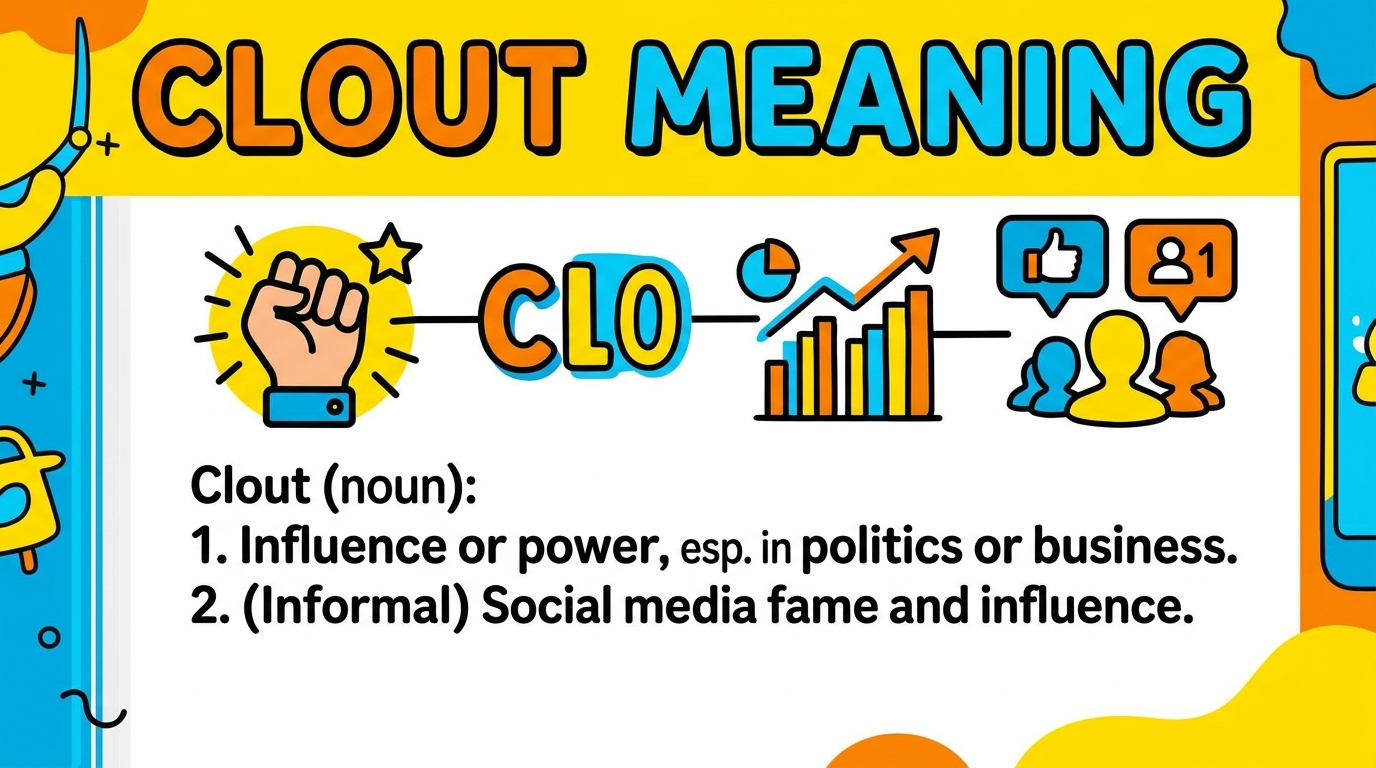
At its core, clout means influence, power, or social attention.
It refers to how much impact a person has on others—especially online or in social circles.
In simple terms:
- Clout = Attention + Influence + Popularity
- It can be real or fake
- It can be earned or chased
Quick examples:
- “He has serious clout on Instagram.”
- “She’s only doing it for clout.”
- “That influencer lost clout after the controversy.”
Clout is not just about being famous—it’s about being noticed and followed.
Origin & Background
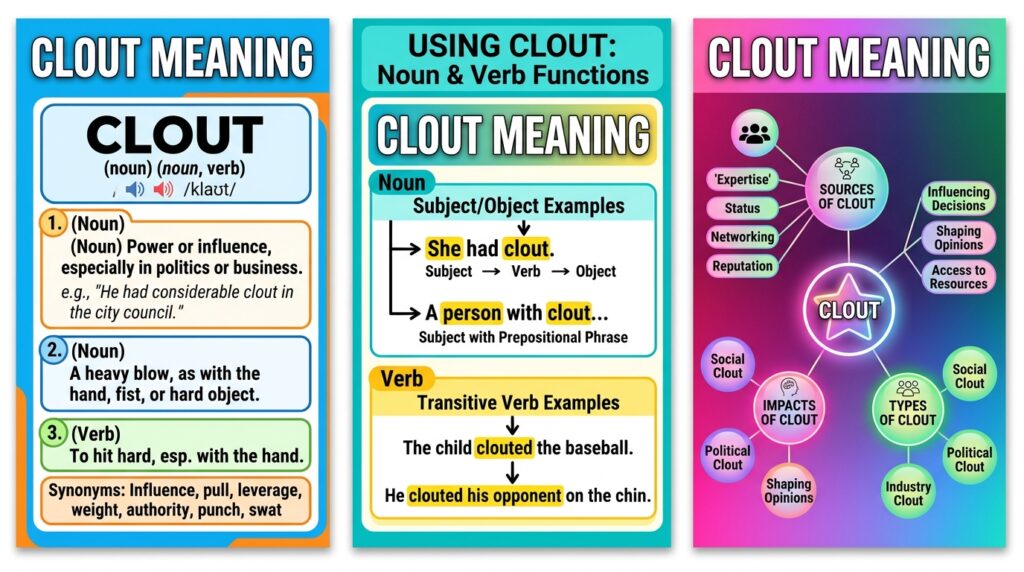
The word clout originally came from Old English, meaning “a heavy blow” or “powerful strike.” Over time, it evolved into meaning influence or authority.
In modern culture, especially through hip-hop and internet communities, “clout” transformed again. By the late 2010s, it became deeply connected to social media influence.
Platforms like Instagram, TikTok, and YouTube shaped its new identity:
- Likes became validation
- Followers became status
- Virality became power
Today, clout is no longer just influence—it’s digital currency for attention.
Clout Meaning in Social Media
On social media, clout means online influence or popularity gained through engagement.
It’s about how many people:
- Follow you
- Like your content
- Share your posts
- Talk about you
Influencers, creators, and even regular users chase clout because it brings visibility and sometimes income.
For example:
- A viral TikTok creator has high clout
- A meme page with millions of followers has clout
- A trending tweet increases digital clout instantly
But social media clout is fragile. It can rise overnight and disappear just as fast.
Clout Meaning Slang
In slang, clout often refers to attention-seeking behavior or influence gained through popularity.
It can be used in two ways:
Positive:
- “She’s got clout in the music industry.”
Negative:
- “He’s just doing it for clout.”
When used negatively, it suggests someone is acting fake or dramatic just to get attention online.
This dual meaning is why “clout” is so powerful—it can praise or criticize depending on tone.
Clout Meaning in Business
In business, clout means professional influence, authority, and reputation in an industry.
It is not about social media likes but real-world power.
Examples:
- A CEO with strong industry connections has clout
- A brand trusted globally has business clout
- A startup founder with investor backing has clout
Business clout helps:
- Close deals faster
- Build partnerships
- Gain customer trust
Unlike social media clout, business clout is usually built over years, not viral moments.
Clout Meaning Gen Z
For Gen Z, clout is deeply tied to online identity and social validation.
It represents:
- Popularity in friend groups
- Viral moments
- Internet recognition
- Trend participation
Gen Z often uses it humorously or sarcastically:
- “Doing it for the clout 😭”
- “Clout chasing era”
- “No clout, just vibes”
For them, clout is both a joke and a real social currency.
Clout Meaning in Medical
In medical terms, clout is not a standard clinical word.
However, in rare informal usage, it may be misunderstood or misused in conversations. Medically, professionals do not use “clout” as a technical term.
Instead, people might confuse it with:
- “Clot” (blood clot)
- “Clout” (informal influence)
This confusion is common in online searches but medically irrelevant.
Clout Meaning in Relationship
In relationships, clout refers to social influence one partner has over the other or within their social circle.
It can appear as:
- One partner being more popular
- One influencing social decisions
- One using the relationship for attention
Examples:
- Posting a relationship just for clout online
- Staying with someone because of their social status
Healthy relationships don’t rely on clout—they rely on trust and connection.
Financial Clout Meaning
Financial clout means economic power and financial influence.
It includes:
- Wealth
- Investment power
- Market control
- Spending influence
Examples:
- Billionaires have global financial clout
- Big corporations influence markets due to financial clout
- Investors with capital shape startups
Financial clout is one of the strongest forms of real-world power.
Chasing Clout Meaning
Chasing clout means trying too hard to gain attention, fame, or validation—often in an obvious or fake way.
It is mostly used negatively.
Examples:
- Posting controversial content just for views
- Copying trends without originality
- Overacting on social media for engagement
People often say:
- “Stop chasing clout.”
- “That’s just clout chasing behavior.”
It reflects how attention has become a competitive currency online.
Real-Life Conversations (MANDATORY)
WhatsApp Chat
Person A: Did you see him posting that drama again?
Person B: Yeah, he’s just chasing clout at this point.
Instagram DM
Person A: Why did she suddenly start dancing online?
Person B: Honestly? Pure clout move. She never did that before.
TikTok Comments
Person A: This trend is so fake now.
Person B: Everyone doing it for clout 😂
Text Message
Person A: He only talks to influencers now.
Person B: That’s his clout era, don’t expect loyalty.
Emotional & Psychological Meaning
Clout is not just a word—it reflects human desire for recognition.
People use it because:
- They want validation
- They want to feel seen
- They want social acceptance
Psychologically, clout represents:
- Ego satisfaction
- Social comparison
- Fear of invisibility
Short scenario:
A teenager posts a video, deletes it if it gets low likes, and reposts another trend instantly. It’s not just fun—it’s emotional dependency on attention.
Clout reveals how deeply digital validation affects modern self-worth.
Usage in Different Contexts
Social media:
- Used to describe viral popularity
Friends & relationships:
- Used for attention-seeking behavior
Work / professional:
- Refers to reputation and influence
Casual tone:
- “He’s got clout”
- “She’s doing it for clout”
Serious tone:
- “That decision increased his professional clout.”
When NOT to Use It
Avoid using “clout” when:
- Speaking in formal academic writing
- In serious professional communication (unless clearly contextual)
- Talking about sensitive emotional situations
- Addressing people respectfully in formal settings
It can sound dismissive or judgmental if misused.
Common Misunderstandings
Many people confuse clout with:
- Fame (not always the same)
- Money (not necessarily linked)
- Respect (can be fake online)
Another misunderstanding is assuming all influencers are “clout chasing.” Some build genuine communities.
Clout is not always negative—it depends on intention.
Comparison Table
| Concept | Meaning | Usage Intent | Example Intent | Comparison |
|---|---|---|---|---|
| Clout | Influence or attention | Social power | “He has clout online” | vs Fame |
| Fame | Being widely known | Public recognition | “She is famous” | broader than clout |
| Influence | Ability to affect others | Decision power | “He influences trends” | deeper than clout |
| Chasing clout | Seeking attention | Negative behavior | “Stop clout chasing” | vs authenticity |
Key Insight
Clout is temporary attention-based influence, while real influence or reputation is built on consistency, trust, and value.
Variations / Types (8–10)
- Clout meaning – General influence or popularity
- Clout in text – Used to describe online attention
- Clout abbreviation – No official abbreviation
- Clout slang – Internet fame or attention-seeking
- Clout in chat – Used in casual digital conversations
- Clout chasing meaning – Seeking attention aggressively
- Social clout – Online popularity power
- Financial clout – Economic influence and wealth power
- Professional clout – Career reputation strength
- Negative clout – Fake or forced attention behavior
How to Respond When Someone Uses It
Casual replies:
- “Yeah, they’ve got clout for sure.”
- “That’s actually wild clout energy.”
Funny replies:
- “Clout level: unlocked 😂”
- “Bro is farming clout again”
Mature replies:
- “Influence matters, but authenticity matters more.”
- “Real impact is better than temporary clout.”
Respectful replies:
- “They’ve built strong influence over time.”
- “That reflects genuine credibility.”
Regional & Cultural Usage
Western culture:
- Heavily linked to social media and fame
Asian culture:
- Often used in online trends and youth slang
Middle Eastern culture:
- Increasing use via social platforms and influencers
Global internet:
- Universal slang for attention economy
Gen Z vs Millennials:
- Gen Z: humorous, ironic use
- Millennials: more literal understanding of influence
Is It Safe for Kids?
Yes, the word “clout” itself is safe. However, the concept of chasing clout online can expose kids to:
- Peer pressure
- Validation addiction
- Unrealistic expectations
Guidance helps children understand healthy digital behavior.
FAQs
What does “clout” mean in slang?
In slang, clout means attention, influence, or popularity, especially online. It can be positive or used to criticize someone seeking attention.
What is clout in Gen Z slang?
For Gen Z, clout means social media fame, viral attention, or online status, often used humorously like “doing it for clout.”
What is clout in social media?
On social media, clout refers to how influential or popular someone is based on likes, followers, and engagement.
What is clout chasing?
Clout chasing means doing things only to get attention, fame, or viral engagement, often seen as fake or forced behavior.
Is clout always negative?
No, clout can be positive when it means real influence or respect, but negative when it involves attention-seeking.
How do people get clout?
People gain clout by going viral, building followers, creating engaging content, or being influential in a niche.
What is clout in real life?
In real life, clout means social status, respect, or influence someone has in a group or community.
Is clout the same as fame?
Not exactly. Fame is being widely known, while clout is more about influence and attention within a specific space.
Why do people chase clout?
People chase clout for validation, recognition, popularity, or sometimes financial opportunities through social media.
Can clout be lost?
Yes, clout is temporary. It can disappear quickly if trends change or people lose interest online.
Conclusion
Clout is more than just a slang word—it reflects how modern society values attention, influence, and visibility. From social media trends to business reputation, it shapes how people connect and present themselves. While clout can bring recognition, it should not replace authenticity or genuine relationships. Real influence lasts longer than viral moments. Understanding clout helps you see the difference between meaningful impact and temporary popularity, allowing you to navigate digital spaces with confidence and clarity.