If you spend any time on social media, texting with friends, or scrolling through TikTok comments, you’ve probably seen the word “finna.” It pops up everywhere — in memes, captions, chats, and casual conversations. Yet many people still pause for a second and wonder: What exactly does “finna” mean?
The confusion usually comes from how naturally the word blends into everyday digital language. Some people think it means “going to,” others assume it’s just internet slang, while a few mistake it for a typo. In reality, “finna” carries cultural roots, emotional tone, and a sense of immediacy that makes modern communication feel more personal and expressive.
This guide breaks down everything you need to know about the finna meaning, including where it came from, how people use it today, real conversations where it appears, and when it’s appropriate—or not—to use it.
Finna Meaning – A Simple Word That Signals Action
Finna – Quick Meaning
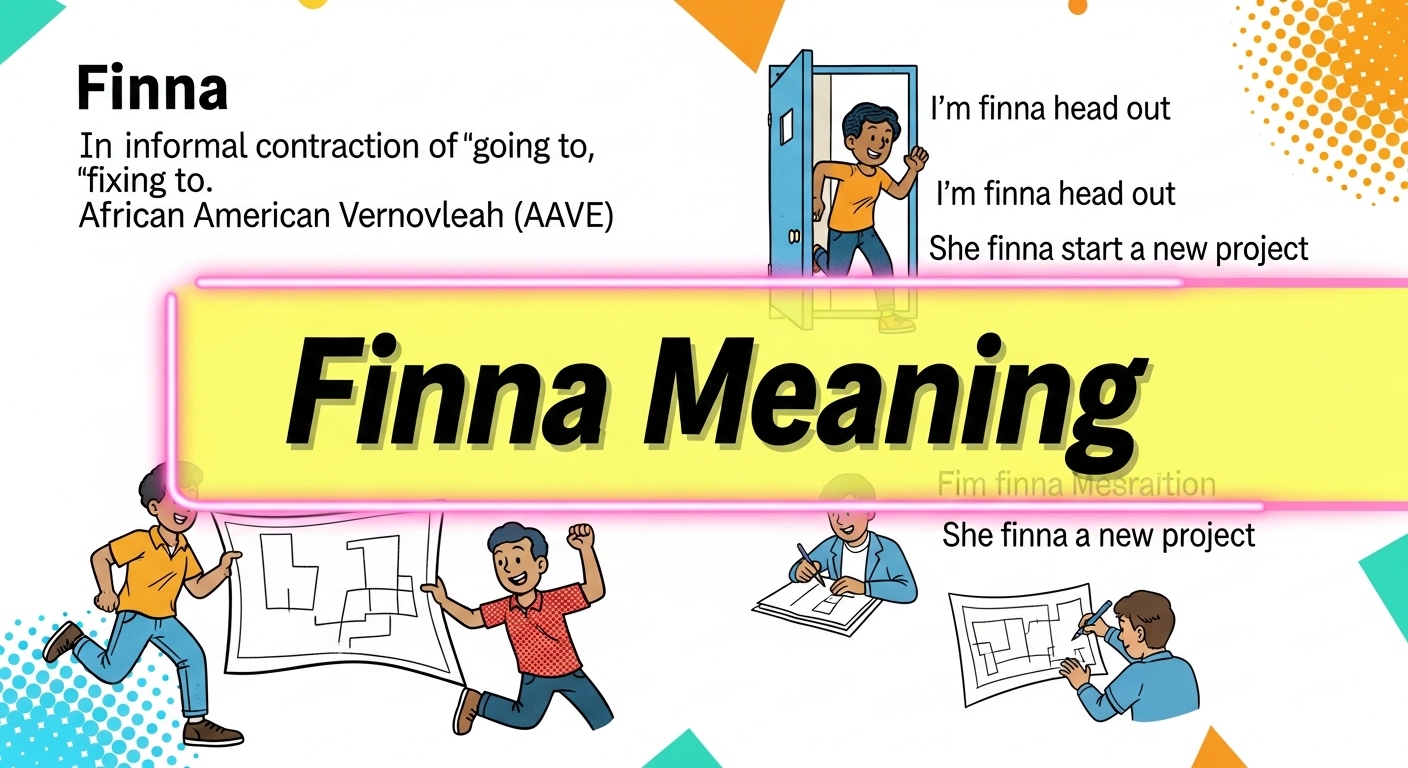
“Finna” is a slang term that means “about to,” “going to,” or “planning to do something very soon.”
It usually expresses immediate intention.
In simple terms, when someone says finna, they mean:
- They are about to do something
- They intend to do it very soon
- The action feels casual or spontaneous
Examples:
“I’m finna grab some food.”
“She finna win this game.”
“We finna leave in five minutes.”
In each case, the speaker is describing an action that will happen shortly.
Origin & Background
The word finna did not originate from the internet. Its roots go much deeper.
Linguists trace it back to African American Vernacular English (AAVE), where it developed as a contraction of “fixing to.”
Originally, people would say:
“I’m fixing to go.”
Over time, this phrase evolved in everyday speech:
- fixing to
- fixin to
- finna
This transformation happened naturally through spoken language. The phrase “fixing to” already meant preparing to do something, so “finna” simply became a faster, smoother version.
Cultural Influence
The spread of hip-hop music, street culture, and online platforms helped bring the word into mainstream language.
Artists, influencers, and creators began using it in:
- rap lyrics
- Instagram captions
- TikTok trends
- casual messaging
Today, finna has crossed cultural and geographic boundaries, becoming a common expression in global internet slang.
However, understanding its cultural roots is important because it originated from a specific linguistic community and cultural identity.
Real-Life Conversations
Seeing the word in real conversations helps clarify its tone and natural use.
WhatsApp Chat
Person A:
Bro I’m so hungry.
Person B:
Same. I’m finna order pizza right now.
Person A:
Bet. Add wings too.
Instagram DMs
Person A:
Your vacation pictures look amazing.
Person B:
Thanks! I’m finna go back next summer honestly.
Person A:
Take me with you 😂
TikTok Comments
User 1:
That dance looks easy.
User 2:
You say that now but you’re finna struggle when you try it.
User 3:
Facts 😂
Text Message Conversation
Friend 1:
Movie starts in 10 minutes.
Friend 2:
Relax I’m finna leave the house now.
Friend 1:
You always say that.
These examples show that finna adds a relaxed, conversational tone to everyday communication.
Emotional & Psychological Meaning
Language isn’t just about definitions—it’s about emotion and connection.
When someone says finna, they often express:
- anticipation
- casual excitement
- spontaneous action
- relaxed conversation
It creates a sense of immediacy and authenticity.
Instead of saying:
“I am going to watch that show tonight.”
People say:
“I’m finna watch that show tonight.”
The second version feels more natural, informal, and emotionally connected.
Personal-style scenario
Imagine messaging your best friend after a long week.
“I’m finna grab ice cream and forget this stressful day.”
The phrase instantly communicates relief, intention, and mood. It’s not just about the action—it’s about the feeling behind it.
Usage in Different Contexts
Social Media
On platforms like Instagram, TikTok, and X, finna is extremely common.
Example:
“I’m finna start my fitness era.”
It signals intention while keeping the tone relaxed.
Friends & Relationships
Among friends, the word feels friendly and conversational.
Example:
“I’m finna call you later.”
It simply means the call will happen soon.
Work or Professional Settings
In professional communication, finna is usually inappropriate.
Instead of writing:
“I’m finna send the report.”
A professional version would be:
“I’m about to send the report.”
Casual vs Serious Tone
Finna = casual tone
It works best when the conversation is relaxed, friendly, and informal.
When NOT to Use It
Even popular slang has limits.
Avoid using finna in these situations:
Professional communication
Emails, business messages, and formal documents require standard grammar.
Academic writing
Essays and research papers should use formal language.
Sensitive cultural situations
Because the word comes from AAVE, using it without understanding context can feel insensitive in certain environments.
Situations requiring clarity
If the listener might misunderstand slang, it’s better to say “about to” or “going to.”
Common Misunderstandings
Thinking it means “finally”
Some people mistakenly think finna = finally.
Incorrect:
“I finna finished my homework.”
Correct:
“I’m finna finish my homework.”
Treating it as a typo
Many assume it’s just incorrect spelling, but it’s actually a recognized slang contraction.
Literal vs figurative confusion
Sometimes finna expresses intention, not certainty.
Example:
“I’m finna start exercising.”
It means the person plans to, not necessarily that they already started.
Comparison Table
| Phrase | Meaning | Intent |
|---|---|---|
| What Does finna Mean | Explains the definition | Understanding the slang |
| How to Use finna | Shows grammar and context | Learning correct usage |
| Examples of finna | Real sentences and conversations | Practical understanding |
| finna vs going to | Slang vs standard English | Tone comparison |
Key Insight
The biggest difference between finna and standard phrases like “going to” is tone. Finna feels spontaneous, social, and expressive—while traditional grammar sounds more structured and formal.
Variations / Types
Here are common ways people adapt the word in conversation.
finna meaning
Directly means about to do something soon.
finna in text
Used in casual messages between friends.
Example:
“I’m finna sleep.”
finna abbreviation
Sometimes shortened to “fna” in very fast texting.
finna slang
A modern slang term expressing immediate intention.
finna in chat
Frequently used in group chats or gaming conversations.
I’m finna
Expresses a personal action about to happen.
Example:
“I’m finna start cooking.”
we finna
Used for group plans.
Example:
“We finna watch a movie.”
she finna / he finna
Describes another person’s upcoming action.
Example:
“She finna win this competition.”
finna go
Means leaving soon.
Example:
“I’m finna go home.”
finna eat
Common phrase in casual conversation.
Example:
“I’m finna eat lunch.”
How to Respond When Someone Uses It
Casual replies
“Alright, sounds good.”
“Okay, let’s go.”
Funny replies
“Don’t just say it — actually do it.”
“You been finna do that for two hours.”
Mature replies
“Alright, let me know when you’re done.”
Respectful replies
“Got it. Talk to you later.”
Regional & Cultural Usage
Western Culture
In the United States, especially in youth culture, finna is widely recognized slang.
Asian Culture
In many Asian countries, the word appears mostly in internet communication and memes, rather than everyday speech.
Middle Eastern Culture
Usage is growing among English-speaking online communities, especially younger users.
Global Internet Usage
Social media has made finna part of global digital language, even among people who don’t speak American English natively.
Generational Differences
Gen Z
Uses it frequently in casual texting and memes.
Millennials
Understand it but may use it less often.
Older generations typically prefer “about to” or “going to.”
Is It Safe for Kids?
Yes, finna is generally safe for kids.
It’s not offensive or inappropriate. It’s simply informal slang.
However, children should still learn the difference between:
- casual language
- formal communication
Knowing when to switch between the two is an important communication skill.
FAQs
What does finna mean in slang?
It means about to do something soon or planning to do something immediately.
Is finna proper English?
No. It’s informal slang, not standard grammar.
Where did the word finna come from?
It evolved from “fixing to,” a phrase used in African American Vernacular English.
Is it okay to say finna?
Yes in casual conversations, but avoid it in formal settings.
Do people still use finna in 2026?
Yes. It remains common in social media, texting, and youth culture.
Is finna the same as gonna?
They’re similar.
gonna = going to
finna = about to / preparing to
Why is finna popular online?
Because it’s short, expressive, and conversational, making it perfect for fast digital communication.
Conclusion
Language constantly evolves, and slang words like finna reveal how people adapt communication to feel more natural, personal, and expressive. What started as a regional speech pattern eventually traveled through music, culture, and the internet until it became part of everyday online conversation.
Understanding the finna meaning isn’t just about knowing a definition. It’s about recognizing tone, cultural roots, and context. When used casually among friends or on social media, it adds warmth and spontaneity to conversations. At the same time, knowing when not to use it—such as in professional writing—shows real communication awareness. Once you understand its purpose, finna becomes a simple yet powerful way to express intention in modern language.