If you’ve spent even a little time texting, scrolling through memes, or chatting on social media, you’ve probably seen someone type “LMFAO.” It often appears after a hilarious comment, a shocking meme, or a moment that makes someone laugh uncontrollably.
But despite how common it is, many people still wonder about the real meaning of LMFAO, when it’s appropriate to use it, and whether it’s too informal for certain situations.
This guide clears up the confusion. We’ll explore where the slang came from, what emotions it expresses, how people actually use it in conversations, and the cultural nuances behind it. By the end, you’ll understand exactly when LMFAO works perfectly—and when it doesn’t.
LMFAO Meaning: The Internet’s Way of Saying “That Was Hilarious”
LMFAO – Quick Meaning
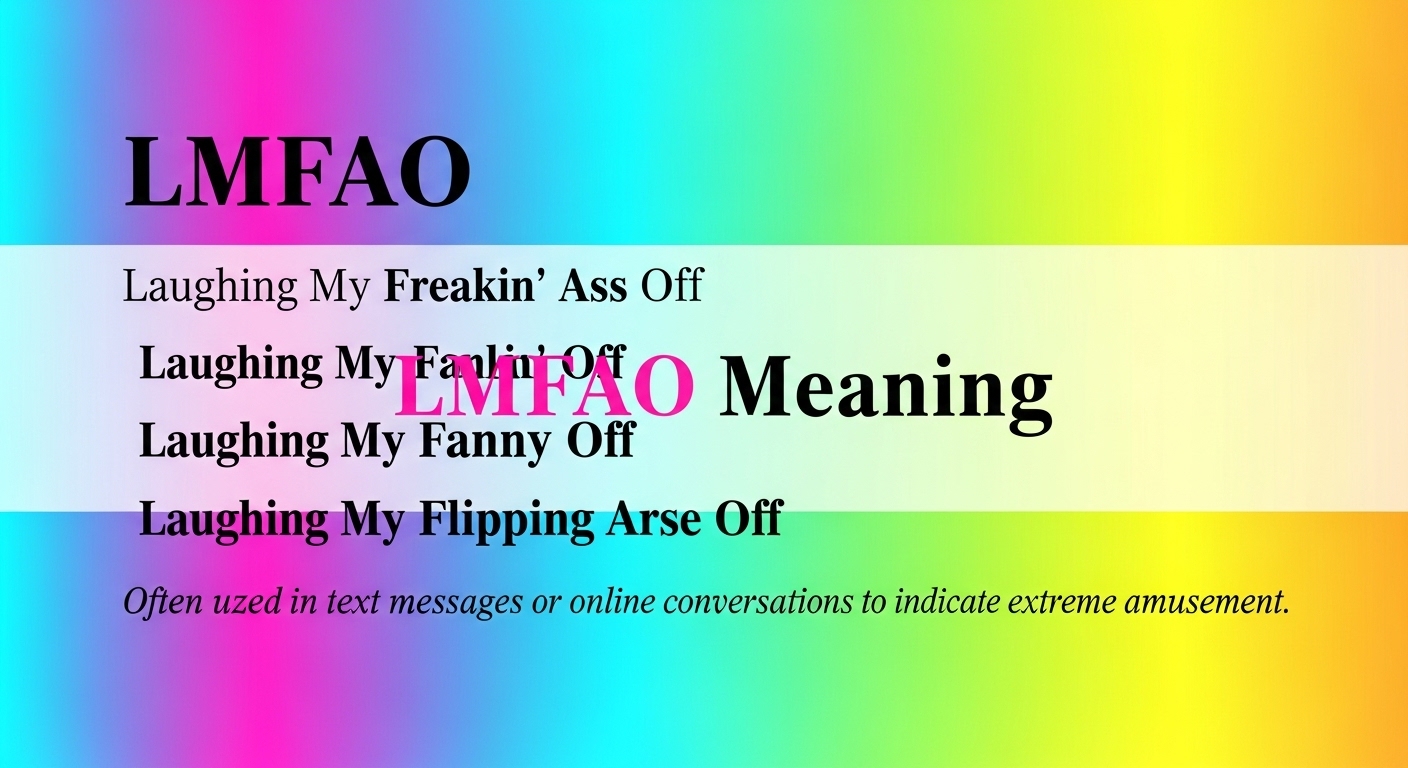
LMFAO is a popular internet slang acronym that means:
“Laughing My F*ing A** Off.”**
It expresses extreme amusement or uncontrollable laughter.
In simple terms, when someone types LMFAO, they’re saying:
- “That’s ridiculously funny.”
- “I’m laughing so hard right now.”
- “I didn’t expect that—it’s hilarious.”
Because it includes strong language, it’s considered informal slang and usually appears in casual conversations.
Example Uses
“That meme you sent me… LMFAO 😂”
“Bro fell off the chair during the meeting. LMFAO.”
“I just saw your comment and LMFAO.”
The acronym exaggerates laughter, similar to saying “I’m dying laughing.”
Origin & Background
The acronym LMFAO started appearing in early internet chat rooms and messaging platforms in the late 1990s and early 2000s. During that time, people were looking for faster ways to express emotions while typing.
Before emojis existed, internet users relied heavily on abbreviations like:
- LOL
- ROFL
- LMAO
Eventually, people intensified these expressions by adding stronger emphasis. That’s how LMFAO evolved from LMAO.
The Role of Social Media
The slang exploded in popularity thanks to platforms like:
- TikTok
Memes and viral videos made exaggerated reactions part of internet culture, and LMFAO became the perfect shorthand for “this is ridiculously funny.”
Interestingly, younger generations sometimes use it even when they’re not literally laughing, but simply reacting to something amusing.
Real-Life Conversations
Here are realistic examples showing how people actually use LMFAO in daily chats.
WhatsApp Conversation
Person A:
Did you see the teacher accidentally mute herself for 20 minutes?
Person B:
Yes! She was explaining the whole lesson. LMFAO.
Instagram DMs
Person A:
Look at this dog wearing sunglasses.
Person B:
LMFAO that dog has more style than me.
TikTok Comments
Commenter 1:
He said “trust the process” and immediately fell.
Commenter 2:
LMFAO this video gets funnier every time.
Text Message
Friend 1:
I tried cooking pasta and burned the water somehow.
Friend 2:
LMFAO HOW DO YOU BURN WATER?!
These examples show that the slang often appears during moments of shared humor or surprise.
Emotional & Psychological Meaning
At its core, LMFAO expresses intense amusement.
But psychologically, it also signals something deeper: shared emotional connection through humor.
When someone sends LMFAO, they’re usually trying to say:
- “That moment made me genuinely laugh.”
- “I relate to this.”
- “This situation is absurdly funny.”
Why People Use It
Digital communication lacks facial expressions and tone. Acronyms like LMFAO help fill that emotional gap.
Instead of simply typing “funny,” the acronym conveys stronger emotion and personality.
A Real-Life Scenario
Imagine you’re in a group chat with friends. Someone shares a photo from years ago where everyone had terrible hairstyles.
One friend responds:
“LMFAO I cannot believe we thought this looked cool.”
The reaction isn’t just about the photo—it’s about shared nostalgia and laughter together.
Usage in Different Contexts
Social Media
On platforms like TikTok or Instagram, LMFAO appears in:
- Meme captions
- Comment sections
- Reaction tweets
It shows strong amusement and engagement.
Example:
“LMFAO this might be the funniest video today.”
Friends & Relationships
Among friends, the acronym feels natural and relaxed.
Example:
“Your story about missing the bus again… LMFAO.”
In relationships, it often signals playful teasing.
Work or Professional Settings
In professional environments, LMFAO is usually inappropriate.
Because the acronym contains profanity, it can appear unprofessional in emails or business chats.
Safer alternatives include:
- “That’s funny.”
- “That made me laugh.”
- “Haha.”
Casual vs Serious Tone
LMFAO is best used when:
- The conversation is informal
- You know the person well
- Humor is expected
Avoid using it in serious discussions where laughter might feel disrespectful.
When NOT to Use It
Although it’s common slang, LMFAO isn’t appropriate everywhere.
Professional Communication
Avoid it in:
- Job interviews
- Work emails
- Formal presentations
Sensitive Situations
Using it during serious discussions can seem insensitive.
Example:
Bad timing:
Someone shares bad news → responding with “LMFAO” would feel inappropriate.
Cultural Sensitivity
Some cultures prefer more formal communication, and slang with profanity may seem rude.
Common Misunderstandings
Thinking It Means Simple Laughter
Some assume LMFAO just means “laughing.”
In reality, it indicates extreme laughter or shock humor.
Tone Confusion
Without context, the acronym might seem:
- Sarcastic
- Mocking
- Overly dramatic
Tone depends heavily on the relationship between speakers.
Literal vs Figurative Meaning
Nobody is literally “laughing their body off.”
The phrase is figurative exaggeration, just like saying “I’m dying laughing.”
Comparison Table
| Phrase | Meaning | Usage Intent |
|---|---|---|
| What Does LMFAO Mean | Extreme laughter | Understanding slang |
| How to Use LMFAO | Express strong amusement | Practical usage |
| Examples of LMFAO | Real conversations | Context learning |
| LMFAO vs LOL | Stronger laughter | Intensity comparison |
Key Insight
While LOL suggests mild amusement, LMFAO expresses much stronger laughter. It’s closer to reacting to something unexpectedly hilarious.
Variations / Types
Here are common variations people use online.
LMAO meaning
“Laughing My A** Off.” Slightly milder version.
ROFL meaning
“Rolling On the Floor Laughing.” Indicates uncontrollable laughter.
LOL meaning
“Laughing Out Loud.” The most common mild laughter acronym.
LMFAOO meaning
An exaggerated version for stronger emphasis.
LMFAO slang
Internet slang for extreme amusement.
LMFAO in chat
Used in texting or messaging to react to something funny.
LMFAO abbreviation
Shortened digital expression for intense laughter.
LMFAO reaction
Often paired with emojis like 😂.
LMFAO meme usage
Common in meme captions and comment sections.
How to Respond When Someone Uses It
Casual Replies
- “Right?! That was hilarious.”
- “I know, I couldn’t stop laughing.”
Funny Replies
- “I’m still laughing too.”
- “Internet comedy at its finest.”
Mature Replies
- “That genuinely made my day.”
Respectful Replies
- “Glad you found it funny.”
Regional & Cultural Usage
Western Culture
In the US, UK, and Canada, LMFAO is widely understood and commonly used in casual communication.
Asian Culture
In many Asian communities, internet slang is popular among younger users, but formal settings tend to avoid profanity-based acronyms.
Middle Eastern Culture
Usage varies. Younger internet users recognize the slang, but older generations may find it inappropriate.
Global Internet Usage
Because of memes and social media, LMFAO has become part of global digital language.
Generational Differences
Gen Z
Uses it frequently in memes and casual reactions.
Millennials
Also use it but may alternate with LOL or LMAO.
Older generations often prefer clearer expressions of laughter.
Is It Safe for Kids?
Parents should know that LMFAO contains profanity, even if the acronym hides it.
Many teenagers use it casually online, but younger children may not understand the full meaning.
Teaching context awareness and respectful communication is usually the best approach.
FAQs
What does LMFAO stand for?
It stands for “Laughing My F*ing A** Off,”** a slang expression used to show extreme laughter.
Is LMFAO rude?
It can be considered rude in formal or professional settings because it contains profanity.
Is LMFAO stronger than LOL?
Yes. LMFAO expresses much stronger laughter than LOL.
Can LMFAO be used in professional communication?
No. It’s best avoided in workplaces or formal messages.
Why do people use LMFAO?
People use it to express intense amusement, surprise humor, or shared laughter in digital conversations.
Is LMFAO outdated slang?
Not really. While new slang appears constantly, LMFAO is still widely understood across the internet.
Conclusion
Language online evolves quickly, but some expressions manage to stick around because they capture emotion so perfectly. LMFAO is one of those expressions. It’s bold, exaggerated, and instantly recognizable across the internet.
When used in the right context—usually among friends or casual conversations—it adds personality and humor to digital communication. But like all slang, it works best when you understand the audience and the moment. Knowing when to use it and when to hold back makes your communication feel natural and respectful. Used wisely, LMFAO simply reflects what the internet has always loved most: sharing laughter together.
Discover more posts:
- What Does IMY Mean in Text? Definition, Tone & Examples
- What Does FW Mean in Text? Meaning, Usage & Examples (2026)
- What Does DW Mean in Text? Meaning, Usage & Examples (2026)
- MK Meaning in Text: What It Really Means in Chat (2026 Guide)
- Mhm Meaning in Text: What It Really Means and How to Use It (2026 Guide)