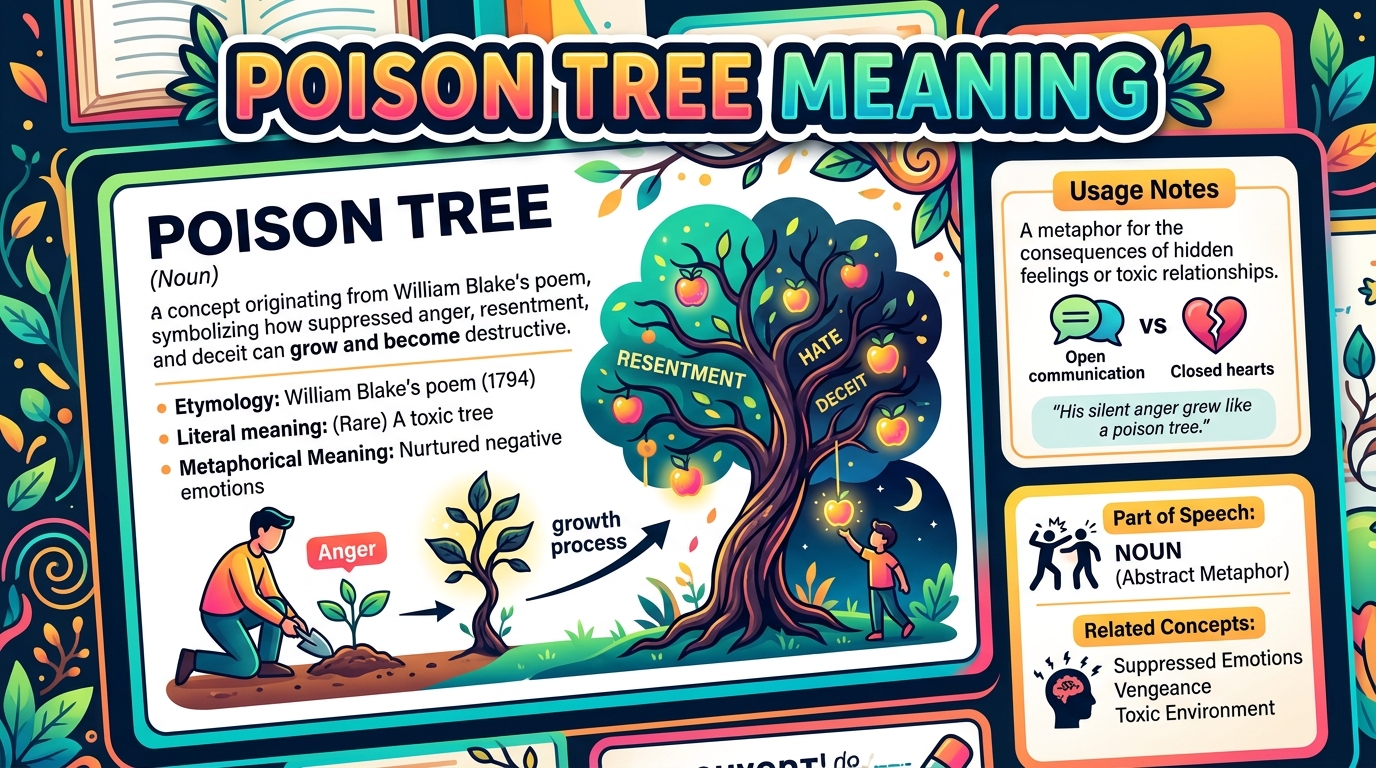
The phrase poison tree meaning often sparks curiosity because it sounds mysterious, emotional, and symbolic all at once. Many people encounter it through William Blake’s famous poem A Poison Tree, while others discover it through tattoos, songs, necklaces, religious discussions, or social media references.
At its core, a poison tree represents anger that is hidden instead of expressed. The image is powerful because it shows how unresolved emotions can grow over time and eventually cause harm. Whether you are studying literature, exploring spiritual symbolism, or trying to understand a tattoo design, the meaning behind a poison tree goes much deeper than a simple image of a dangerous plant.
In this guide, we’ll explore every major interpretation of the poison tree symbol, its literary roots, emotional significance, cultural meanings, and how people use it in modern conversations.
Poison Tree Meaning – Quick Meaning
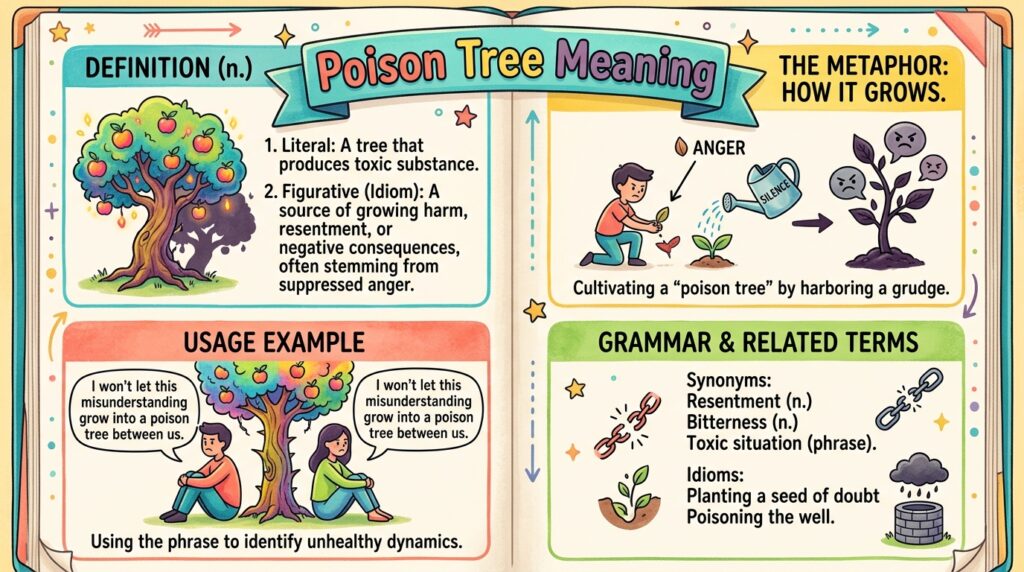
A poison tree symbolizes hidden anger, resentment, bitterness, and emotional pain that grows when feelings are not openly expressed.
Simple Definition
A poison tree is a metaphor for:
- Suppressed anger
- Growing resentment
- Emotional toxicity
- Secret hostility
- The consequences of unresolved conflict
Quick Examples
“His jealousy became a poison tree that affected every friendship.”
“Holding onto old grudges can grow into a poison tree inside the mind.”
“The poem warns that hidden anger can become a poison tree with dangerous results.”
The symbol reminds people that emotions ignored today may create bigger problems tomorrow.
Origin & Background
The phrase comes from William Blake’s famous poem A Poison Tree, published in 1794 as part of Songs of Experience.
Blake used a simple story to illustrate a deep psychological truth. In the poem, the speaker tells a friend about anger and resolves it. However, anger toward an enemy is hidden and secretly nurtured until it grows into a poisonous tree bearing a tempting fruit.
The poem quickly became one of Blake’s most studied works because its message feels timeless. Human beings often suppress emotions rather than communicate honestly.
Over the years, the poison tree became more than a literary symbol. It appears in:
- Tattoos
- Jewelry designs
- Religious discussions
- Music lyrics
- Social media quotes
- Mental health conversations
Today, many people use the phrase to describe toxic emotions that slowly grow beneath the surface.
Poison Tree Tattoo Meaning
A poison tree tattoo usually symbolizes emotional struggles, personal growth, or lessons learned from anger and betrayal.
Different people choose the tattoo for different reasons:
Hidden Anger
Some wear the tattoo as a reminder of past resentment and the damage it caused.
Emotional Healing
Others use it to symbolize overcoming bitterness and choosing forgiveness.
Personal Transformation
Just as a tree grows from a seed, emotions can grow into something powerful. The tattoo may represent learning from painful experiences.
Warning Symbol
For some, the tattoo serves as a reminder not to allow negative emotions to control their lives.
Because of William Blake’s influence, many poison tree tattoos include apples, roots, branches, or lines from the poem.
A Poison Tree Meaning Each Stanza
First Stanza
The speaker expresses anger toward a friend and talks about it openly. The anger disappears.
The lesson is simple: honest communication can solve conflicts.
Second Stanza
The speaker hides anger from an enemy.
Instead of discussing it, the emotion grows through fear, deception, and resentment.
Third Stanza
The anger develops into a symbolic tree.
The tree produces a shining apple that attracts the enemy.
This shows how hidden emotions can become dangerous.
Fourth Stanza
The enemy takes the fruit and dies beneath the tree.
The ending reveals the destructive consequences of nurtured hatred.
The poem suggests that unresolved anger ultimately harms relationships and human connection.
Poison Tree Meaning in English
In English, the phrase poison tree is commonly understood as a metaphor for emotions that become harmful when left unchecked.
It often refers to:
- Bitterness
- Revenge
- Secret hostility
- Emotional toxicity
- Hidden resentment
Outside literature, people use the phrase figuratively when discussing toxic relationships, workplace conflicts, or personal grudges.
Poison Tree Meaning Song
Several songs reference A Poison Tree directly or indirectly.
When musicians use the poison tree symbol, they usually connect it with:
- Betrayal
- Revenge
- Emotional pain
- Toxic love
- Unresolved conflict
In music, the image often becomes a warning about allowing negative emotions to grow until they affect relationships.
Listeners frequently relate to the symbol because many have experienced anger that was never fully expressed.
Poison Tree Meaning to Jah
In Rastafarian and spiritual discussions, “Jah” refers to God.
When interpreted through this lens, a poison tree may symbolize spiritual corruption caused by hatred, envy, or resentment.
The message aligns with many spiritual teachings:
- Negative emotions separate people from peace.
- Bitterness damages spiritual growth.
- Forgiveness promotes healing.
Many believers see the poison tree as a warning against nurturing emotions that lead away from compassion and wisdom.
Poison Tree Meaning Bible
Although the exact phrase does not appear in the Bible in the same way as Blake’s poem, the symbolism closely matches biblical teachings.
Many biblical passages warn against:
- Wrath
- Bitterness
- Envy
- Hatred
- Revenge
The poison tree can therefore represent sin or destructive emotions taking root in the heart.
Biblical interpretations often connect the symbol to the idea that hidden resentment grows over time and eventually produces harmful consequences.
Forgiveness is frequently presented as the solution.
Poison Tree Meaning Necklace
A poison tree necklace usually carries symbolic rather than literal meaning.
People wear these necklaces to represent:
- Personal growth
- Emotional awareness
- Literary appreciation
- Healing after betrayal
- Strength gained through hardship
For literature lovers, the necklace can be a tribute to William Blake’s poem.
For others, it serves as a reminder to release negativity and focus on emotional balance.
A Poison Tree Analysis
A Poison Tree is a short poem with a remarkably deep message.
Theme
The central theme is the danger of suppressed anger.
Symbolism
The tree symbolizes growing resentment.
The apple symbolizes temptation and revenge.
Tone
The poem begins calmly but becomes darker as the hidden anger develops.
Irony
The speaker appears satisfied at the end, yet readers recognize the tragic consequences of revenge.
Psychological Insight
Modern psychology supports Blake’s observation that unresolved emotions can become harmful when ignored rather than addressed.
This timeless relevance explains why the poem remains widely studied today.
Real-Life Conversations
WhatsApp Conversation
Person A: I still haven’t told him why I’m upset.
Person B: Be careful. That’s exactly how a poison tree grows.
Instagram DM
Person A: I’ve been holding that grudge for years.
Person B: Sometimes resentment hurts us more than the other person.
TikTok Comments
Person A: This poem hits differently when you’ve experienced betrayal.
Person B: True. The poison tree isn’t really about a tree at all.
Text Message
Person A: I finally talked about what was bothering me.
Person B: Good. Hidden anger only gets heavier with time.
Emotional & Psychological Meaning
The poison tree symbolizes something deeply human.
Many people struggle with expressing difficult emotions. Fear of confrontation often leads individuals to hide anger instead of addressing it.
Over time, that anger may become:
- Resentment
- Distrust
- Jealousy
- Bitterness
I’ve seen situations where friends stopped speaking for years simply because neither person discussed the original problem. The issue itself was small, but silence allowed negative feelings to grow larger than reality.
This is why the poison tree remains such a powerful symbol. It reflects emotional patterns that still exist today.
Usage in Different Contexts
Social Media
People use the phrase when discussing toxic relationships, emotional healing, or personal growth.
Friends & Relationships
The symbol often appears in conversations about unresolved conflicts and grudges.
Work & Professional Settings
Professionals may use the concept metaphorically when discussing workplace resentment or communication problems.
Casual vs Serious Tone
Casually, it may refer to everyday frustrations.
In serious discussions, it often symbolizes deep emotional wounds and long-term resentment.
When NOT to Use It
Avoid using the phrase when:
- People are unfamiliar with literary references.
- Serious mental health situations require direct communication.
- Cultural misunderstandings may occur.
- The metaphor could confuse rather than clarify.
Sometimes plain language communicates feelings more effectively than symbolism.
Common Misunderstandings
It Is About an Actual Tree
The poem uses a symbolic tree rather than a real one.
It Encourages Revenge
Some readers mistakenly think the poem supports revenge. In reality, it warns against it.
Only Literary Meaning Exists
Many people apply the symbol to psychology, spirituality, and personal development.
Anger Is Always Bad
The poem does not condemn anger itself. It highlights the danger of suppressing it.
Comparison Table
| Search Term | Definition Intent |
|---|---|
| What Does Poison Tree Mean | Understanding the core symbolism |
| How to Use Poison Tree | Learning proper contextual usage |
| Examples of Poison Tree | Seeing real-world applications |
| Poison Tree vs Anger | Symbol versus emotion |
| Poison Tree vs Resentment | Metaphor versus specific feeling |
| Poison Tree vs Grudge | Growth of emotion versus stored anger |
| Poison Tree vs Forgiveness | Destruction versus healing |
Key Insight
The poison tree is not really about anger alone. It is about what happens when anger remains hidden long enough to transform into something much more destructive.
Variations / Types
Poison Tree Meaning
A symbol of growing resentment and hidden anger.
Poison Tree in Text
Used metaphorically to discuss emotional conflict.
Poison Tree Abbreviation
No standard abbreviation exists.
Poison Tree Slang
Rarely used as slang but sometimes refers to toxic emotional behavior.
Poison Tree in Chat
Used to describe grudges or unresolved issues.
Poison Tree Symbol Meaning
Represents emotional toxicity and consequences.
Poison Tree Spiritual Meaning
A warning against bitterness and negativity.
Poison Tree Literary Meaning
A metaphor for suppressed anger.
Poison Tree Relationship Meaning
Unspoken conflict damaging trust.
Poison Tree Modern Meaning
Emotional wounds that grow through silence.
How to Respond When Someone Uses It
Casual Replies
- “That’s actually a powerful way to describe it.”
- “I understand exactly what you mean.”
Funny Replies
- “Sounds like that tree needs emotional pruning.”
- “Maybe it’s time to water something healthier.”
Mature Replies
- “Have you talked to the person involved?”
- “Holding onto that feeling may only make things harder.”
Respectful Replies
- “Thank you for sharing that perspective.”
- “That’s an important lesson about emotions.”
Regional & Cultural Usage
Western Culture
Often connected to literature, psychology, and personal development.
Asian Culture
May be interpreted through concepts of balance, harmony, and emotional control.
Middle Eastern Culture
Often linked to spiritual reflection and moral lessons about forgiveness.
Global Internet Usage
Used in discussions about toxic behavior, healing, and emotional growth.
Gen Z vs Millennials
Gen Z often connects the symbol to mental health awareness.
Millennials frequently relate it to personal growth and relationship dynamics.
Is It Safe for Kids?
Yes, when explained appropriately.
The poison tree can teach valuable lessons about expressing emotions honestly, resolving conflicts peacefully, and understanding the consequences of holding grudges. Adult guidance may help younger readers understand its deeper symbolism.
FAQs
What does poison tree symbolize?
A poison tree symbolizes hidden anger, resentment, and bitterness that grow when people refuse to express their feelings openly. It shows how negative emotions can become destructive over time.
What is the meaning of the poison tree?
The poison tree represents suppressed emotions, especially anger, that develop into harmful thoughts or actions. It serves as a warning about the consequences of unresolved conflict.
What is the main message of A Poison Tree?
The main message of A Poison Tree is that unspoken anger can grow into resentment and cause serious harm. The poem encourages honest communication instead of hiding negative feelings.
What is the poison tree about?
A Poison Tree is about a speaker who hides anger toward an enemy and allows it to grow. The poem explores the dangers of revenge, secrecy, and emotional suppression.
Who wrote A Poison Tree?
William Blake wrote A Poison Tree and published it in 1794 as part of his collection Songs of Experience. The poem remains one of his most famous works.
Why is the apple important in A Poison Tree?
The apple symbolizes temptation and the result of growing resentment. It attracts the enemy and represents the dangerous outcome of the speaker’s hidden anger.
Is A Poison Tree based on a true story?
No, A Poison Tree is not based on a specific true story. William Blake used symbolism and metaphor to explore universal human emotions and behavior.
What lesson can readers learn from A Poison Tree?
Readers learn that expressing emotions honestly can prevent misunderstandings and conflict. The poem shows that hiding anger often creates bigger problems later.
Why is A Poison Tree still relevant today?
The poem remains relevant because people still struggle with anger, resentment, and communication. Its message about emotional honesty applies to modern relationships and everyday life.
Is the poison tree a symbol of revenge?
Yes, the poison tree can symbolize revenge because the speaker secretly nurtures anger until it harms another person. However, the poem mainly warns about the destructive nature of revenge rather than supporting it.
Conclusion
Understanding the poison tree meaning reveals far more than a literary symbol. It offers a powerful lesson about human emotions, communication, and the hidden consequences of unresolved anger. Whether encountered in William Blake’s poem, a tattoo, a song, a necklace, or everyday conversation, the poison tree reminds us that feelings left unspoken can grow into something harmful. By recognizing resentment early and communicating honestly, people can choose healing over bitterness and create healthier relationships built on understanding, trust, and emotional honesty.