The word “squatters” often appears in news headlines, property discussions, and even social media debates—but its meaning is not always as clear as it seems. At first glance, it sounds like just someone “staying somewhere.” But in reality, it carries legal tension, social complexity, and sometimes emotional controversy.
People search this term because they hear it in movies, see it in eviction stories, or encounter it in legal contexts and feel confused. Is it illegal occupation? Is it temporary shelter? Or does it have deeper historical roots?
The truth is, “squatters” sits at the intersection of law, survival, and social perception. Understanding it helps you decode not just the word, but the situations behind it.
Squatters Meaning in English – Quick Meaning
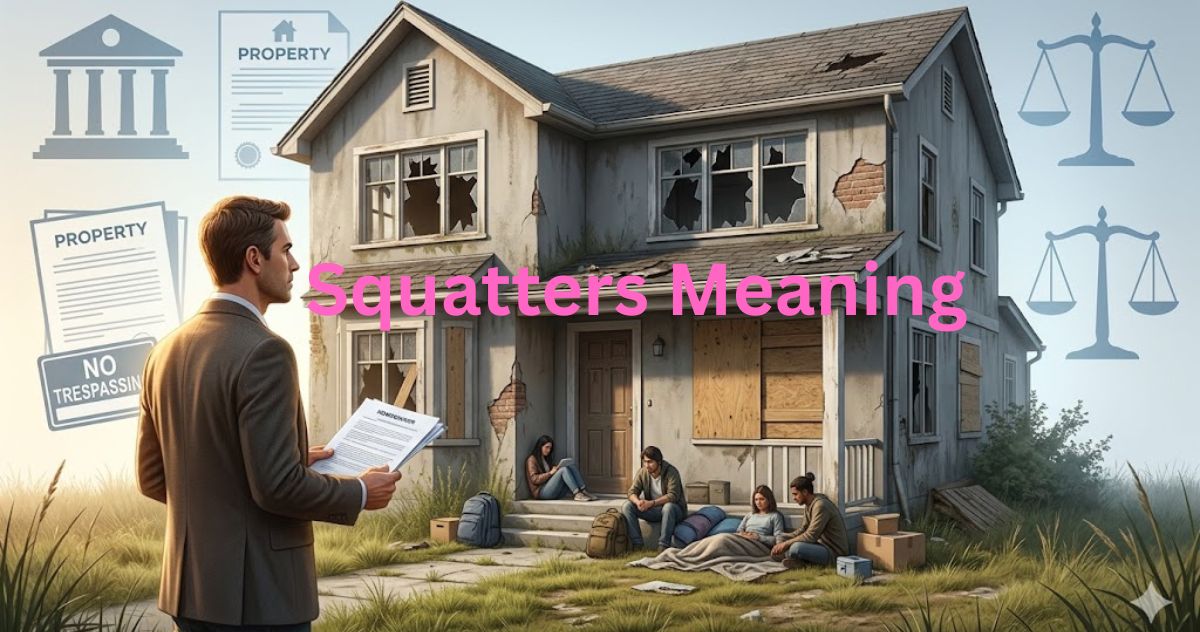
In simple English, squatters refers to people who occupy land or property without legal permission from the owner.
- They do not own or rent the property legally
- They stay without formal authorization
- In some cases, they remain for long periods
Examples:
- “The abandoned house was taken over by squatters.”
- “Authorities removed squatters from the land.”
- “Squatters have been living there for months.”
In everyday language, it often sounds negative, but the real situation can be more complicated than it appears.
Origin & Background
The idea of squatting is not new. It has existed for centuries, especially during times of economic hardship, war, or rapid urban growth.
Historically, people without homes would occupy unused land or abandoned buildings simply to survive. Over time, governments introduced laws to regulate property ownership and prevent unauthorized occupation.
In modern cities, the term became more legal-focused, especially in urban planning and housing laws. Today, “squatters” can refer to:
- Homeless individuals seeking shelter
- Groups occupying abandoned buildings
- Organized communities in unused spaces
Social media has also reshaped the perception. Viral videos often show dramatic evictions or abandoned houses, making the term more emotionally charged and widely misunderstood.
Squatters Meaning in Farsi
In Farsi (Persian), “squatters” is commonly translated as:
“افرادی که بهطور غیرقانونی در ملک یا زمین زندگی میکنند”
Simple breakdown:
- They occupy property
- Without legal permission
- Often in abandoned or unused places
In everyday Persian conversation, it may also be described as:
- “متصرف غیرقانونی ملک” (illegal occupant of property)
The meaning stays closely aligned with legal occupation without ownership.
Squatter en français
In French, “squatter” is used both as a noun and a verb:
- Un squatteur = a squatter (person occupying illegally)
- Squatter un lieu = to occupy a place illegally
It is often used in urban discussions or housing debates in France, especially in cities with housing shortages.
Example:
- “Des squatteurs ont occupé l’immeuble vide.”
The French usage also carries social nuance, sometimes linked to activism or housing crises.
Squatters Meaning in Law
Legally, squatters refer to individuals who occupy property without the legal right or permission from the owner.
However, law is where things become complex.
In many countries:
- Squatting is illegal
- But long-term occupation may create legal claims
- Some laws allow “adverse possession” if conditions are met
This means if someone occupies land openly, continuously, and without dispute for years, they may gain legal rights in rare cases.
Legal systems treat squatting differently:
- In the UK: strict eviction laws
- In the US: varies by state
- In developing regions: enforcement may be weaker
So legally, the term sits between trespassing and potential ownership claims depending on time and jurisdiction.
Squatter Synonym
Common synonyms include:
- Intruder
- Occupier
- Trespasser
- Unauthorized resident
- Encroacher
Each synonym carries a slightly different tone. “Trespasser” sounds more immediate and legal, while “occupier” can sometimes sound neutral or even political.
Squatters Meaning in Arabic
In Arabic, “squatters” can be expressed as:
“شاغلون غير قانونيين للأراضي أو الممتلكات”
Other variations include:
- “متعدّون على الملكية” (property violators)
- “ساكنون غير قانونيين”
The meaning stays consistent: people occupying property without legal authorization.
In many Arabic-speaking regions, the term is often used in legal and governmental contexts rather than casual speech.
Squatters Pronunciation
The pronunciation of “squatters” is:
/ˈskwɒt-ərz/ (British English)
/ˈskwɑː-tərz/ (American English)
Breakdown:
- “squat” → rhymes with “pot”
- “-ters” → soft ending sound
It’s pronounced smoothly as: Skwot-ers
Squatters Meaning in Spanish
In Spanish, “squatters” is commonly translated as:
- “Okupas” (informal slang)
- “Intrusos” (intruders)
- “Ocupantes ilegales” (illegal occupants)
Example:
- “Los okupas entraron en la casa abandonada.”
The word “okupa” is widely used in Spain and often appears in social and political discussions.
Real-Life Conversations (MANDATORY)
WhatsApp Chat 1:
Person A: Did you see that old house near the station?
Person B: Yeah, I heard squatters moved in there last week.
Instagram DM:
Person A: Why is that building always closed?
Person B: It’s been taken over by squatters, complicated situation.
TikTok Comment Thread:
Person A: That place looks abandoned.
Person B: It is… but squatters are living inside now.
Text Message:
Person A: Is that property still empty?
Person B: Not really, squatters are occupying it temporarily.
Emotional & Psychological Meaning
Beyond legal definitions, “squatters” often reflects deeper human emotions—survival, displacement, and need.
People use the term because:
- It explains unexpected occupation
- It signals urgency or conflict
- It reflects housing struggles in cities
Psychologically, it can trigger mixed feelings:
- Sympathy for people without shelter
- Frustration for property owners
- Curiosity about how such situations happen
Imagine walking past an abandoned building and discovering people living inside. It creates a mental conflict between legality and humanity.
Usage in Different Contexts
Social Media:
Used in viral posts about abandoned homes or urban exploration.
Friends & Relationships:
Used casually when describing empty places being occupied.
Work / Professional Settings:
Used in legal, real estate, or urban planning discussions.
Casual vs Serious Tone:
Casual: “Some squatters are living there.”
Serious: “Unauthorized occupation of property has been reported.”
When NOT to Use It
- When discussing sensitive homeless situations without context
- In a disrespectful or mocking tone
- When legal clarity is needed but slang is used instead
- In formal documents without proper legal terminology
The word can sound judgmental if used carelessly.
Common Misunderstandings
Many people think:
- Squatters always break into homes (not always true)
- All squatting is criminal (laws vary)
- Squatting is always temporary (it can last years)
The biggest confusion is between illegal entry and long-term occupation under unclear legal systems.
Comparison Table
| Concept | Meaning | Usage Intent |
|---|---|---|
| Squatters Meaning | People occupying property without permission | Define occupation status |
| How to Use Squatters | Refers to unauthorized residency | Contextual explanation |
| Examples of Squatters | Real-life occupancy cases | Illustrative understanding |
| Squatters vs Trespassers | Long-term vs short-term entry | Legal distinction |
Key Insight:
Squatters are not just “illegal occupants”—they represent a mix of legal boundaries, social issues, and human survival realities depending on context.
Variations / Types (8–10)
- Squatters meaning → people occupying property without permission
- Squatters in text → casual reference to illegal occupants
- Squatters slang → informal way of describing occupiers
- Squatters abbreviation → rarely abbreviated, usually written fully
- Squatters in chat → used to describe occupied places
- Squatter meaning → single person occupying illegally
- Urban squatters → city-based informal housing occupants
- Legal squatters → occupation cases under legal review
- Homeless squatters → people using abandoned spaces for shelter
- Political squatters → occupation linked to protests
How to Respond When Someone Uses It
Casual Replies:
- “Oh really? I didn’t know that.”
- “That explains a lot.”
Funny Replies:
- “Guess they found a free Airbnb 😄”
- “No rent, no rules I suppose!”
Mature Replies:
- “That sounds like a legal issue worth checking.”
- “It depends on how long they’ve been there.”
Respectful Replies:
- “I hope the situation is handled fairly for everyone.”
- “That must be complicated for both sides.”
Regional & Cultural Usage
- Western culture: Often linked to housing laws and urban issues
- Asian culture: Usually discussed in legal/property contexts
- Middle Eastern culture: More formal/legal usage
- Global internet: Used in viral content and discussions
- Gen Z: Casual slang usage on TikTok and memes
- Millennials: More structured and informational use
Is It Safe for Kids?
Yes, the word itself is safe. However, the topic involves legal and social issues that may require explanation for younger audiences.
FAQs
What exactly does squatter mean?
A squatter is a person who occupies land or property without legal permission from the owner. It usually refers to someone living in an abandoned or unused space without paying rent or having a lease agreement.
What is another word for squatter?
Another word for squatter includes:
- Trespasser
- Intruder
- Occupier
- Unauthorized resident
Each word slightly changes tone, but all refer to someone staying without permission.
Is squatting legal in the US?
In most cases, squatting is illegal in the United States. However, some states have “adverse possession” laws that may allow long-term occupation under strict conditions to eventually lead to ownership rights.
Is squatting legal in India?
Squatting is generally illegal in India. However, due to housing shortages and legal delays, eviction cases can sometimes be slow, and some occupants may stay for long periods before removal.
Can squatters claim ownership of property?
Yes, in some countries, squatters may claim ownership under “adverse possession” laws if they occupy a property continuously for many years without dispute.
Why do people become squatters?
People may become squatters due to homelessness, poverty, abandoned buildings, or lack of affordable housing in urban areas.
How long do squatters need to stay to claim rights?
It depends on the country. In some places, it can range from 5 to 20+ years of continuous, open occupation.
What is the difference between a squatter and a trespasser?
A trespasser enters briefly without permission, while a squatter stays for a longer period and occupies the property.
How are squatters removed from property?
Property owners usually go through legal eviction processes, which may involve police or court orders depending on local laws.
What should you do if someone is squatting on your property?
You should contact local authorities or a legal professional immediately instead of trying to remove them yourself, as self-eviction can be illegal in many regions.
Conclusion
Understanding squatters is not just about learning a definition—it’s about seeing the reality behind property, law, and human survival. The word carries legal weight but also emotional depth, reflecting situations where people occupy unused spaces for necessity or conflict. Depending on context, it can sound negative, neutral, or even sympathetic. By understanding its legal meaning and cultural usage, you can interpret conversations more clearly and respond with awareness instead of confusion in everyday discussion.